Saturday, July 29, 2006

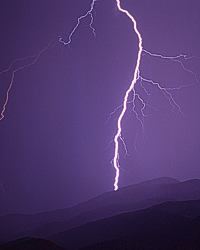
Lightning Safety Guidelines from NOAA posted on the Web


CREDIT FOR POST AND PHOTO: NOAA
PLEASE SEE NOAA WEBSITE FOR MORE VERIFYING DATA

Lightning Safety
Lightning is the MOST UNDERRATED weather hazard. On average, only floods kill more people. Lightning makes every single thunderstorm a potential killer, whether the storm produces one single bolt or ten thousand bolts.In the United States, lightning routinely kills more people each year than tornadoes and hurricanes COMBINED. Tornadoes, hail, and wind gusts get the most attention, but only lightning can strike outside the storm itself. Lightning is the first thunderstorm hazard to arrive and the last to leave.Lightning is one of the most capricious and unpredictable characteristics of a thunderstorm. Because of this, no one can guarantee an individual or group absolute protection from lightning. However, knowing and following proven lightning safety guidelines can greatly reduce the risk of injury or death. Remember, YOU are ultimately responsible for your personal safety, and should take appropriate action when threatened by lightning.While no place is 100% safe from lightning, some places are much safer than others


Where to Go
The safest location during a thunderstorm is inside a large enclosed structure with plumbing and electrical wiring. These include shopping centers, schools, office buildings, and private residences.If lightning strikes the building, the plumbing and wiring will conduct the electricity more efficiently than a human body. If no buildings are available, then an enclosed metal vehicle such as an automobile, van, or school bus makes a decent alternative.


Where NOT to Go
The safest location during a thunderstorm is inside a large enclosed structure with plumbing and electrical wiring. These include shopping centers, schools, office buildings, and private residences.If lightning strikes the building, the plumbing and wiring will conduct the electricity more efficiently than a human body. If no buildings are available, then an enclosed metal vehicle such as an automobile, van, or school bus makes a decent alternative.

Not all types of buildings or vehicles are safe during thunderstorms. Buildings which are NOT SAFE (even if they are "grounded") have exposed openings. These include beach shacks, metal sheds, picnic shelters/pavilions, carports, and baseball dugouts. Porches are dangerous as well.Convertible vehicles offer no safety from lightning, even if the top is "up". Other vehicles which are NOT SAFE during lightning storms are those which have open cabs, such as golf carts, tractors, and construction equipment.


What To Do
Once inside a sturdy building, stay away from electrical appliances and plumbing fixtures. As an added safety measure, stay in an interior room.If you are inside a vehicle, roll the windows up, and avoid contact with any conducting paths leading to the outside of the vehicle (e.g. radios, CB's, ignition, etc.).


What NOT to Do
Once inside a sturdy building, stay away from electrical appliances and plumbing fixtures. As an added safety measure, stay in an interior room.If you are inside a vehicle, roll the windows up, and avoid contact with any conducting paths leading to the outside of the vehicle (e.g. radios, CB's, ignition, etc.).
Lightning can travel great distances through power lines, especially in rural areas. Do not use electrical appliances, ESPECIALLY corded telephones unless it is an emergency (cordless and cell phones are safe to use).Computers are also dangerous as they usually are connected to both phone and electrical cords. Do not take a shower or bath or use a hot tub.

Lightning Safety Plan

A lightning safety plan should be an integral part of the planning process for any outdoor event. Do not wait for storm clouds to develop before considering what to do should lightning threaten! An effective plan begins LONG before any lightning threat is realized. You can't control the weather, so you have to work around it!Detailed weather forecasts are accurate only out to seven days at best, but outdoor events often are planned many months in advance. Because of this limitation, every outdoor event coordinator should consider the possibility of lightning, especially if the event is scheduled during the late spring to early autumn months.

The key to an effective lightning safety action plan lies in your answers to the following questions:
Where is the safest lightning shelter?
How far am I (or the group I am responsible for) from that location?
How long will it take me (or my group) to get there?

Knowing the answers to these questions will greatly reduce your chances of being struck by lightning, provided you know them BEFORE thunderstorms threaten!

The 30/30 rule
Any lightning safety plan should incorporate the 30/30 Rule. The 30/30 Rule states that people should seek shelter if the "Flash-To-Bang" delay (length of time in seconds between a lightning flash and its subsequent thunder), is 30 seconds or less, and that they remain under cover until 30 minutes after the final clap of thunder.

A 30 second lead time is necessary prior to a storm's arrival because of the possibility of distant strikes. A 30 minute wait after the last thunder is heard is necessary because the trailing storm clouds still carry a lingering charge. This charge can and does occasionally produce lightning on the back edge of a storm, several minutes after the rain has ended.Studies have shown most people struck by lightning are struck not at the height of a thunderstorm, but before and after the storm has peaked. This shows many people are unaware of how far lightning can strike from its parent thunderstorm. DO NOT wait for the rain to start before seeking shelter, and do not leave shelter just because the rain has ended.

Safety Guidelines

For YOU!
Plan Ahead! Make sure you get the latest weather forecast before going out. Get it here!Carry a NOAA weather radio (found at most electronics stores) or a portable radio with you, especially if you will be away from sturdy shelter (such as boating, camping, etc.). This way you will always be able to get the latest forecast. At the very least, the reception of an AM radio will have static created by lightning. So if you hear the static, keep an eye to the sky as a thunderstorm may be nearby.

If thunderstorms are expected and you go ahead with your planned outdoor activity, have a lightning safety plan in place. Upon arriving on-site, determine how far away your shelter is in case lightning threatens. Remember to account for the time it will require to get to your safe location. If storms threaten or the sky begins to darken, monitor the sky for lightning.

If lightning is seen and the time delay to its subsequent thunder is 30 seconds or less, or if thunderclouds are building overhead, implement your lightning safety action plan without delay!Remember the "Flash to Bang" method to estimate lightning from your location - If you see lightning, count the number of seconds until you hear thunder. Divide the number of seconds by five to get the distance the lightning is away from you. For example, if you see lightning and it takes 10 seconds before you hear the thunder, then the lightning is 2 miles away from you (10 divided by 5 = 2 miles, too close!).Do not resume outdoor activities until 30 minutes after the last thunder clap.

THIS IS A PUBLIC SERVICE/PUBLIC INFORMATION ATTEMPT. SEE THE NOAA WEBSITE FOR FULL INFORMATION.

Tuesday, July 25, 2006

Back From British Columbia !

A great big hearty thanks to Naden Lodge ( www.nadenlodge.com/) for a fantastic stay that provided me with 14 chinook salmon to 21 pounds and 17 coho salmon to 11 pounds. The food, lodgings, guiding, vessels, guides, and environment were outstanding! Captain Brian Hillier, we'll be coming back as soon as we can to your beautiful lodge in Masset, Queen Charlotte Islands!

Another big thanks to guide Clint Goyette of Valley Fishing Guides (www.valleyfishing.com/) for two days of great fishing in and around the snow-capped mountains around Whistler and Pemberton. I stopped counting the rainbow trout we released, but the big memories were the striking colors of a 5 pound char I released as well as my brief hookup of a chinook of about 35 pounds in knee- deep water!

I'll be writing about these exotic destinations in the near future.

Jan Maizler

Friday, July 14, 2006

Posted Permit Article by Jan


SEEN IN THE MAR/APR 2006 ISSUE of South Florida Sport Fishing Magazine

Written by Jan Maizler

Stalking powerful permit on the ultra-shallow flats presents a new level of challenges. Review these tips and tactics for making the most of your Florida Keys skinny water adventure Fishing nomenclature names the permit Trachinotus falcatus. Maybe two of the last syllables is the perfect place to begin, meaning that if permit could talk, “not-us” would be their immediate response as to whether they felt at home on the flats. Indeed, when permit prowl skinny water for a meal, they are considered by savvy shallow water anglers to be a great challenge. This is factual, because permit are flats visitors - not residents, like bonefish. And like most visitors, they tend to be more cautious in less than optimal and familiar environs.Experienced anglers know that when permit are hanging offshore in close proximity to structure such as reefs and wrecks, they are not terribly hard to catch. That's where they generally live. Like many bottom dwelling species, permit do not use structure as ambush points, but rather as buffet tables for crunchy crab entrees. Ditto, for easily accessed inshore deep-water lairs like Key West Harbor. Hooking a fresh crab on a jig and easing it through a chum slick to the harbor bottom is a method that catches them quite frequently.

The key to understanding permit on the flats and effectively pursuing them there is to realize that these fish have learned that coming ashore to feed in the ultra-skinny shallows offers a bountiful, bellyful experience. Mutton snapper did the same off Key West for many years, but they were eventually decimated by commercial fishing. Cobia still exhibit this same behavior when they enter the shallows off Tampa Bay.In Florida, skinny water flats fishing for permit begins in Miami's Biscayne Bay and extends all the way south past Key West to the Marquesas, an area worthy of being dubbed the Permit Coast.

The Florida Keys can rightfully feel proud that this area is unique to the entire planet and is the epicenter for world record Atlantic permit fishing; some of the fish are well over fifty pounds!Again, successful permit fishing on Keys flats addresses the idea that visiting the ultra skinny plateaus is a part time experience for these fish- and you can bet that an exit strategy is always in place. Involve this fact in your poling strategies and stick to the deeper edges of flats as well as working flats slopes that abut channels and contours leading into deeper water. If you couple this with the kind of crunchy, rocky bottom that holds crabs and such, you're in prime skinny water permit territory.

Fishing the flats along the Permit Coast should be considered a year-round possibility that only avoids periods when cold fronts drive water temperatures below the mid-seventies. This approach is less arbitrary and forces you to consider and include all the between-front, warmer water days of south Florida's springtime in addition to the remainder of the year.Your consideration of permit as a cautious visitor to the flats can be maximized by using wind in your strategy.

All experienced anglers who ply Florida Key's shallows know that windier days on the flats allow closer and shorter casts to their quarry. This is because wind breaks up the water surface and disguises the image of angler and skiff. In addition, the countless wavelets muffle the sound of any fly, lure, or bait as it hits the surface, as well as allowing slightly heavier lines and tippets.You'll often find these brisk conditions from February through early May. The wind may be over twenty knots and you'd normally decline a long trip to the flats. As long as you can make a safe passage, you might want to reconsider; since most permit cruising the ultra shallows on these days are much less spooky. They'll also be hungry as winter waters give way to springtime conditions. Somewhat unlike tarpon, permit are generally happy with windy conditions.

Some anglers and guides hold the opinion that permit leave the flats for offshore spawning during April and May. However, since they do not migrate en masse as a giant silver cloud, you can rest assured that you will find some permit there. I always have and you will too.

Perfecting Permit Presentations-Now that you've crossed the bumpy bays of early spring, you'll find it especially gratifying to have the luxury of brisker weather so you can use heavier tackle to shorten your battles with these powerful fighters. Beefed- up tackle will enable fish to be released with more vigor, thus they will be less subject to predation by their ever-present skinny water enemy, sharks. You can feel free to use 12 lb. spin and plug tackle and a double line at the business end. Fly gear can be nine-weight or even ten, because of the need for casting power in the midst of influential wind forces. As south Florida heads into summer, the waters along the Permit Coast from north of Key Largo to south of Key West often flatten and grow calm like a country lake. These conditions will make it easier for you to see permit cruising, tailing, and pushing water - conversely, spooky permit will be able to see and hear you and your skiff with greater acuity in these same glassy conditions. Now is the time to start lengthening your casts, so that you won't be spotted before you make your presentation. The best way to increase your casting distance is to lighten the pound test of your monofilament line or decrease the diameter of your super-braid, as well as increase the length of your spinning or baitcasting rod. For fly tackle, calm water permit tactics may involve dropping down to an eight-weight outfit.

When faced with summer like conditions on the flats, presentations to cruising permit should “lead” the fish a bit more. Baits like live shrimp and crabs should be smaller to lighten their impact on the ripple free surface. Leaders should be longer and lighter on all types of tackle. On fly gear, I recommend fluorocarbon for building a leader in its entirety. On spinning or plug tackle loaded with monofilament or fiber running line, try 3- to 5-feet of 15 lb. fluorocarbon leader. During the calmest conditions, you want the impact of your presentation on the water to be as stealthy as possible!You may have heard that with tailing permit - regardless of the conditions - you have to “drop it on top of them” to get their attention. Don't interpret this as instructions to land your presentation right on their heads. The usual advice for casting lures or flies to a tailing permit that is intently distracted by its foraging activity, is to get the presentation close enough for the fish to sense that another feeding possibility has presented itself. When fishing with live shrimp and crabs, many guides encourage their clients to cast past and forward of the permit and bring the bait right across the surface to the tailing fish, and then let the live bait drop to the fish's eye level. The truth is that both of these methods work.

Super-braids and flats permit - a match made in heaven.
You will find that fishing braided line such as PowerPro may work to your advantage in two focal situations when using spinning or baitcasting tackle. The first is when you are pursuing permit on the flats where any abundance of rock piles, reefs, and/or sea fans demand that you use a line that has extreme abrasion resistance to optimally cope with these obstructions. The second situation concerns those glass-like calm conditions where long casts and faraway hook-sets are necessary. You'll appreciate a line that not only casts a great distance, but one that has virtually no stretch. My choice in these situations is 8 or 10 lb. PowerPro which has the ultra-thin diameter of about 2 lb. monofilament. If I strike a permit at 60 feet away with a two foot long sweep of the rod, I know my hook essentially moves two feet, substantially more than stretchy monofilament nylon. The length of my hook-sweep will of course be affected by the length and material of my leader, which is why I use no more than five feet of fluorocarbon leader. Fluorocarbon is less stretchy and less visible than a comparable setup constructed of monofilament.

Those in-the-know fish it slow!
Considering permit are in the jack family, some anglers practice the idea of "bringing the jack out of the permit" in their retrieve style - Do Not Do That! Rather, bring out the pompano and palometa instead. In contrast to permit, jacks are voracious, highly aggressive bullies that run down, corner, and ambush terrified finfish. When was the last time you saw a jack attack and gobble a crab or sea urchin off the bottom? Jacks want movement- but permit feed on hard shelled life forms that hide in weeds, sea grass, and in the sandy bottom. Generally, permit prey uses the freeze-and-hide defense, rather than the fleeing defenses that pilchards, mullet, and sardines utilize on jacks.A close look at the fish's architecture also reveals exactly how they eat. Permit are armed with crushers versus teeth, which verifies the "hard bodied" prey assumption- clams, lobsters, urchins, and crabs are easily crushed. If you're casting live shrimp at permit, give the fish minimal line on the strike by just extending your rod tip and coming tight. This is because permit's powerful mouths make short work of a shrimp's comparatively soft body. The rounded hard head of a permit verifies the ease with which evolution gives this fish the ability to pin its prey against the ocean floor. While a large sickle tail provides plenty of power and stabilization when tailing and head-down feeding. A jack's feeding experience is primarily a horizontal pursuit, while a permit is more of a vertical pin and crush feeder. This has enormous implications when considering a presentation style. On the flats, a still-fished crab is really the most comfortable encounter for a permit.

The challenge that drives fly-fishermen crazy when stalking these silvery speedsters on that tackle is simply that most flies don't really look like a realistic representation of what permit generally eat. Combine this with a lush, massive living biomass underfoot on the flats and it's easy to see why permit would ignore your vise-created concoction for the natural crunchy stuff - the kind that scurries around like a spider and disappears into the sand. For fly-fishermen, the key to overcoming this challenge is enticing permit to take your fly with a combination of a realistic-enough appearance coupled with an even-more realistic retrieve style. For permit on fly, you may very well find that at the moment of truth, no retrieve is the best retrieve of all!Pleasing permit offerings-Although this list is far from extensive, it does chronicle the prime choices.

Flats anglers with any level of experience know that permit will grab many baits, lures, and flies as long as they are properly presented. But remember that if you want to really stack the odds in your favor, fish a live crab. If you're looking for the greatest challenge, pursue them on fly.

Other Baits and Artificials
*Live shrimp *Live blue crabs *Live hermit crabs *Live spider crabs *Fresh sand fleas *D.O.A. Shrimp *D.O.A. Crab *SPRO Bucktail in Pink Shad *BackBone Jig in Brown *Chernobyl Crab fly

If you are new to the flats, do not have a flats boat, or are a seasoned angler visiting our state, it will be essential to hire an experienced permit guide. The best are often booked a year in advance - do your research and call them as early as you can. When I am doing a story, I use the following guides when I fish the Permit Coast-Miami/Biscayne Bay: Captain Joe Gonzalez 305-798-0841 Upper/Middle Keys: Captain Greg Poland 305-852-9940 Lower Keys: Captain Fernand Braun 305-872-9004 Key West/Marquesas: Captain Tom Rowland 305-294-7447

Sunday, July 09, 2006

Fins Reach Out Across the Sea !!!


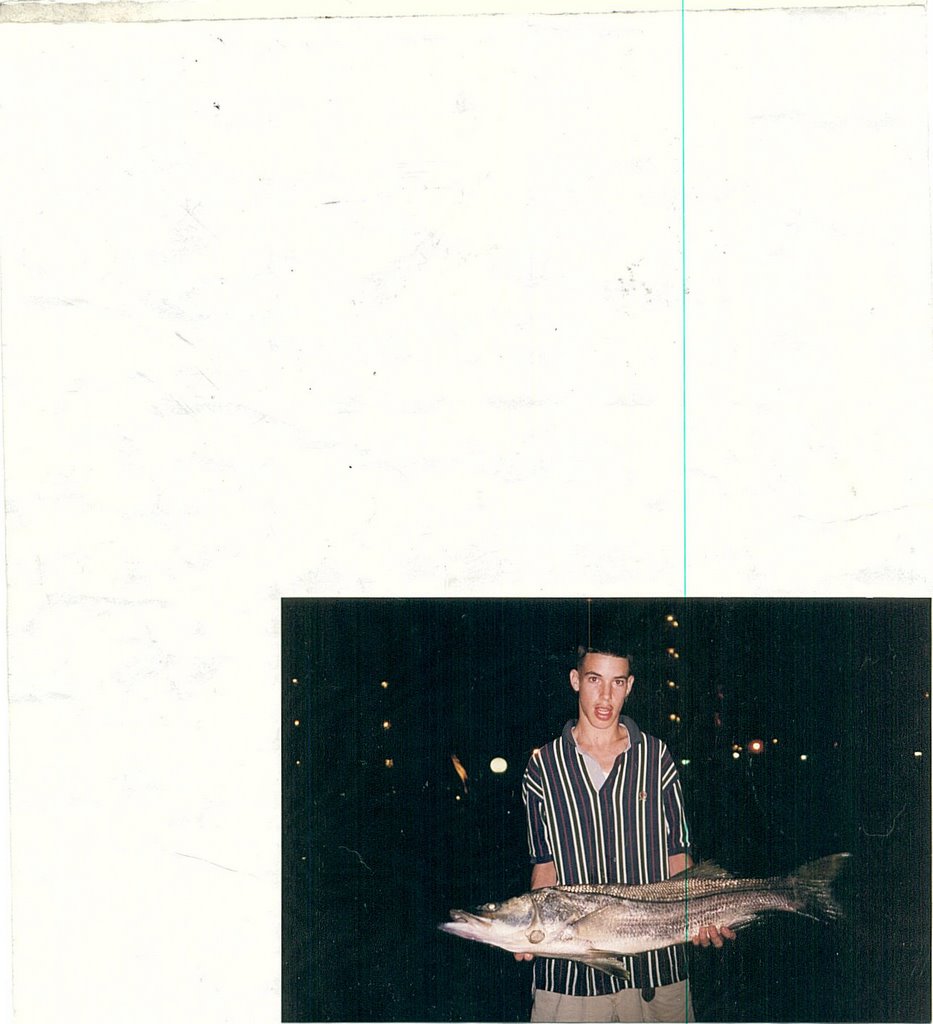
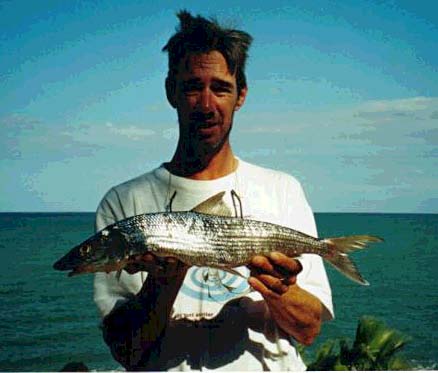
It appears that the Land Down Under may have a snooky relative in the Barramundi, although the latter seems to have a few Corvina/ Croaker features mixed in. The Barra's the one on the beach, while Florida's common snook appears in a nightime shot of Kid Snook, as well as with Captain Mike Smith displaying a tannin-colored beauty from the Ding in Sanibel.

I see some vague analogy potentials that are unrealized. Hordes of American black bass anglers are surging to South American jungle creeks for peacock bass, though the latter are more properly Cichlids. Yet the Barramundi is not given a smidgeon of attention by traveling snook anglers. Is Australia too far? Is this species-which grows to jumbo sizes- still relatively unknown?

Jan

Saturday, July 08, 2006

Looking Forward to Naden Lodge

It's with a heart full of excitement and anticipation that my plans for visiting Naden Lodge ( www.nadenlodge.com/ ) in British Columbia's Queen Charlotte Islands should be coming to fruition this year.

This destination has some of the largest chinook salmon around. Naden Lodge lies smack dab in the migratory path of millions of all the salmon species en route to their natal streams. Halibut the size of a compact car as well as steelhead fishing in the island's tea-colored streams adds to Naden Lodge's bountiful offerings.

Whales, seals, eagles, mountains, leaping salmon, verdant forests, delicious meals...who could ask for more?

Jan

Tuesday, July 04, 2006

More Guidelines for Traveling Flats Anglers...

Besides knowing yourself- your desires, abilities, and proclivities-know your intended destination fully. That includes every facet from guides, boats, country, weather/season, tidal/lunar profile for your stay, culture, political stability, and economic stability of the Lodge itself. Unfortunately, certain lodges and camps go broke for lack of adequate capitalization and cash infusions over time. All these features are crucial for you to review! If you hear rumors that your outfitter does not know about, try to check them out for yourself: even ask the Lodge owner directly!

Do not forget the stability of the transportation: usually, this involves airlines. As this is written, the air carrier for Kamchatka appears to be going out of business and outfitters are scrambling for a replacement! Also, check the political stability of the country of your destination. My personal belief is that relations between the U.S. and Venezuela will continue to deteriorate as President Chavez dukes it out with America and holds hands with Iran- this may not bode well for Los Roques, or things make work out. The point is be clear-thinking and shamelessly inquisitive. I subscribe to the Angling Report ( www.anglingreport.com/) because of its unbiased and honest destination reports and assessments.

Always check out your prospective guide, and doubly verify them if they own the destination you're headed for. Although they may suit the (desireable) personality goals of your outfitter, they may not suit you. Be sure it's going to be a good match! I personally like guides whose competence is flavored by an excellent sense of humor and an optimistic patience. Some guides are slightly more quiet, but they can respond quite well to jokes and are capable of patience and optimism without any difficulty or strain whatsoever. Sometimes there's a cultural factor. I'd think that a Russian guide might be a tad more expressive than a Mayan guide- but there's exceptions everywhere!


Jan

Saturday, July 01, 2006

On the Trail of the Longfin Bonefish.....


Shafted Bonefish, Albula nemoptera: Shows up when one purchases a “scoop of bait.” Caught in the surf zone, La Playita, San Jose del Cabo, Baja California Sur, Mexico, during late December 2003, with a water temperature of 76 degrees, early morning, in 5 to 10 foot water, utilizing a cast net by panguero bait salesmen. Size of specimen in photo without the angler is approximately 8 inches and 1 pound. Virtually an unknown species to locals. Description and photo courtesy John Snow.


Photo credit for Shafted Bonefish with angler, Albula nemoptera: Found at El Rincon, East Cape, Baja California Sur, Mexico, November 2000. Description and photo courtesy Peter Langstraat.

The mouth of the Shafted Bonefish reaches the eye, another key identification characteristic. The Shafted Bonefish is very similar to and at first sight can be easily confused with three species, the Eastern Pacific Bonefish, Albula esuncula; the Ladyfish, Elops affinis; and the Milk Fish, Chanos chanos. However, none of these three species has an elongated anal or dorsal fin ray. The Shafted Bonefish reaches 2 feet in length and is normally found in the first 30 feet of the water column over sandy bottoms.The Shafted Bonefish is a member of the Albulidae or Bonefish Family which consists of only one genus, Albula.


BONEFISH [bonefish] common name for a fish belonging to either of two species of the family Albulidae. Albula vulpes is widespread in warm, shallow marine waters, and Dixonina nemoptera is found only in the West Indies. The bonefish is silvery in color, with a long, deeply forked tail and a single dorsal fin; it has a pointed head covered by a thick, transparent cartilage and a receding mouth filled with numerous small rounded teeth. D. nemoptera is distinguished by two long trailing filaments, one extending from its dorsal fin and one from its anal fin. Also known as ladyfish and banana fish, the bonefish may reach 3.5 ft (107 cm) in length, and 18 lb (8 kg) in weight. It is a bottom dweller of shallow, sandy areas where it feeds on crabs, shrimp, and worms. It is much prized as a game fish, despite the numerous tiny bones that limit its appeal as food. It is classified in the phylum Chordata , subphylum Vertebrata, class Osteichthyes, order Clupeiformes, family Albulidae. Author not available, BONEFISH., The Columbia Encyclopedia,
Sixth Edition 2006


From The University of Florida:Taxonomy- Linnaeus described the bonefish in 1758, designating it a species within the genus Esox, a taxon that at the time already referred to at least one species of the holarctic freshwater pikes and pickerels. Recognizing the conflict, later workers placed the bonefish in the available genus Albula. The scientific name Albula vulpes is derived from Latin, and can be translated as "white fox". Other synonyms of Albula vulpes include, Esox argenteus, Albula conorynchus, Albula plumier, Amis immaculata, Clupea brasilienses, Clupea macrocephala, Butyrinus bananus, Engraulis sericus, Engraulis bahiensis, Glossodus forskalii, Albula goreensis, Albula parrae, Albula seminuda, Albula rostrata, Esunculus costai, Atopichthys esunculus, and Albula virgata. At least one other species of bonefish exists, the shafted bonefish, described and named by Fowler as Dixonina nemoptera in 1911. However, some scientists argue that the differences between the two species do not warrant genetic separation, and that both should be included within the genus Albula.

Catches for research have been made in the Dominican Republic and Puerto Rico.


Countries where Albula nemoptera is found ( incomplete )
Point map (with point info)

Brazil
BRA
native

7251
Colombia
COL
native

5217
Dominican Rp
DOM
native

12965
Ecuador
ECU
native

40498
Fr Guiana
GUF
native

13608
Jamaica
JAM
native

27228
Nicaragua
NIC
native

13613
Panama
PAN
native

7251
Suriname
SUR
native

13608
Trinidad Tob
TTO
native

33407
Venezuela
VEN
native

Page created by: Eli, 10.05.99, last modified by Eli, 01.02.06.

This is just a searching foray into what I see as a genetic variation of the world's most popular flats fish. I'd love to catch one..would you?

Jan

Sunday, June 25, 2006

Now's The Time!

There's been some wonderful developments in habitat preservation and reclamation. Ditto, for groups dedicated to the preservation of fish stocks, like Bonefish and Tarpon Unlimited. However, the real bedrock is the capacity of the Planet Earth to sustain life-without which there are no fish or fish stocks. It seems like there's little time left-unless you're into massive denial- to reverse a malignant process of carbon dioxide emissions, global warming, and deforrestization that may spurn climate changes that may have catastrophic results. It's really a matter of awareness and mindfulness, and how you want the world that your children inherit to be.

Ther's simply no reason for every angler, as well as every company involved in fishing, boating, travel to embrace practices by themselves, their customers, their politicians, their cities and states that will reverse toxic emissions and stabilize our planet's atmosphere, seas, and global geobalance.

Check out the website, www.climatecrisis.net/ Forget your politics, since it's not a political issue. Review it carefully, and if anything rings true for you, do your bit to help!

Jan

Friday, June 23, 2006

High Summer, Stay in the Shade, and Bloated Gloating

Forget the Druidic celebrations at Stonehenge and forget the longest day! Floridians have "been bakin' " in the bacon for at least a month, day after day. Summer swelter's heat felt everywhere down here. More of a time for early and late, stay in the shade, think back on Spring, forward to Fall, and catch tarpon in low light before it's white- hot. As you rest later, you might just think every so often about 'canes- so what! "Quiere una maragarita, Senor?" " Si, con much gusto, y un Mojito!" Broken spanish, a slow stretch, and lazy in the shade!

Day off today to fight the fishy bloats from prior success which threatens to oversate and the pursuit loses the magic and challenge, unless stressed to absurd levels. Part of the art of angling is knowing when not to fish, regardless of the fishing! Take it from me, 2000 bones and 1000 tarpon later.

Gratitude and gratification run high this year with last Friday's release of six silver kings from 75 to 125 pounds. The retrospectoscope winds back three weeks as the airco blows welcome chilly blasts at 8:30 a.m. and pulls up Deadman's Cay and Sam Knowles where my partner and I- me, 70 bonefish released and he, 50 bonefish released- logged our best three day flats fishing trip ever. In May, more blessings based on solid prepping at Southern Cross Club in Little Cayman, where streams of variety- jacks, triggers, snappers, tarpon, permit, and plenty of bones- culminate in a flats Grand Slam. Back up the 'scope to April with Tad VanDerMark off Flamingo guiding us to who-can-count-'em numbers of large seatrout, some topping four pounds!

With a peek forward to BC salmon, rocketland redfish, fall stripers, and Ascencion Bay, who could ever complain? A traveling angler's life for this scribe outshines The Star of India!

Jan

Tuesday, June 20, 2006

It's A Small World....

CREDIT/YAHOO NEWS /EMAIL

MANAGUA, Nicaragua - A freakishly powerful storm far off in the South Pacific propelled huge swells to the Americas, causing a surge of waves that battered homes and beachfront businesses from Peru to Mexico, authorities said Tuesday.

High surf kicked up as far south as northern Chile and as far north as Southern California, but no deaths or serious injuries were reported as several hundred people were evacuated in at least eight countries.

The barrage began Sunday, and the waves were beginning to weaken Tuesday afternoon, meteorologists said.

"We expect them to gradually subside over the next 24 to 48 hours," said Hugh Cobb, at the
National Hurricane Center' name=c1> SEARCHNews News Photos Images Web' name=c3> National Hurricane Center in Miami.

The waves resulted from a particularly intense low pressure system several hundred miles off New Zealand that caused hurricane force winds and rare snowfall at sea level. Masses of water were shoved eastward, creating unusually big waves when the swells hit the Americas.
"The storm system that generated these waves was fairly extraordinary," Cobb said.
The waves were not like those in a tsunami, giant swells caused by seismic shifts along the ocean floor that can be much larger and faster moving.

Crowds watched in awe as 10-foot surf pounded Southern California's beaches Tuesday. The
National Weather Service' name=c1> SEARCHNews News Photos Images Web' name=c3> National Weather Service posted high surf advisories from north of Los Angeles to San Diego.
In Sipacate, Guatemala, the pounding of in-rushing waves wrecked the 10-room Rancho Carrillo hotel, a few restaurants and about 50 homes, emergency officials said. The hotel had been evacuated before part of it collapsed Tuesday.

"The sea took away eight rooms and part of the restaurant, which was made of wood," said Brigido de Paz, the hotel manager. "The kitchen and the rooms that were made of concrete are flooded and damaged."

In the Mexican resort of Acapulco, waves reaching 6 feet began hitting on Monday and authorities ordered beaches closed. Knee-deep water engulfed 2 miles of the Costera Miguel Aleman, the famed boulevard running around the bay. Beachfront restaurants and nightclubs were flooded.

"The waves came up fairly high and it is definitely dangerous," said Areli Chavarria, concierge at the Hotel Emporio.

In neighboring Oaxaca state, waves flooded seaside restaurants and hotels along Zicatela Beach, a surfing hotspot in Puerto Escondido. Mexican soldiers evacuated 200 people and closed some 85 businesses.

Nicaraguan authorities ordered 200 people evacuated after 15-foot waves surged 100 yards up onto land, knocking down about 20 houses in Puerto Corinto, civil defense official William Rodriguez said.

Over the weekend, heavy surf wrecked 15 homes in a shantytown in Lima's port of Callao and damaged about 100 in the northern coast city of Trujillo, 300 miles northwest of the capital, National Civil Defense spokesman Jorge Arguedas said.

The Peruvian ports of Mollendo, 485 miles southeast of Lima, and Chimbote, 230 miles to the north, were also battered and officials halted shipping operations.

High surf hit as far south as Antofagasta, Chile, some 870 miles north of the capital, Santiago.
In Honduras, giant swells damaged at least 300 houses along the Gulf of Fonseca on Sunday, said emergency response official Juan Carlos Elvir. The homes were in the communities of Cedeno, Punta Raton, Marcovia and Choluteca.
At least 30 people were evacuated Monday in El Salvador'

El Salvador, where waves up to 20 feet damaged some 20 corrugated-metal homes in Playa El Mahajual, about 15 miles west of the capital of San Salvador, said Salvador Rosales, director of civil protection. Beach huts also were lost along the coast.

Officials said waves in El Salvador had subsided to about 10 feet Tuesday.

In Panama, six ramshackle homes were lost on two beaches in Cocle Province, about 90 miles west of Panama City, said National Civil Protection Agency spokeswoman Larissa Samaniego.
Costa Rican authorities reported minor flooding in several coastal communities. Twenty families were evacuated in Palo Seco de Parrita, 185 miles south of the capital of San Jose, the National Emergency Commission said.
___
On the Net:
U.S. National Hurricane Center: http://www.nhc.noaa.gov

From the CDC to Caribbean Travelers...

Health Information for Travelers to Countries in the Caribbean
On This Page
Vaccines for Your Protection
Diseases Found in the Caribbean
Other Health Risks
What You Need To Bring With You
Staying Healthy During Your Trip
After You Return Home
For More Information

Travel Notices in Effect
Malaria, Great Exuma, Bahamas: Recommendations for Travelers(Released June 16, 2006)
U.S. Department of State
See all Traveler's Health travel notices


Vaccines for Your Protection: The Caribbean

Routine Vaccinations
Check with your healthcare provider: you and your family may need routine as well as recommended vaccinations.
Before travel, be sure you and your children are up to date on all routine immunizations according to schedules approved by the Advisory Committee on Immunization Practice (ACIP). See the schedule for adults and the schedule for infants and children. Some schedules can be accelerated for travel.
See your doctor at least 4–6 weeks before your trip to allow time for shots to take effect. If it is less than 4 weeks before you leave, you should still see your doctor. It might not be too late to get your shots or medications as well as other information about how to protect yourself from illness and injury while traveling.
Recommended Vaccinations and Preventive Medications
The following vaccines may be recommended for your travel to The Caribbean. Discuss your travel plans and personal health with a health-care provider to determine which vaccines you will need.
Hepatitis A or immune globulin (IG).Transmission of hepatitis A virus can occur through direct person-to-person contact; through exposure to contaminated water, ice, or shellfish harvested in contaminated water; or from fruits, vegetables, or other foods that are eaten uncooked and that were contaminated during harvesting or subsequent handling.
Hepatitis B, especially if you might be exposed to blood or body fluids (for example, health-care workers), have sexual contact with the local population, or be exposed through medical treatment. Hepatitis B vaccine is now recommended for all infants and for children ages 11–12 years who did not receive the series as infants.
Malaria: if you are traveling to a malaria-risk area in this region, see your health care provider for a prescription antimalarial drug. For details concerning risk and preventive medications, see Malaria Information for Travelers to the Caribbean.
Rabies, if you might have extensive unprotected outdoor exposure in rural areas, such as might occur during camping, hiking, or bicycling, or engaging in certain occupational activities.
Typhoid, particularly if you are visiting developing countries in this region. Typhoid fever can be contracted through contaminated drinking water or food, or by eating food or drinking beverages that have been handled by a person who is infected. Large outbreaks are most often related to fecal contamination of water supplies or foods sold by street vendors
Yellow Fever, for travelers to Trinidad and Tobago
As needed, booster doses for tetanus-diphtheria and measles.
Required Vaccinations
None.


Diseases found in the Caribbean (risk can vary by country and region within a country; quality of in-country surveillance also varies)

The preventive measures you need to take while traveling in the Caribbean depend on the areas you visit and the length of time you stay. You should observe the precautions listed in this document in most areas of this region.
Malaria
An Anopheles freeborni mosquito takes a blood meal.
Malaria is always a serious disease and may be a deadly illness.
Humans get malaria from the bite of a mosquito infected with the parasite. Prevent this serious disease by seeing your health care provider for a prescription antimalarial drug and by protecting yourself against mosquito bites (see below). All travelers to malaria-risk areas in Haiti and the Dominican Republic, including infants, children, and former residents of these islands, should take an antimalarial drug. All travelers to Haiti are at risk for malaria, except no risk in the cruise port of Labadee (Labadie). Travelers to rural areas of the Dominican Republic are at risk for malaria, with the highest risk in provinces bordering Haiti. In addition, risk in all areas of La Altagracia Province, including resort areas (Updated October 21, 2005). There is also malaria risk on Great Exuma Island, Bahamas (Updated June 16, 2006). Travelers to malaria-risk areas in Haiti, Dominican Republic, and The Bahamas should take chloroquine to prevent malaria.
For additional information on malaria risk and prevention, see Malaria Information for Travelers to the Caribbean.
There is no risk for malaria in: Anguilla (U.K.), Antigua & Barbuda, Barbados, Bermuda (U.K.), Cayman Islands (U.K.), Cuba, Dominica, Grenada, Guadeloupe, Jamaica, Martinique (France), Montserrat (U.K.), Netherlands Antilles, Puerto Rico (U.S.), St. Kitts & Nevis, St. Lucia, St. Vincent & the Grenadines, Trinidad & Tobago, Turks & Caicos (U.K.), Virgin Islands (U.K., U.S.).
Yellow Fever
Yellow fever is present only in Trinidad & Tobago in this region. A certificate of yellow fever vaccination may be required for entry into certain countries in the region if you have visited Trinidad & Tobago or an endemic area in South America or sub-Saharan Africa. For detailed information, see Comprehensive Yellow Fever Vaccination Requirements. Also, find the nearest authorized U.S. yellow fever vaccine center.
Food and Waterborne Diseases
Avoid buying food or drink from street vendors, because it is relatively easy for such food to become contaminated.
Make sure your food and drinking water are safe. Food and waterborne diseases are the primary cause of illness in travelers. Travelers’ diarrhea can be caused by viruses, bacteria, or parasites, which are found throughout the Caribbean and can contaminate food or water. Infections may cause diarrhea and vomiting (E. coli, Salmonella, cholera, and parasites), fever (typhoid fever and toxoplasmosis), or liver damage ( hepatitis). Illness caused by a parasitic worm (Angiostrongylus cantonensis) can occur in this region. People can get infected by eating raw or undercooked snails or slugs that are infected with the parasite.
Additional information: see the Safe Food and Water page for a list of links.
Other Disease Risks
Dengue is transmitted by mosquitoes in this region. Protecting yourself against insect bites (see below) will help to prevent this disease.
Cutaneous larval migrans is a risk for travelers with exposures on beaches and leptospirosis is present. Eosinophilic meningitis caused by Angiostongylus cantonensis occurred in travelers to Jamaica. Anthrax occurs in Haiti. Other infections that tend to occur more often in longer-term travelers (or immigrants from this region) include lymphatic filariasis (Dominican Republic and Haiti), cutaneous leishmaniais (Dominican Republic), tuberculosis (Haiti), HIV (Haiti), and hepatitis B (Haiti and the Dominican Republic). There remains very limited risk of schistosomiasis in few areas. Other hazards for travelers include toxic fish poisoning


Other Health Risks

Injuries
Motor vehicle crashes are a leading cause of injury among travelers. Protect yourself from motor vehicle injuries: avoid drinking and driving; wear your safety belt and place children in age-appropriate restraints in the back seat; follow the local customs and laws regarding pedestrian safety and vehicle speed; obey the rules of the road; and use helmets on bikes, motorcycles, and motor bikes. Avoid boarding an overloaded bus or mini-bus. Where possible, hire a local driver.


What You Need To Bring With You

Long-sleeved shirt, long pants, and a hat to wear whenever possible while outside, to prevent illnesses carried by insects (e.g., malaria, Dengue, filariasis, leishmaniasis, and onchocerciasis).
Insect repellent containing DEET.
Bed nets treated with permethrin. For use and purchasing information, see Insecticide Treated Bednets on the CDC malaria site. Overseas, permethrin or another insecticide, deltamethrin, may be purchased to treat bed nets and clothes.
Flying-insect spray to help clear rooms of mosquitoes. The product should contain a pyrethroid insecticide; these insecticides quickly kill flying insects, including mosquitoes.
Iodine tablets and portable water filters to purify water if bottled water is not available. See Preventing Cryptosporidiosis: A Guide to Water Filters and Bottled Water for more detailed information.
Sunblock, sunglasses, and a hat for protection from harmful effects of UV sun rays. See Skin Cancer Questions and Answers for more information.
Prescription medications: make sure you have enough to last during your trip, as well as a copy of the prescription(s) or letter from your health-care provider on office stationery explaining that the medication has been prescribed for you.
Always carry medications in their original containers, in your carry-on luggage.
Be sure to bring along over-the-counter antidiarrheal medication (e.g., bismuth subsalicylate, loperamide) and an antibiotic prescribed by your doctor to self-treat moderate to severe diarrhea. See suggested over-the-counter medications and first aid items for a travel kit.


Staying Healthy During Your Trip

Travelers should take the following precautions
To stay healthy, do...
When using repellent on a child, apply it to your own hands and then rub them on your child. Avoid children's eyes and mouth and use it sparingly around their ears. Wash your hands often with soap and water or, if hands are not visibly soiled, use a waterless, alcohol-based hand rub to remove potentially infectious materials from your skin and help prevent disease transmission.
In developing countries, drink only bottled or boiled water, or carbonated (bubbly) drinks in cans or bottles. Avoid tap water, fountain drinks, and ice cubes. If this is not possible, learn how to make water safer to drink.
Take your malaria prevention medication before, during, and after travel, as directed. (See your health care provider for a prescription.)
To prevent fungal and parasitic infections, keep feet clean and dry, and do not go barefoot, even on beaches.
Always use latex condoms to reduce the risk of HIV and other sexually transmitted diseases.
Protect yourself from mosquito insect bites:
Wear long-sleeved shirts, long pants, and hats when outdoors.
Use insect repellents that contain DEET (N, N-diethylmethyltoluamide). For more information about insect repellents and correct use, see What You Need to Know about Mosquito Repellent on the CDC West Nile Virus site.
If no screening or air conditioning is available: use a pyrethroid-containing spray in living and sleeping areas during evening and night-time hours; sleep under bed nets, preferably insecticide-treated ones.
If you are visiting friends and relatives in your home country, see additional special information about malaria prevention in Recent Immigrants to the U.S. from Malarious Countries Returning 'Home' to Visit Friends and Relatives on the CDC Malaria site.
Do not
Do not eat food purchased from street vendors or food that is not well cooked to reduce risk of infection (i.e., hepatitis A and typhoid fever).
Do not drink beverages with ice.
Avoid dairy products, unless you know they have been pasteurized.
Do not swim in fresh water to avoid exposure to certain water-borne diseases such as schistosomiasis. (For more information, please see Swimming and Recreational Water Precautions.)
Do not handle animals, especially monkeys, dogs, and cats, to avoid bites and serious diseases (including rabies and plague). Consider pre-exposure rabies vaccination if you might have extensive unprotected outdoor exposure in rural areas. For more information, please see Animal-Associated Hazards.
Do not share needles for tattoos, body piercing or injections to prevent infections such as HIV and hepatitis B.


After You Return Home

If you have visited a malaria-risk area in Haiti or the Dominican Republic, continue taking your chloroquine for 4 weeks after leaving the risk area.
Malaria is always a serious disease and may be a deadly illness. If you become ill with a fever or flu-like illness either while traveling in a malaria-risk area or after you return home (for up to1 year), you should seek immediate medical attention and should tell the physician your travel history.


For More Information

For more information about these and other diseases, please check the Diseases page and CDC Health Topics A-Z
Diseases

Monday, June 19, 2006

Exuma Alert From CDC

Travelers' Health
Travelers' Health Home > Travel Notices > Outbreak Notice
Outbreak Notice Malaria, Great Exuma, Bahamas: Recommendations for Travelers This information is current as of today,
June 19, 2006, 11:28:50 PM
Released: June 16, 2006
The Centers for Disease Control and Prevention (CDC) has recently received official reports of 14 confirmed malaria cases in Great Exuma, Bahamas, an area where malaria transmission does not normally occur and for which antimalarial drugs have not previously been recommended. Thirteen cases occurred in residents of the Bahamas, and an additional malaria infection was confirmed in a U.S. citizen who traveled to Great Exuma in early May 2006. All these confirmed infections were caused by Plasmodium falciparum. Most of the patients reported no recent travel to malaria-endemic areas, but some of the Bahamas residents may have recently traveled from Haiti, where P. falciparum is endemic.

Malaria is not considered endemic on the islands of the Bahamas. The Ministry of Health in the Bahamas has responded with heightened surveillance for and treatment of malaria cases, mosquito control measures, and education of the local population. The Caribbean Epidemiology Center and the Pan American Health Organization/World Health Organization are assisting the Ministry of Health with these response measures.

Antimalarial Medication
At this time, CDC is recommending chloroquine as an antimalarial medication for travelers to Great Exuma. This recommendation is expected to be temporary and does not apply to other islands of the Bahamas. Chloroquine has a long history of use and safety and is well tolerated by most people, including children. People with an allergy to chloroquine should discuss an alternative antimalarial drug with their health-care provider. To learn more about chloroquine, including dosing information, see Information for the Public: Prescription Drugs for Malaria.
Other Prevention Measures

Because antimalarial drugs are not 100% protective, travelers to Great Exuma should take precautions to protect against mosquito bites. These prevention measures should be taken by travelers to other islands in the Bahamas, as well.
Use insect repellent on exposed skin surfaces when outdoors, particularly from dusk to dawn. Repellents containing 30% – 50% DEET (N, N-diethyl-m-toluamide) are recommended. Lower concentrations of DEET offer shorter-term protection, requiring more frequent reapplication.
To learn more about preventing mosquito bites and the appropriate use of insect repellents, visit Protection Against Mosquito and Other Arthropods in Health Information for International Travel and What You Need to Know about Mosquito Repellent.
Malaria caused by P. falciparum may rapidly result in a severe, life-threatening illness if not promptly treated. If you have traveled to Great Exuma and you become ill with fever and other flu-like symptoms, you should immediately seek professional medical care; inform your health-care provider that you have visited an area currently experiencing a malaria outbreak.
Visit the CDC’s Travelers’ Health website for Health information for Travelers to Countries in the Caribbean.

Additional information about malaria can be found at the CDC Malaria homepage.
Health-care providers needing assistance with diagnosis or management of suspected cases of malaria should call the CDC Malaria Hotline: 770-488-7788 (M-F, 8 am-4:30 pm, Eastern Time). For consultation after hours, call 770-488-7100 and ask to speak with a CDC Malaria Branch clinician.


Date: June 16, 2006
Content Source: National Center for Infectious Diseases, Division of Global Migration and Quarantine

Destinations
Vaccinations
Diseases
Yellow Book
Safe Food and Water
Illness and Injury Abroad
Traveling with Children
Cruise Ship and Air Travel
Special Needs Travel
Traveling with Pets
Travel Medicine Clinics
Yellow Fever Vaccination Clinics
References and Resources
Travelers' Health Automated Information LinePHONE: 877-FYI-TRIP toll free (Information about ordering the Yellow Book and International Certificates of Vaccination and recorded messages on travel-related health topics)
VIA EMAIL: Contact Us Form

Sunday, June 18, 2006

When Traveling Flats Anglers Use Outfitters...

One phrase that serves as an important guide for traveling flats anglers that use an outfitting service is, " to thine ownself, be true." What this basically means is that you should honestly acknowledge to yourself what your real needs and aspirations are when you want to travel to a destination to fish. This would include at the least what the brevity or plentitude of features and amenities are at your target destination. Also, what are the physical demands placed on you enroute to where you're going, as well as once you arrive and begin fishing. Start to think about what you really want and what you really need for that angling trip of a lifetime. It's important to acknowledge your goals as well as personality and preferences. Here's just a few things to consider:

1. Are you flying, and what is the length, legroom, carry-on policy, and overall reliability of your air carrier? Different anglers have different levels of preference and tolerance for these features. A one hour flight from Fort Lauderdale to Abaco to fish the Marls is one thing and a double digit flight from Los Angeles (LAX) to Hawaii to Christmas Island is another.

2. What are the real size ranges and availability of target flats species at your destination? For instance, find out whether the camp you are going to is a real tarpon destination. Alternatively, if you want bonefish only, the Bahamas are fine.

But if you are looking for a Grand Slam, start to think about the Carib Coast of Quintana Roo State in Mexico from Ascension Bay south. If you want a trophy bonefish, think about Miami, Islamorada, Green Turtle Cay off Abaco, and maybe even Mayaguana in the Southeast Bahamas. If money and time spent is no object, go across the world and fish the northern islands of New Caledonia.

Also, insist on seeing seasonal availability charts for flats species at your intended destination. Equatorial destinations are more weather- stable. Bonaire is a year-round bonefish destination, while the flats of Bermuda are much less weather resistant.

3. Is your destination a far-flung wilderness setting that is rustic and spartan or is it a closely-located site with a full range of amenities like air conditioning, internet, twenty-four hour running generators, and such. Double check the claim that ceiling fans and ocean breezes will keep you cool and comfy at night: think about whether those rooms in the northeast Yucatan peninsula will feel one way in December and another way in August.

4. Your outfitter should even know the personalities, experience, and equipment of the fishing guides they are sending you to fish with. A laid-back but excellent guide provides one experience, while a twenty-four hour perfectionist provides another. Ask yourself who you prefer, and insist on it. A good outfitter should know all these specifics.

These are just a few of the things you should be thinking about when you are trip planning with an outfitter- the more they know about what you want, the better they can match you to a specific destination!

Jan

Friday, June 16, 2006

Tarpon Time...Again and Again!

Nothing like bathtub weather to bring out the silver kings. Remember to work the aspect of the water column they're on: Tail-slapping rollers on basins almost always return and hold toward the bottom. It's a good idea to make your presentations down there. Chumming will get them to rise up in the water column. Think about fragrant, oily bits. Tarpon often like things on the way down, not up! Today's results: six tarpon from 75 to 125 pounds.
Jan

Monday, June 12, 2006

Growing Better and Better.....


Congratulations, Captain Mike and Leah Genoun on the growth and continued success of one of the best fishing magazines to ever appear on the angling scene.

Jan Maizler
www.flatsfishingonline.com/

Saturday, June 10, 2006

Weather Watch Begins !


Who would have thought that so quickly after the Storm Season started after June first we'd see some consolidating system starting to cause a bit of concern- the birth of Tropical Depression #1. The area of birth is no great surprise with the vastly hot Northwest Caribbean Sea to stoke it, and further to the South, the lush rain forrests of Central America. Thrills, fear, mastery, prediction of Mother Nature's joker up her multi-colored sleeve....who's to say? But all of these things so much a part of the True-Believing Angler's Life.

Jan

Wednesday, June 07, 2006

Back From Deadman's Cay, Long Island


I've just returned from fishing with Captain Samuel Knowles of Deadman's Cay Bonefish Adventures on the fabulous salinas, transitional, and ocean flats of west central Long Island in the Bahamas. I am excited to report that photographer Art Blank of Right Angling Images and I have logged an all-time high of over 120 bonefish releases in our three days of fishing there. One of my fish was the largest of the group, and it topped six pounds. In addition, I experienced mutton snapper schools on the outside flats that were staggering to behold! I watched as a school of about twenty five fish- some topping twenty pounds- fought to grab my yellow- orange 1/8 ounce Spro baby bucktail. I caught one fish out of this school that took us over the flats for twenty minutes in a see-saw fight that ended in the fifteen pounder being bested by me and boated for the table. In addition, we caught loads of big mangrove snapper, jacks, and nassau grouper to eighteen pounds in the channels right next to the flats.

Meals served at our lodge- Smith and Wells- consisted of conch, chicken, grouper, rice, peas, and lots of ice -cold Kalik! The value of these trips is astounding, and Sam Knowles, Wayde Smith and their guides Frank and Jerry Cartwright stand ready to give you the fishing trip of a lifetime! Their website is www.deadmansbones.com/ I'll be writing about this trip extensively in the next few months.

Jan

Monday, May 29, 2006

Little Palm Island Trip Retrospective


DESTINATION FISH: Escape to Little Palm Island

AS SEEN IN THE MAR/APR 2006 ISSUE of South Florida Sport Fishing Magazine

By Jan Stephen Maizler


Imagine the embodiment of Pacific tropical magic set in the beautiful Florida Keys with environs, lodgings, amenities, and appointments on the highest scale of excellence and luxury. Imagine a six-star destination in a five-star world, a destination with pristine expressions supported by its offshore placement, reachable only by boat or seaplane. Imagine no longer because you've just stepped foot on Little Palm Island. The first thing that any angler will notice on this sub-tropical oasis is the abundance of lush flats laid gently against the island. There is a crystal-clear moat that surrounds most of the retreat quite close to the steps that lead you to your thatched oceanfront suite. During daylight hours, plump mangrove snapper and colorful wrasses circle for your viewing pleasure.

As the sun surrenders the sky to a starry blue nightfall, countless tarpon flood the same surrounding moat.After a memorable gourmet fusion in the dining room, stroll down to the Atlantic Docks, slip into a lounger and enjoy the parade of silver kings as they swim after pink-colored shrimp. You may find that your adrenaline gets the best of you and you find yourself headed back to your suite for your favorite rod. With scepter in hand, take a deep breath and steady yourself. Even if your concierge hasn't told you yet, and he will, when nightfall covers Little Palm Island, the Sunset Dock is the tarpon epicenter. Make your way through the torch-lit, palm-studded path to the Island's northwest corner, and walk to the end of the pier. Here you'll find silver kings of all sizes in impressive numbers. Discard all distractions; it's now time to focus on catching a Little Palm 'poon. There's no doubt that your wife, friends, and family are pleasantly caught up somewhere in their plush rooms, strolling amidst the greenery, enjoying a libation at the Monkey Hut Bar, or gazing mesmerized at the star-studded sky. Keep switching lures or flies and no doubt, you'll hook a high jumping silver king. You could even fall prey to Little Palm's Island Spell with the balmy breeze and lose all track of time. A pleasant sensation, but fight it off as the moon drops, since you'll need a little energy for early morning when your guide pulls up in his skiff within steps of your oceanfront suite.Amidst the magic of Little Palm Island, you'll have to tell yourself that tomorrow is another day, which is exactly what I said to myself at 2:00am after jumping my third fish.

It was easy to find my suite along the moonlit tropical path as a tasteful sign reading, “Owl Suite- Jan Maizler”, led me right to my accommodations. As the ceiling fan spun overhead, I eased into the massive bed and plunged into a peaceful reverie of my entrée to this little piece of paradise. A series of recalled images whirled by…memories of a delightful trip over from Little Torch Key aboard the thirty-five foot launch, Miss Margaret. A pre-check-in tour of the island which features a world-class spa, fitness center, lagoon-style pool, boutique and gift shop, library, and the two bars and dining room. Soon, I descended into a deep, peaceful sleep.A brisk knock on my door awakened me. I surfaced quickly and on my way to answer it, my alarm clock joined in on the wake-up brigade. I could make out the beginning glow of a cloud-spotted dawn through one of the southern windows of my suite. I opened the door and there stood Captain Fernand Braun, ready, willing, and able. I told him I'd be “right back” (a relative term) and made a writer's rounds of gear, tackle, note pad, pen, coffee, and camera. When I got back to the half-open door, Fernand said, “Ssshhh, stay still- it's a nice buck.” In my pre-coffee state, I had no idea what he meant until his hand pointed to a large Key deer munching in the grass in a gently lit clearing barely fifty feet away. I smiled and said, “Looks like we've already hunted something down.”

We headed towards the Atlantic Dock mere steps from my suite. As we turned through the shrubs onto the weathered dock planks, I could see his skiff. It was an impressive rig: a 17 ft. Maverick HPX, powered by a shiny 90HP Evinrude. I quickly concluded that this was just the right kind of skiff to get us quickly across open waters, yet able to easily cross tailing flats as well. The interior was spotless and laid out perfectly with flush open casting decks for fly and light tackle fishing. As Fernand started loading my fishing tackle onboard, I lifted up my ten-pound plug rod and said, “Weapon of choice.” We had a brief talk about how rare bait-casting tackle was getting on the flats, compared to spin and fly gear. In my case, I've had plug rods under my thumb with weekly regularity since the Beatles invaded the States.

In the low light that preceded sunrise, he laid out his strategy to start the day. We were heading out into the backcountry about ten miles to the north, to an area where he found schools of rolling tarpon on the preceding three days. His words had the effect of potent Greek coffee - my adrenaline fired up at the prospect of battling leaping tarpon under a dawn sky amongst seemingly limitless shallows. Fernand fired up his engine and began to ease through the crystal clear moat that surrounded this part of Little Palm Island. I took this time to rig the business end of my plug rod with 3 ft. of doubled line, 3 ft. of 50 lb. fluorocarbon leader, and a 1/2 oz. white Spro bucktail.

Once we got into open water, he gunned the throttle and off we flew towards the Gulf. The smooth ride across the emerald-colored bay and my position alongside Fernand gave me a chance to interview him as to his background as a fishing guide. Captain Fernand Braun is one of the “house guides” at Little Palm Island, yet he guides independently as well. His background is indeed rich and fascinating and includes expertise in judo as well as food and beverage. In years past, he was one of the first commercial fishing divers to turn away from the pursuit of jewfish, now called goliath grouper, because of his concerns for their over-harvesting. His stance helped form regulations that have increased the number of these glorious fish in their deepwater and wreck habitats.For the last twenty years, Fernand has been a professional charter captain. In a refreshing expansion of this work, he offers not only flats fishing, but also photographic expeditions and eco-tours. Further, everyone from novice to expert is welcome on his vessel. Fernand is an instructor in fly casting and fly fishing, yet enthusiastically encourages the use of all forms of light tackle. It was a nice start to a fishing trip to know I was with an accomplished diver and photographer as well as a professional fisherman.

We arrived at his backcountry destination a short time later under an early morning sky patched with light showers and blocks of blue. Fernand said, “Hang on” as he suddenly reached for the throttle to slow down his skiff. As the boat coasted towards a rain-misted sun, he cut the engine. Fernand stood up, pointed, and said, “Eleven o'clock- about a hundred feet.”It didn't take long for me to see the shimmer of a tarpon roll, then another and another. Fernand seemed to sense where I was looking and said, “No…more to the left.” Then I saw what he meant, a school of about thirty or forty “happy” tarpon rolling right towards us. On the flat surface of these backcountry waters, it was easy to see a school of the same size about eighty feet behind this first group of fish. Fernand climbed onto the poling platform and began pushing their way. I, in turn, climbed to the casting deck. The moment of truth arrived with the first of school of fish now only fifty feet away. I landed a perfect cast well in front of the lead fish and watched my bucktail disappear behind a whitish silver flash as my rod pulled down with a vicious strike. I struck back and a fifty-pounder' immediately went airborne. Though I quickly bowed to the fish, a quick snap of its head threw the bucktail.The first school of tarpon was already well behind the boat, but the following school was now just feet away. I quickly checked my leader for chafes, re-sharpened the hook and plunked off another good cast. In two sweeps of the rod, another tarpon struck hard, and I struck back. Fortunately, the fish didn't jump. I struck back twice more and line poured off my reel in a battle that was now settling into a safe “ground game.” It took me about fifteen minutes to get the tarpon alongside the boat. We guessed its weight was around forty-five pounds, an excellent catch on tackle normally used to catch five pound bass. We took some photos, and “breathed” the fish until it was strong enough to swim away.

Fernand said, “That's the hardest part of the Grand Slam. Now let's go find a permit.” He only ran his skiff about five minutes before he cut the engine and pointed to a school of large tarpon in a channel. We were drifting their way and they were swimming ours: who could resist? I tied on a slightly heavier bucktail and cast twenty feet in front of the apparent lead fish. I got a solid strike immediately and struck back. It felt like I had hooked a freight train, though nothing jumped. Fernand saw the line disappearing from my reel and started the engine to follow the powerful fish. This battle took about half an hour in slightly deeper water and yielded a beautiful trophy barracuda.

We released the fish and again cranked up for the permit flats.About ten minutes later, Fernand cut the engine, climbed the tower, and astonishingly said, “One hundred feet- at one o'clock.” I gazed in the direction hoping to see a sea of black sickles, but instead saw a large group of circling whitish silver tails. This was a group of large bonefish. For the Grand Slam's sake, I grabbed a spinning rod baited with a live crab and fired off a cast that landed about ten feet in front of the tailing fish. The tails disappeared and my line came tight. I struck hard and the line began to fly off the reel. However, the run didn't seem hard enough or long enough. In five minutes, we released a small bonnethead shark.

The bonefish were gone and as we fired up his rig for a fourth try for permit, the light showers off to our north had consolidated into a huge threatening thunderstorm. This persuaded us that heading back to Little Palm Island was the right thing to do. In the few hours that we had been fishing, the action was excellent.

The Resort-Little Palm Island is designed to provide a lifetime experience for couples, friends, and family members over sixteen years of age. There are thirty rooms: twenty-eight thatched oceanfront suites and two Island Grand Suites. It's important for you to be aware that this destination is one of the most highly-awarded of exotic resorts, because of its secluded locale and ultimate treatment you and yours will receive: attention is paid to every possible detail by a warm and caring staff.It is also a brilliant destination for non-angling wives. As you fish the pristine flats of the lower Keys or ply the Atlantic's bounty for sailfish or marlin, your spouse may be gratefully partaking in any of the following amenities and appointments.
*Breakfast served on your private deck.
*Treatments at the Spa.
*Cozy reading at the library.
*Shopping for gifts.
*Exercising at the gym.
*Hunting around for numerous Key deer roaming the island.
*Swimming in the crystal clear sea or lagoon shaped pool, followed by a discrete rinse in your suite's private outdoor shower.
*Enjoying a trip on Little Palm's dive boat to the most beautiful shallow water reefs in the world.

After you return from fishing, have your fresh catch cooked, or enjoy Little Palm's own gourmet fare. If you desire, have them set up a romantic candlelit dinner at the water's edge so you can enjoy a magnificent sunset. Afterwards, you can both return to your suite and find your canopied bed turned down and the room lit by numerous candles. Little Palm Island is one angling destination any fisherman owes to himself and loved one at least once. Like other peak experiences, you'll find yourself craving to return again and again…

CONTACT DATA:
Little Palm Island Resort & Spa
Toll-Free Phone: 1-800-3-GET-LOST
www.LittlePalmIsland.com

Captain Fernand Braun
Phone: 305-872-9004
Email: frbraun@bellsouth.net.

Sunday, May 28, 2006

NOAA PRESS RELEASE REGARDING 2006 HURRICANE SEASON

NOAA PRESS RELEASE

NOAA: 2006 Atlantic Hurricane Outlook
Issued: 22 May 2006
Realtime monitoring of tropical Atlantic conditionsRealtime monitoring of tropical East Pacific conditions

Atlantic Hurricane Outlook & Seasonal Climate Summary Archive


SUMMARY
NOAA’s 2006 Atlantic hurricane season outlook indicates an 80% chance of an above-normal hurricane season, a 15% chance of a near-normal season, and only a 5% chance of a below-normal season. This outlook is produced by scientists at the National Oceanic and Atmospheric Administration's (NOAA) Climate Prediction Center (CPC), National Hurricane Center (NHC), and Hurricane Research Division (HRD). See NOAA’s definitions of above-, near-, and below-normal seasons.
The outlook calls for a very active 2006 season, with 13-16 named storms, 8-10 hurricanes, and 4-6 major hurricanes. The likely range of the ACE index is 135%-205% of the median. This prediction indicates a continuation of above-normal activity that began in 1995. However, we do not currently expect a repeat of last year’s record season.
The predicted 2006 activity strongly reflects an expected continuation of conditions associated with the multi-decadal signal, which has favored above-normal Atlantic hurricane seasons since 1995. These conditions include considerably warmer than normal sea surface temperatures (SSTs), lower wind shear, reduced sea level pressure, and a more conducive structure of the African easterly jet. An updated Atlantic hurricane outlook will be issued in early August, which begins the peak months (August-October) of the hurricane season.

Saturday, May 27, 2006

NOAA PRESS RELEASE


photo by NOAA


NOAA PRESS RELEASE

NOAA: 2006 Atlantic Hurricane Outlook
Issued: 22 May 2006
Realtime monitoring of tropical Atlantic conditionsRealtime monitoring of tropical East Pacific conditions

Atlantic Hurricane Outlook & Seasonal Climate Summary Archive


SUMMARY
NOAA’s 2006 Atlantic hurricane season outlook indicates an 80% chance of an above-normal hurricane season, a 15% chance of a near-normal season, and only a 5% chance of a below-normal season. This outlook is produced by scientists at the National Oceanic and Atmospheric Administration's (NOAA) Climate Prediction Center (CPC), National Hurricane Center (NHC), and Hurricane Research Division (HRD). See NOAA’s definitions of above-, near-, and below-normal seasons.
The outlook calls for a very active 2006 season, with 13-16 named storms, 8-10 hurricanes, and 4-6 major hurricanes. The likely range of the ACE index is 135%-205% of the median. This prediction indicates a continuation of above-normal activity that began in 1995. However, we do not currently expect a repeat of last year’s record season.
The predicted 2006 activity strongly reflects an expected continuation of conditions associated with the multi-decadal signal, which has favored above-normal Atlantic hurricane seasons since 1995. These conditions include considerably warmer than normal sea surface temperatures (SSTs), lower wind shear, reduced sea level pressure, and a more conducive structure of the African easterly jet. An updated Atlantic hurricane outlook will be issued in early August, which begins the peak months (August-October) of the hurricane season.