Friday, September 29, 2006

Fall's Attempt at Self-Assertion...


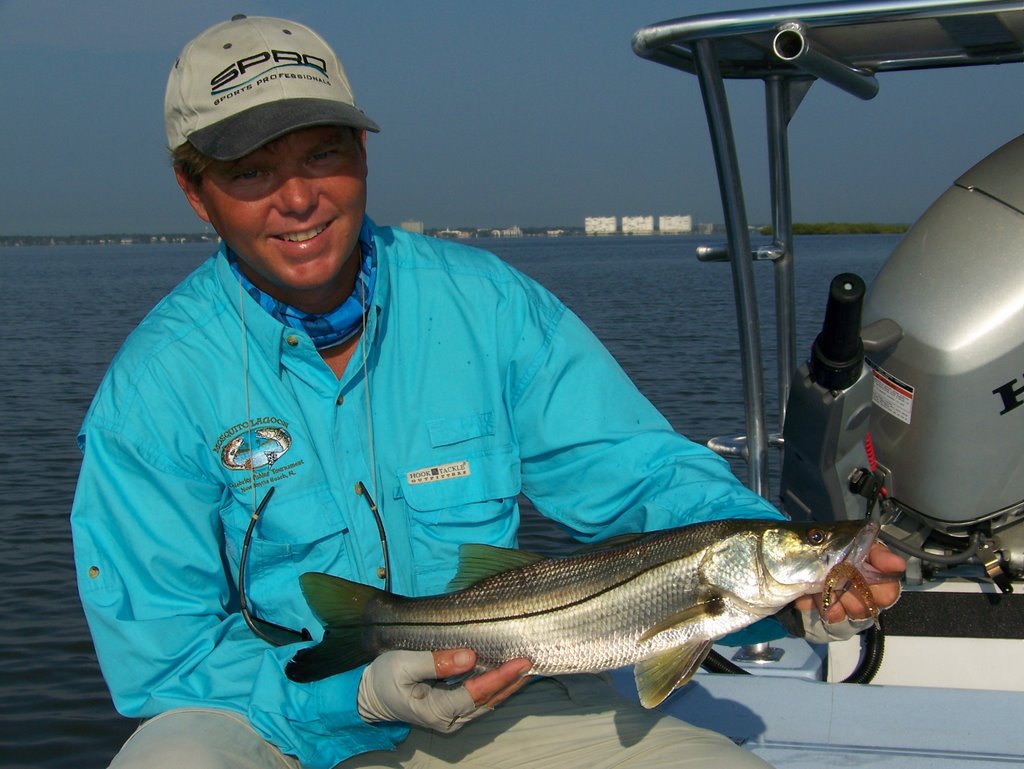
The day began chilly, featuring northwest winds of 15 mph- and did the tarpon ever feel it! Bushwacked by the half-alive ghost of a front from Canada, the silver kings rolled less and struck less. I jumped off one fish of fifty pounds and had another forty-pounder do a see-saw/channel drop cutoff of my double line just before the leader touched the tip-top of my rod. Such is fishing!

Disappointed but not dejected, I ran to the grassflats and consoled myself by catching and releasing a few small seatrout. By midday, the cumulus clouds were building up with the radiant heat of Indian Summer in South Florida, giving fall's early morning strut a real slapdown!

The whole outing would have been far more fertile had the mullet run reached Biscayne Bay. It has not, but hopes run high.

Jan

Friday, September 22, 2006

Fall Staging Begins...


As Helen gets punted towards England by a "cold front", Florida East Coast anglers await the muller run. Though the little critters have not appeared, tarpon and snook are staging at ocean junctures and feeding quite well. On plug tackle armed with a DOA BaitBuster, I caught one 6-pound snook, jumped 2 tarpon around 60-pounds, and released a tiny tarpon around 10-pounds. Waiting for the fall migration is a bit like the savoring anticipation of a first date kiss.
Jan

Wednesday, September 20, 2006

Clash of the Titans?

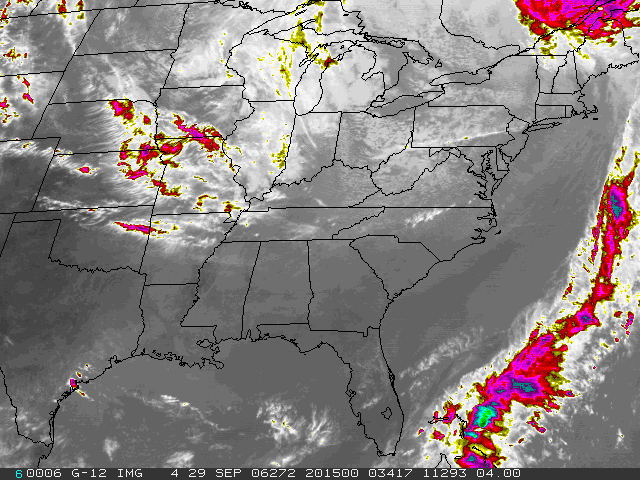
It's quiet on the beaches of Miami. Stars shimmer in the cloudness heavens-all of it bathed in silence. Yet for all the Gold Coast calm, if our limited senses lost limits, we'd be soul-traveling to the east far out to the high seas of the Atlantic where two giant forces are moving towards collision. Though this event may be silent for others, it won't be for me. That's the magic and inspiration.


In a practical sense, I feel every good angler should have a keen weather sense to achieve optimized results and personal evolution.

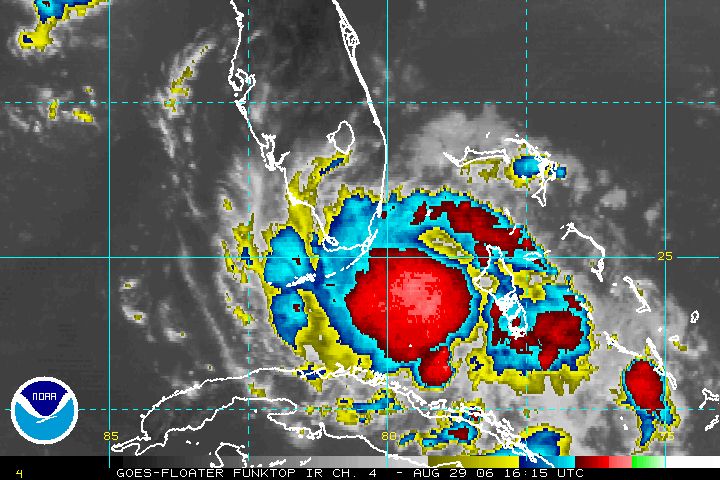
I don't think it's often we find a front and a 'cane so "on course" with each other. Presumably, the 'cane will slide to the North-Northeast as the front eases it up and along.

For me, it's another addition to the planetary scrapbook that keeps me in perpetual awe.

Jan

Saturday, September 16, 2006

Space Coast Fishing Bonanza with Get1Charters...


Space Coast Fishing Bonanza

by

Jan Maizler

Photography by Jan Maizler

Even though it would take another month to complete the angling portion of my Space Coast expedition, the results could not have been any better. Under the shrewd guidance of Captain Bryan Pahmeier, the Indian River off Titusville, Florida yielded a bounty of gamefish.

Fitting in this fishing trip was a bit like people squeezing in the subway- a bit of pushing, shoving, and rearranging, but generally leading to "all hands on deck." What this looked like was a "night-before" scoot from Miami to Titusville on I-95, a trip of four hours. I spent the night at the crisp Hampton Inn at Exit 215, which put me only twenty minutes away from Parish Park where Bryan would launch his boat.

After a night of the excited, tossing and turning sleep that only a true angler understands, I prepared myself and drove down to the boat ramp. I recognized Bryan and his impressive flats rig: it was an 18-foot East Cape Skiff powered by a brand new Honda electrostart tiller handle model.

It was important for us to get a quick start so we could arrive on the flats as early as possible. This strategy would place us at the epicenter of the rising and tipping redfish tails that would greet the early light of dawn. As we headed away from the ramp into a patch of lighter sky that would eventually become the day, Bryan remarked on the excellent conditions.

In no more than twenty minutes, Bryan slowed his skiff down and cut the engine. In five minutes more, he was pointing out the first school of tailing redfish with his trusty pushpole. I flicked out a fifty- foot cast with one of his spin outfits and the plastic jerkbait landed right in front of the tailing fish. It took two easy flicks of my wrist and...pow!... I was hooked up. After an excellent ten minute fight of two long runs and lots of surface thrashes, we released a big redfish over 15 pounds.

Over the next four hours, I stopped counting after redfish number twelve. Amidst countless leaping mullet, rolling dolphin, bellowing 'gators, and circling osprey, we enjoyed nonstop action with Captain Bryan's excellent guiding.

We also spotted numerous tarpon, but I was far more interested in plugging for the snook that Bryan was pointing out. I used a dancing surface plug at first and had three good snook strikes: they would not connect because the bow wave of the strike shoved the plug into the air. As soon as I tossed a jerkbait under that same mangrove point, I had a solid hookup and was soon releasing a 5-pound snook.

We reached a point where I had to call it a day for other commitments, yet I was thoroughly satisfied. There'll be more to report on Captain Bryan and his Space Coast bonanza, but that story and its telling belongs to another place and time...

CONTACT DATA-
Captain Bryan Pahmeier
Get 1 Charters
Titusville, Florida
Telephones- 1-321-698-4381, 1-321-268-5266
Email- get1charters@earthlink.net
Website- www.get1charters.com

Tuesday, September 12, 2006

Looking Forward to Cheeca Lodge...


I am pleased to announce that the world-famous Cheeca Lodge (www.cheeca.com) is on my list of destinations. The location of this magnificent resort is in the heart of Islamorada in the Florida Keys- " The Sport Fishing Capital of the World." Flats Grand Slams are common here, and Islamorada has the largest numbers of huge trophy bonefish in the entire Western Hemisphere, if not the world. Last year, the winter sailfishing offshore featured record numbers of spindlebeaks- over two hundred-being released in three-day tournaments.

The Cheeca mirrors and embodies the same five-star status of the fishing and waters that surrounds it! I'll be writing a great deal more about The Cheeca in the future.

Jan

Friday, September 08, 2006

A Bone is a Bone Wherever It Be...

A fine full moon Friday it was today. The rising sun carved a cornflower blue pocket out of the indigo night sky, providing me with a heavenly bearing as I steered my skiff towards a mangrove-studded beach. Behind me, the moon was dropping down into the horizon, surrendering the very same firmament to the bright yellow adversary it had bested during yesterday's dusk.

This "lune" of a moon was pushing a thick boiling incoming tide around Key Biscayne and into Biscayne Bay. As soon as my depth recorder showed the 15- foot deep channel shallowing where the flat begun, I cut my engine, and eased the anchor overboard. As my skiff pulled tight against the anchor line, I could hear the water rushing by my skiff with a momentum that would demand a bucktail jig of at least 1/2-ounce. In the low light, it was impossible to sight fish the beach flat, so I planned on casting the contoured dropoff until I could see into the water.

I rigged my plug tackle with a 1/2 ounce white Spro bucktail and tipped it with a shrimp tail. I cast the lure upcurrent and fished it along the bottom. The line came tight on the second sweep of the rod and I struck my unseen opponent. After a strong five minute battle, I brought a six-pound green jack alongside my skiff and released it. The next cast produced a five-pound mutton snapper, which I released. Two casts later, I'd caught a three-pound mojarra-this was quite large for this species. The next hour of incoming tide produced this same kind of delightful potluck merry-go-round action.

At this point, the rising sun had given me the visibility into the water I needed. I repositioned the boat farther onto the flat and tossed out a chum tube full of chopped live shrimp about 15 feet "downstream" of my bow. It took about twenty minutes for the scent to do its work, but the wait paid off as two big submarine forms tracked towards the skiff. I made a perfect cast and the lead fish of the pair gobbled my crunchy breakfast offering. The fish fought with the renewed vigor a spring tide current usually bestows on summer's heat-besotted waters. It made three good runs of at least seventy yards, then fifty yards, then twenty yards.

As I brought the fish alongside my skiff, I could see it was between between nine and ten pounds. I reflected that this trophy fish was taken no more that fifteen minutes from the boat ramp and in clear sight of Miami's skyscrapers. I considered the fact that this fish would not have been the slightest bit more exciting if it had been hooked on the atoll flats of the South Pacific or the pancake flats or beaches of Los Roques. Even though travel is one of my greatest passions- even bordering on obsession- ultimately, when I "wet" a line, for me it's always the fish, the fish, the fish!


Jan

Monday, September 04, 2006

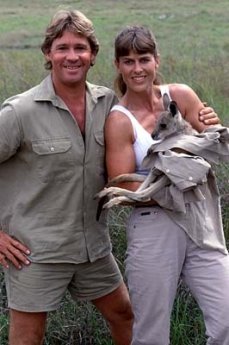
Goodbye, Steve...


In South Florida this morning, the copious showers morphed to heavenly sobs as I opened YahooNews and read the headlines that Steve Irwin was killed by a stingray today in the waters off Cairns.

Steve had a profoundly personal meaning for me- not the least of which were his total lack of pretension, infectious enthusiam, love of adventure, and love for the animal world. He knew nothing of boredom and better yet, no need to be "cool." In this day where matching Supplex ensembles, scarves, and tented caps spawn Lawrence of Arabia clones, Steve's khakis and boots were a real breath of fresh air.

As he swam over a creature that he meant no harm to, the ray reacted wildly as it flexed its body, and drove its barb into his chest in a moment of underwater Caeserian irony. Yet the ray was doing "what it does", as was Steve and he died in his greatest moments of love and inspiration. How many people can lay claim to that? For the future finger-waggers, I'll also point out that "caution" is a relative term that rarely finds its way alongside inspiration or passion...so, take your choice. He did!

Jan

Sunday, September 03, 2006

A British Columbia Fishing Adventure


A British Columbia Fishing Adventure

By Jan Stephen Maizler

Photography by Art Blank

The plans to fish the fabulous rivers and streams of British Columbia with Professional Angling Guide Clint Goyette of Valley Fishing Guides were long in the making: by winter of 2005, my photographer Art Blank and I knew we’d be there in July of 2006. Though there were some interesting assignments that kept me busy in the interim, I especially hankered for Canadian fishing where sight casting for trout and salmon in crystal clear knee-deep water was the method.

The time finally arrived and we landed in Vancouver. We’d secured a rental car well in advance knowing we’d probably be meeting Clint in Squamish or Whistler, which are both simple one or two hours drives from the Vancouver International Airport. A quick call from my cell phone confirmed we’d meet in Squamish. The drive through the beautiful Vancouver was simple, and the further north we went, the more striking the terrain became- it was as if with each few miles traveled on the Sea to Sky Highway, snow-capped mountains sprouted up for our pleasure.

It wasn’t long before Art had driven into the center of Squamish, where we spotted Clint’s SUV. After we picked up some terminal tackle, we lunched at a popular restaurant set right alongside the Squamish River. As we dined on pasta, salads, and cold Molson beer, Clint explained that the recent hot weather that had melted some snow up in the mountains had the rivers swollen with “glacially-silted “ water- this would limit the number of choices of streams, but would not be an overwhelming problem.

After lunch, we caravanned to Whistler, which turned out to be an exquisite resort city. Clint then checked us in to the beautiful Greystone Lodge (www.greystonelodge.com/). We found our two-bedroom suite to be luxurious and provided with all the amenities. After check-in, the afternoon had matured and dusk was not far off. It was time to fish!

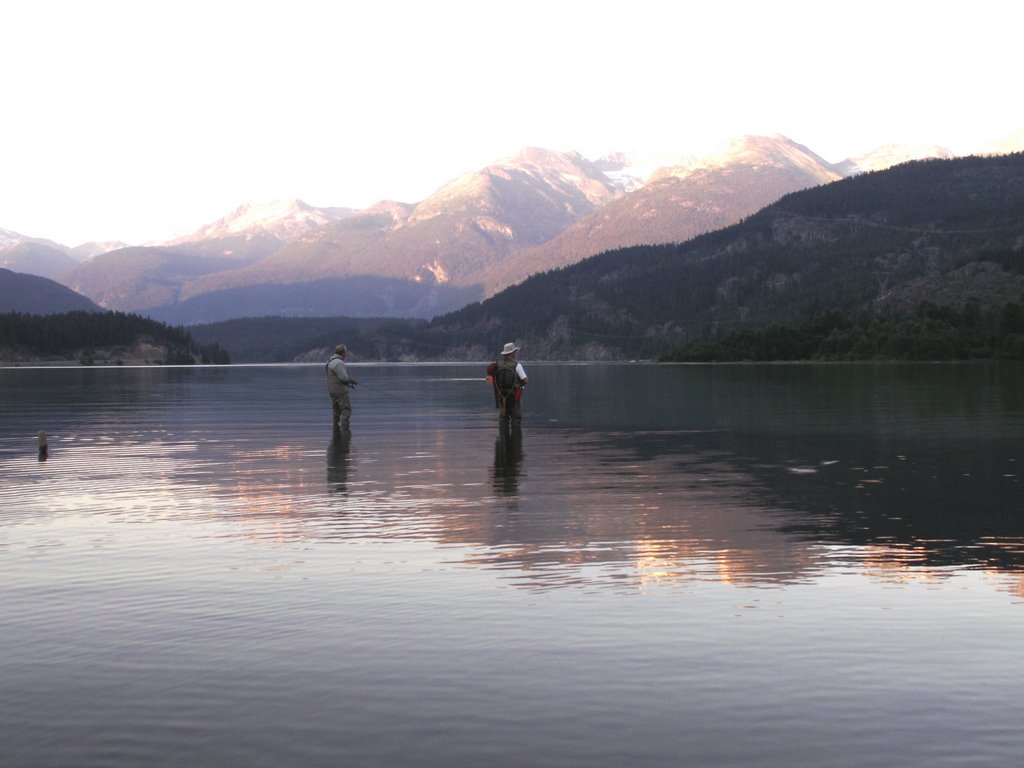
We hopped in Clint’s vehicle and he drove us to nearby Green Lake. We geared up with waders, flippers, and float tubes and walked a short distance to the lake’s edge. After a short period of instruction by Clint, we eased into the water and over to the area where an underwater bank dropped off from three feet to ten feet. As the sun set over snow-capped glorious mountains, the trout started rising on insects. In the next two hours, we released about twenty rainbow trout to 12 inches on ultralight fly and spin tackle. Before we knew it, pitch darkness emerged and encouraged us to quit fishing for that day. After a quick dinner at a fashionable crepe restaurant in Whistler, we retired for the night feeling thoroughly satisfied looking back on the day’s action, and looking forward to the wake-up by Clint six a.m.the next morning for more adventure.

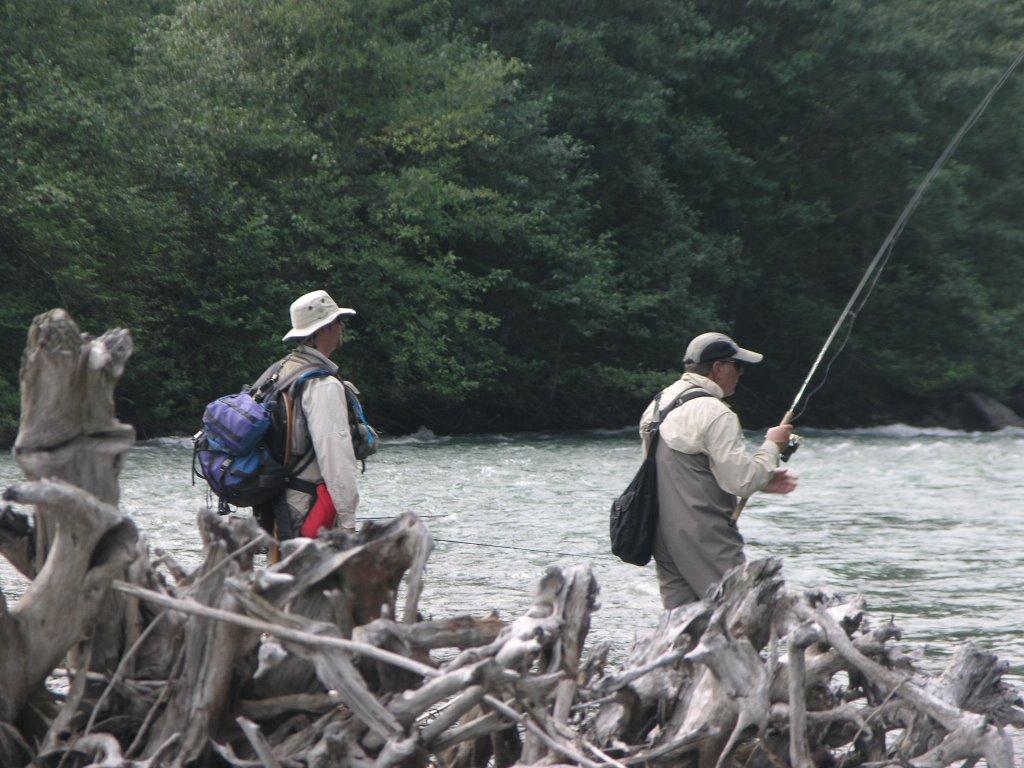
The wake-up knock seemed only an hour or two later, but clearly an eight-hour night had passed. In seemingly no time at all, we were headed north to the streams of Pemberton. We had to access the streams through the bush and when we emerged, Clint found their condition and fishability to be in excellent shape. We were geared up with light spinning tackle and small spoons as well as large spinners. Art recorded our every move with his trusty digital camera. The first few streams held some nice char, and I released one beautiful specimen about five pounds and pulled the hook on two more. As we trekked further down the river system, we saw many Chinook salmon from twenty to thirty pounds. I briefly hooked one of these magnificent fish in knee-deep water, but its’ violent head thrashing threw the barbless hook on the spoon I’d been using. We saw many more salmon on this day, but they were slow to strike. Clint laughed as he explained the advantage a giant Chinook has over the angler once the fish “got its head” and rocketed downstream- there would be no stopping it! As the day neared an end, Art and I were thoroughly impressed: the size of this fish, racing waters, and snow-capped mountains created an enormous thrill for two Florida flats fishermen.

CONTACT DATA:
Oufitter: Clint Goyette/Valley Fishing Guides, Ltd.
Telephone: 1-877-85TROUT, 1-604-938-4458
Email: contact@valleyfishing.com/
Website: www.valleyfishing.com/ -

Thursday, August 31, 2006

At the Crossroads of Indian Summer with Big "E"...


Even though using the term, " Post-Ernesto," has the same oxymoronic tribute and shaky credence as genuflecting to a wind devil of newspapers in some Manhattan alley, we could say conditions momentarily changed-but not much. I only keep my eyes on NOAA, since the commercial channels-mindful of the Nielsen ratings given off by spectacularity ("look at that palm frond wiggling!")- had reporters out in droves in their all-too-familiar foul weather gear. Problem was, there was not much of a problem. It is crucial to be cautious, but "incautious" to go crazy when a threat is not a threat. SOFla. residents engulfed the gas stations and food stores either stoked by commercial TV's Ernesto fanfare or under the dark spell of the PTSD panic Ernesto dug up from the cyclone graveyard with not-yet-dead ghosts like Wilma, Katrina, Ivan, et. al. Max Mayfield called the storm "mediocre", which may be a meteorological way of saying, "not much."

So the secret, then, is really, stay calm and carefully watch the development or devolvement of the storm system, prepare with temperate timeliness, and stay abreast with NOAA.

Back in the world of summer, early mornings on the flats of South Biscayne Bay has some bonefish moving along and some rolling tarpon in some basins and channels-if you know where to look.

I'll be looking towards reporting on a July trip I made to the streams of British Columbia with Valley Fishing's Clint Goyette for char and chinook as well as look forward to Space Coast redfish and Maine stripers.

Jan

Sunday, August 20, 2006

Indian Summer Bonefish and Travel Talk...

This last Friday saw good numbers of dawn tarpon, permit, and bonefish. As a " Japanese sunrise" unfolded, I tossed a live crab upcurrent of a stilt house. In moments, a big permit's bulged head surged through the water's surface, gulped the crab, and cut me off on the pilings in less time than this sentence takes to read. After running a mile north to Mashta Point, I found tarpon rolling in Cape Florida-they were "happy," but unresponsive to flies, jigs, plugs, crabs, or shrimp. How different these fish are from their silvery comrades in North Bay! As the sun rose, I eased up on a sandbar that featured a good flow of falling tide: a bit of chum and in a flew a nice-sized bonefish. A quick cast well upcurrent of the fish sunk the shrimp to its level and the bone gulped it down. Five minutes later, I released a beautiful six-pound specimen into summer seas and an eastern sun.

When my engine starting tilting up by itself moments later, I tried the engine tilt switch and found it was shorting out. I managed to stabilize it long enough to come back to the marina and made a short day of it. I later learned more about what I could have disconnected to stop that "Sorcerer's Apprentice" behavior from my mechanic-next time (never, I hope), I'll know better.


Back in the shade, I dwelled on rememberances of "places past". I had some time and chronicled some destinations-each place was a uniquely-colored building block that, together with the rest, made a mosaic of recollected adventures, pleasures, and friends. Some destinations were deliberately for fishing, where I lugged rod tubes all over the globe. Other destinations offered fishing as a co-feature rather than a primary purpose, and then I generally toted a small travel pack with a five-piece rod and ultralight reels. Still others revealed fishing I did not anticipate and the best I could do was dream and drool. Here are some of them. Maybe you've been there or you plan on going....In any case, good luck and safe traveling!

Jan Maizler Angling Partial Travelography

Alaska-
-Anchorage
-Juneau
-Ketchikan
-Skagway
-Prince of Wales Island

Bahamas-
-Abaco-
--The Marls
--Sandy Point
--Green Turtle Cay
-Andros-
--North and Middle Bights
--Fresh and Cargill Creek
--Small Hope Bay
-Bimini, North and South
-Grand Bahama Island-
--Water Cay
--South Side
-Long Island-
--Deadman’s Cay Region
-Little San Salvador Island
-Coco Cay (Little Stirrup)

Belize-
-Goff’s Caye
-Belize City
-Belize River
-"Big" Flat

Bonaire-
-Salinas/salt pans
-Lac Bay

British Columbia-
-Masset, Queen Charlotte Islands
-Whistler
-Pemberton

Central America-
-Costa Rica- Tortuguero Canals
-Panama- Gatun Lake

Curacao-
-Willemstad
-Caracasbaai
-Piscaderabaai
-Westpunt

Fanning Island, South Pacific-English Harbor

Florida-
-Jupiter
-Sanibel/Captiva/Pine Island/San Carlos Bay
-Rookery Bay/Naples
-Biscayne Bay
-Key Largo
-Islamorada
-Marathon
-Little Torch Key/Contents
-Key West
-Marquesas
-Placida
-Punta Gorda
-Charlotte Harbor/Cape Haze
-Mosquito Lagoon/Indian River

Jamaica-
-Port Antonio
-Black River

Grand Cayman Island, British West Indies
Little Cayman Island, British West Indies

Mexico- Riviera Section-
-Cabo San Lucas
-Puerto Vallarta
-Acapulco
-Mazatlan

Mexico- Yucatan/Quintana Roo State-
-Cozumel- flats, drop, and offshore
-Xel Ha/ Tulum south flats
-Ascension Bay
-Bahia Espiritu Santo

Bay Islands, Honduras-
-Roatan
-Moret
-Barbaretta

Windward and Leeward Islands
-Jost Van Dyke, British Virgin Islands
-St. Thomas, U.S. Virgin Islands
-St. Martin
-Antigua
-Saint Lucia
-Dominica
-Martinique

American Errata-
-Cape Hatteras, North Carolina
-Franklin, North Carolina
-Cowee Valley, North Carolina
-Long Island, New York
-Portland, Maine
-Ocean City, Maryland
-Savannah, Georgia
-St. Augustine, Florida
-San Francisco Bay, California
-Myrtle Beach, South Carolina

Jan Maizler Partial Travelography/Residence

Antilles-Lesser and Greater-
Haiti
San Juan, Puerto Rico

Jamaica-
-Montego Bay
-Orracabessa-Residence
-Ocho Rios
-Kingston
-Spanish Town
-Mandeville


Bahamas-
-Freeport/Lucaya
-New Providence/Nassau
-Salt Cay

Central America-
Mexico-
-Mexico City- Residence
-Tasco
-Cuernavaca
-Guadalajara
-Oaxaca-Residence
-Merida-Residence
-Playa del Carmen

Costa Rica-
-Limon

Panama-
-Colon
-Panama Canal

Belize-
-Belize City

Europe-

England-
-London

Austria-
-Vienna
-Salzberg

Lichtenstein

Switzerland-
-Lucerne

Iberia

Portugal-
-Lisbon

Spain-
-Barcelona
-Madrid
-Mallorca-
--Palma
--Valdemosa

Mediterranean

France-
-Paris
-St.Tropez/Nice/Blue Coast
-Marseilles

Gibraltar

Greece-
-Athens

Italy-
-Lake Como
-Florence
-Naples
-Positano
-Salerno
-Sorrento
-Civitivecchia
-Rome
-Venice

Israel-
-Acco
-Jaffa
-Golan Heights/Mount Herman
-Dead Sea/Masada
-Haifa
-Tel Aviv
-Jerusalem
-Eilat

Morocco-
-Casablanca
-Marrakesh

Morocco, Spanish-
-Ceuta

Turkey-
-Istanbul
-Kussadasi

Windward, Leeward, and ABC Islands-
-St. Johns, Trunk Bay
-St. Kitts
-Barbados
-Grenada
-Trinidad
-Aruba

South Pacific-
-Tahitian Islands-
--Tahiti/Papaette
--Bora-Bora
--Moorea
-Hawaiian Islands
--Hawaii/Big Island
--Honolulu/Oahu
--Lahaina/Mauai
--Kauai

Canadian Maritimes-
--Saint Martins, New Brunswick
--Saint John, New Brunswick
--Halifax, Nova Scotia

Jan Maizler
www.flatsfishingonline.com/

Wednesday, August 16, 2006

The Dog Days

Ambient heat pervades the biosphere. Nightime sweltering skies sound soft, unless the rolling leviathan thunderheads move in, throwing fiery bolts and heaven-shaking booms that say, "Thor's hammer is here." The rising sun burns up the blustering buildup bullies. Later in the afternoon, the very same heat will recreate them over the Everglades when they'll begin their seaward march. But midday, things go hot and flat, save the leg-grinding droning chirp of Cicadas, cocky in the shaded sanctuary of seagrape trees.

The tarpon still are providing early morning excitements that break this monotony. But the vibrancy comes from dreams of mullet streaming down the coast, bringing the Fall Run Circus- the sooner, the better. The headlines this dawn announce actor Bruno Kirby's death and a resolute inner voice says once again, "make the most of this very tiny window" as the day's heat ramps up to pull the sweat from us all.

Jan

Sunday, August 13, 2006

Florida's Space Coast

Space Coast Florida Attractions and Features for Fishing Families

By

Jan Stephen Maizler

Up until the present, my contact with Florida’s Space Coast was basic. Yet in the overall planning I did for an upcoming story on Space Coast redfishing with Captain Brian Pahmeier (www.get1charters.com/), I learned a great deal more. The cities of Palm Bay, Melbourne, Cocoa Beach, and Titusville comprise the major cities of the Space Coast. While four cities may seem a modest constituency, you’ll quickly learn - as did I - that this covers a huge amount of pristine lagoon, river, marsh, and “beach and bluff” habitat. If you’re arriving from an urban area, you’ll quickly realize that the local populace has succeeded in preserving not just the land, but the sky as well: there are blessedly few high-rise buildings. In Miami, these structures are a blight to sighting the Heavens - not so, on the Space Coast!

It would take many days to deeply experience all the wonderful features and attractions that would delight the traveling angler and their family. What really ramped up my familiarity (and subsequent love of this area) was my involvement in the Florida’s Space Coast “Blast-Off” Media Tour. What follows is a gosh-honest chronicle of what I experienced there and my appraisals for outdoors readers who are devoted to exploration and adventure as well as fishing.

We arrived at the Crowne Plaza Melbourne Oceanfront (1-321-777-4100) at 2605 North A1A Highway in Melbourne. This was to be the place we would be lodged and our base of operations. I do not recall seeing a single boat in the ocean behind this hotel resort for three days! Surf conditions were likewise calm and pristine. Pelicans would gather every morning and evening to dive on the copious bait schools: in observing this, I was glad I’d brought some light tackle up from Miami. I fished to the bait schools during low light times with white Spro bucktails and DOA small TerrorEyz with good effect, catching jacks, mackerel, and even a small bonito. I found I had to wade out to waist deep water to get off a far-enough cast.

As to the rooms and amenities at the Crowne Plaza, I was thoroughly satisfied. The bedrooms were extremely sumptuous and well appointed with a full complement of snacks and electronic features, which included wireless Internet capabilities. The staff was friendly. Before leaving, we enjoyed the breakfast buffet, which featured the full array of fresh and chef-prepared foods as well as fresh raspberries, huckleberries, smoked salmon, and croissants as pleasant additions. The view from our room on the sixth floor featured an ocean expanse of an uncluttered sea and sky. Indeed, the conditions were so calm that the sky and ocean blended into a huge blue-green medium unfettered by a horizon line. Of note is that the hotel sits near the south end of the Space Coast, which would mean planning on drives of about an hour to get around the region.

Our first stop featured a drive along the Indian River up to Historic Cocoa Village for dinner at the Cara Mia Riverside Grill (1-321-639-3388). While the group bonded, Captain Rodney Smith joined us and talked about the specifics of the Space Coast sport fishery. The food was entirely pleasing and featured Italian dishes cooked with subtle skills. The main courses were supplemented with appetizers like fresh bruschetta and tasty mussels in tomato garlic broth. The wines were quite good as well. My impression of this friendly, well-situated establishment included visualizing Cara Mia as an ideal setting for recounting and celebrating a day of fishing the Cocoa Area.

Our drive from the restaurant to our next stop was but a few minutes. We arrived at a pier where Island Boat Lines (www.islandboatlines.com/) ( 1-321-302-0544) had a large old-style paddleboat awaiting us for a sunset cruise. Our group boarded the vessel and in no time at all, we eased off into the calm river waters under the setting sun. We declined some sumptuous dishes, but gladly grabbed some ice cold Heinekens and headed for the top deck to get the best view. It again became instantly apparent that Big Development had not been allowed or encouraged to sink its teeth into this delightful region. As we eased along and dusk blended into night, we saw jumping mullet and rolling porpoises galore. It occurred to me that the best way to end a day on the water is to spend the evening on it as well!

The next day dawned with a full morning to night schedule, and thus demanded a hearty breakfast to provide nutrient and caloric fuel. Our two-car SUV caravan headed to Cape Canaveral Inlet, where a large table at Grills Tiki Bar and Restaurant (1-321-868-2226) awaited us. This was clearly a full-blown seaside Florida eatery with excellent around the clock food. It was decorated in a fun maritime fashion and offered adjacent views of the cruise ships. Grills Tiki Bar and Restaurant is located at the epicenter of Cape Canaveral “action” and enjoys a broad-based customer following.

Our next destination on the tour was Kennedy Space Center Visitor Complex (www.kennedyspacecenter.com/), an absolutely essential place to not only visit, observe, and learn- but more importantly, to experience. As members of a press tour, we also got an incredibly in-depth look at the actual workings of N.A.S.A. (www.nasa.gov/). Firstly, anglers and their families will be astonished by the experience, strength, and hope that have been the foundation of the N.A.S.A. program. Secondly, fishing folks- who are aquanauts- should easily identify with the exploratory passion, technical expertise, and cosmic reverence of the wonderful astronauts of the program from inception to present. When you watch men walking on the moon with Planet Earth hanging high in the sky above them, you’ll feel a keen sense of respect and perspective that will quicken the philosophical foundations of why and how you should fish.

There are many images and experiences that whirl around in my mind from Kennedy Space Center, yet there are two that stand out with the strongest color and clarity. The first was a delightful question and answer session over lunch with astronaut Storey Musgrave, whose vision for mankind’s relationship to science, space travel, and the human race itself was deeply enriching. The second was the obvious and demonstrable excellent stewardship for the marine, marsh, and beach environment that this program has been able to achieve and maintain. Wildlife abounds on N.A.S.A. grounds! As our tour bus took us deep into in the program’s property, I saw resplendent bird life aloft and wading as well as lots of redfish tailing over pristine flats and creeks. Visiting and experiencing Kennedy Space Center Visitor Complex is sure to give you and your family a day to remember. Their contact number is 1-321-449-4444.

Like all good experiences, the day passed quickly and all of a sudden it was six o’ clock and time to leave for dinner. Our little caravan quickly reassembled itself and headed for the famous Dixie Crossroads restaurant (www.dixiecrossroads.com/) in nearby Titusville. This landmark eatery is more than a visit- it’s an event! The owner, Laurilee Thompson, has seen to it that a staggering array of fresh ocean-caught seafood is available in various preparations that are sure to please any palette. Added to this incredible base are steaks, ribs, soups, salads, and Old Florida desserts that guarantee a home run dining triumph for all visitors. Their phone number is 1-321-268-5000. As I lingered over some key lime pie and iced coffee, Laurilee informed our group that she’d be joining us on that evening’s kayak trip.

As nightfall settled over the Space Coast, Laurilee lead our caravan deep into the Merritt Island National Wildlife Refuge. We made a brief stop to watch some manatees feeding alongside Haulover Canal Bridge. In five more minutes, we arrived at our kayak launching area. This part of the tour was to be headed up by A Day Away Kayak Tours (1-321-268-2655) – (www.adayawaykayaktours.com/). Owner Mike Mahn greeted our group and gave us a kayak safety and operation talk as well as discussing our paddling itinerary. Our nighttime water safari would take us from the northern reaches of the Indian River through Haulover Canal into the Mosquito Lagoon. This particular kayak tour featured Biolumenescent Amazement, which is caused by glowing organisms in the water that give off a “cold light” as your paddle goes through them in the water. Although the ambient light of the half moon cut down on optimal darkness for viewing this phenomenon, it was easy to see the fiery trails of these organisms if you kayaked in the shadows of the tree lines. Other highlights included up-close and personal contact with porpoises swimming alongside us as well as the cascades of mullet that showered over our kayaks as we paddled through them. I did see some tarpon strike the mullet, but my not bringing a rod was dictated by the parameters of this itinerary; and besides, the nighttime magic of glowing fish trails under a serene summer nighttime sky was completely sufficient! The trip took two hours and was a delightful adventure. This day and the entire Tour was something that will find itself in my Hallway of Cherished Memories.

Some of the best news I have to report is that my monster redfish trip with Captain Brian Pahmeier remains in the near future and not in the past. This means I’ll be journeying to the Space Coast very soon, a trip I’m sure I’ll be taking again and again.


Jan Maizler
www.flatsfishingonline.com/
http://flatsfishingonline.blogspot.com/

Friday, August 11, 2006

Back from the Space Coast!

I just returned from a Media Tour of Melbourne, Cocoa, and Titusville. These cities surround and abut the Indian and Banana Rivers, as well as the Mosquito Lagoon. These waters are home to probably the best shallow water fishing for monster redfish and seatrout in the entire western hemisphere. I'll be reviewing this tour(which includes an in-depth look at the waters of the Kennedy Space Center) in the near future.
Jan

Saturday, July 29, 2006

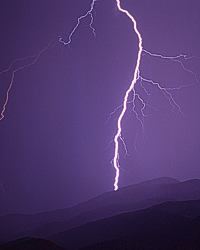
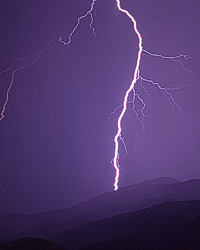
Lightning Safety Guidelines from NOAA posted on the Web


CREDIT FOR POST AND PHOTO: NOAA
PLEASE SEE NOAA WEBSITE FOR MORE VERIFYING DATA

Lightning Safety
Lightning is the MOST UNDERRATED weather hazard. On average, only floods kill more people. Lightning makes every single thunderstorm a potential killer, whether the storm produces one single bolt or ten thousand bolts.In the United States, lightning routinely kills more people each year than tornadoes and hurricanes COMBINED. Tornadoes, hail, and wind gusts get the most attention, but only lightning can strike outside the storm itself. Lightning is the first thunderstorm hazard to arrive and the last to leave.Lightning is one of the most capricious and unpredictable characteristics of a thunderstorm. Because of this, no one can guarantee an individual or group absolute protection from lightning. However, knowing and following proven lightning safety guidelines can greatly reduce the risk of injury or death. Remember, YOU are ultimately responsible for your personal safety, and should take appropriate action when threatened by lightning.While no place is 100% safe from lightning, some places are much safer than others


Where to Go
The safest location during a thunderstorm is inside a large enclosed structure with plumbing and electrical wiring. These include shopping centers, schools, office buildings, and private residences.If lightning strikes the building, the plumbing and wiring will conduct the electricity more efficiently than a human body. If no buildings are available, then an enclosed metal vehicle such as an automobile, van, or school bus makes a decent alternative.


Where NOT to Go
The safest location during a thunderstorm is inside a large enclosed structure with plumbing and electrical wiring. These include shopping centers, schools, office buildings, and private residences.If lightning strikes the building, the plumbing and wiring will conduct the electricity more efficiently than a human body. If no buildings are available, then an enclosed metal vehicle such as an automobile, van, or school bus makes a decent alternative.

Not all types of buildings or vehicles are safe during thunderstorms. Buildings which are NOT SAFE (even if they are "grounded") have exposed openings. These include beach shacks, metal sheds, picnic shelters/pavilions, carports, and baseball dugouts. Porches are dangerous as well.Convertible vehicles offer no safety from lightning, even if the top is "up". Other vehicles which are NOT SAFE during lightning storms are those which have open cabs, such as golf carts, tractors, and construction equipment.


What To Do
Once inside a sturdy building, stay away from electrical appliances and plumbing fixtures. As an added safety measure, stay in an interior room.If you are inside a vehicle, roll the windows up, and avoid contact with any conducting paths leading to the outside of the vehicle (e.g. radios, CB's, ignition, etc.).


What NOT to Do
Once inside a sturdy building, stay away from electrical appliances and plumbing fixtures. As an added safety measure, stay in an interior room.If you are inside a vehicle, roll the windows up, and avoid contact with any conducting paths leading to the outside of the vehicle (e.g. radios, CB's, ignition, etc.).
Lightning can travel great distances through power lines, especially in rural areas. Do not use electrical appliances, ESPECIALLY corded telephones unless it is an emergency (cordless and cell phones are safe to use).Computers are also dangerous as they usually are connected to both phone and electrical cords. Do not take a shower or bath or use a hot tub.

Lightning Safety Plan

A lightning safety plan should be an integral part of the planning process for any outdoor event. Do not wait for storm clouds to develop before considering what to do should lightning threaten! An effective plan begins LONG before any lightning threat is realized. You can't control the weather, so you have to work around it!Detailed weather forecasts are accurate only out to seven days at best, but outdoor events often are planned many months in advance. Because of this limitation, every outdoor event coordinator should consider the possibility of lightning, especially if the event is scheduled during the late spring to early autumn months.

The key to an effective lightning safety action plan lies in your answers to the following questions:
Where is the safest lightning shelter?
How far am I (or the group I am responsible for) from that location?
How long will it take me (or my group) to get there?

Knowing the answers to these questions will greatly reduce your chances of being struck by lightning, provided you know them BEFORE thunderstorms threaten!

The 30/30 rule
Any lightning safety plan should incorporate the 30/30 Rule. The 30/30 Rule states that people should seek shelter if the "Flash-To-Bang" delay (length of time in seconds between a lightning flash and its subsequent thunder), is 30 seconds or less, and that they remain under cover until 30 minutes after the final clap of thunder.

A 30 second lead time is necessary prior to a storm's arrival because of the possibility of distant strikes. A 30 minute wait after the last thunder is heard is necessary because the trailing storm clouds still carry a lingering charge. This charge can and does occasionally produce lightning on the back edge of a storm, several minutes after the rain has ended.Studies have shown most people struck by lightning are struck not at the height of a thunderstorm, but before and after the storm has peaked. This shows many people are unaware of how far lightning can strike from its parent thunderstorm. DO NOT wait for the rain to start before seeking shelter, and do not leave shelter just because the rain has ended.

Safety Guidelines

For YOU!
Plan Ahead! Make sure you get the latest weather forecast before going out. Get it here!Carry a NOAA weather radio (found at most electronics stores) or a portable radio with you, especially if you will be away from sturdy shelter (such as boating, camping, etc.). This way you will always be able to get the latest forecast. At the very least, the reception of an AM radio will have static created by lightning. So if you hear the static, keep an eye to the sky as a thunderstorm may be nearby.

If thunderstorms are expected and you go ahead with your planned outdoor activity, have a lightning safety plan in place. Upon arriving on-site, determine how far away your shelter is in case lightning threatens. Remember to account for the time it will require to get to your safe location. If storms threaten or the sky begins to darken, monitor the sky for lightning.

If lightning is seen and the time delay to its subsequent thunder is 30 seconds or less, or if thunderclouds are building overhead, implement your lightning safety action plan without delay!Remember the "Flash to Bang" method to estimate lightning from your location - If you see lightning, count the number of seconds until you hear thunder. Divide the number of seconds by five to get the distance the lightning is away from you. For example, if you see lightning and it takes 10 seconds before you hear the thunder, then the lightning is 2 miles away from you (10 divided by 5 = 2 miles, too close!).Do not resume outdoor activities until 30 minutes after the last thunder clap.

THIS IS A PUBLIC SERVICE/PUBLIC INFORMATION ATTEMPT. SEE THE NOAA WEBSITE FOR FULL INFORMATION.

Tuesday, July 25, 2006

Back From British Columbia !

A great big hearty thanks to Naden Lodge ( www.nadenlodge.com/) for a fantastic stay that provided me with 14 chinook salmon to 21 pounds and 17 coho salmon to 11 pounds. The food, lodgings, guiding, vessels, guides, and environment were outstanding! Captain Brian Hillier, we'll be coming back as soon as we can to your beautiful lodge in Masset, Queen Charlotte Islands!

Another big thanks to guide Clint Goyette of Valley Fishing Guides (www.valleyfishing.com/) for two days of great fishing in and around the snow-capped mountains around Whistler and Pemberton. I stopped counting the rainbow trout we released, but the big memories were the striking colors of a 5 pound char I released as well as my brief hookup of a chinook of about 35 pounds in knee- deep water!

I'll be writing about these exotic destinations in the near future.

Jan Maizler

Friday, July 14, 2006

Posted Permit Article by Jan


SEEN IN THE MAR/APR 2006 ISSUE of South Florida Sport Fishing Magazine

Written by Jan Maizler

Stalking powerful permit on the ultra-shallow flats presents a new level of challenges. Review these tips and tactics for making the most of your Florida Keys skinny water adventure Fishing nomenclature names the permit Trachinotus falcatus. Maybe two of the last syllables is the perfect place to begin, meaning that if permit could talk, “not-us” would be their immediate response as to whether they felt at home on the flats. Indeed, when permit prowl skinny water for a meal, they are considered by savvy shallow water anglers to be a great challenge. This is factual, because permit are flats visitors - not residents, like bonefish. And like most visitors, they tend to be more cautious in less than optimal and familiar environs.Experienced anglers know that when permit are hanging offshore in close proximity to structure such as reefs and wrecks, they are not terribly hard to catch. That's where they generally live. Like many bottom dwelling species, permit do not use structure as ambush points, but rather as buffet tables for crunchy crab entrees. Ditto, for easily accessed inshore deep-water lairs like Key West Harbor. Hooking a fresh crab on a jig and easing it through a chum slick to the harbor bottom is a method that catches them quite frequently.

The key to understanding permit on the flats and effectively pursuing them there is to realize that these fish have learned that coming ashore to feed in the ultra-skinny shallows offers a bountiful, bellyful experience. Mutton snapper did the same off Key West for many years, but they were eventually decimated by commercial fishing. Cobia still exhibit this same behavior when they enter the shallows off Tampa Bay.In Florida, skinny water flats fishing for permit begins in Miami's Biscayne Bay and extends all the way south past Key West to the Marquesas, an area worthy of being dubbed the Permit Coast.

The Florida Keys can rightfully feel proud that this area is unique to the entire planet and is the epicenter for world record Atlantic permit fishing; some of the fish are well over fifty pounds!Again, successful permit fishing on Keys flats addresses the idea that visiting the ultra skinny plateaus is a part time experience for these fish- and you can bet that an exit strategy is always in place. Involve this fact in your poling strategies and stick to the deeper edges of flats as well as working flats slopes that abut channels and contours leading into deeper water. If you couple this with the kind of crunchy, rocky bottom that holds crabs and such, you're in prime skinny water permit territory.

Fishing the flats along the Permit Coast should be considered a year-round possibility that only avoids periods when cold fronts drive water temperatures below the mid-seventies. This approach is less arbitrary and forces you to consider and include all the between-front, warmer water days of south Florida's springtime in addition to the remainder of the year.Your consideration of permit as a cautious visitor to the flats can be maximized by using wind in your strategy.

All experienced anglers who ply Florida Key's shallows know that windier days on the flats allow closer and shorter casts to their quarry. This is because wind breaks up the water surface and disguises the image of angler and skiff. In addition, the countless wavelets muffle the sound of any fly, lure, or bait as it hits the surface, as well as allowing slightly heavier lines and tippets.You'll often find these brisk conditions from February through early May. The wind may be over twenty knots and you'd normally decline a long trip to the flats. As long as you can make a safe passage, you might want to reconsider; since most permit cruising the ultra shallows on these days are much less spooky. They'll also be hungry as winter waters give way to springtime conditions. Somewhat unlike tarpon, permit are generally happy with windy conditions.

Some anglers and guides hold the opinion that permit leave the flats for offshore spawning during April and May. However, since they do not migrate en masse as a giant silver cloud, you can rest assured that you will find some permit there. I always have and you will too.

Perfecting Permit Presentations-Now that you've crossed the bumpy bays of early spring, you'll find it especially gratifying to have the luxury of brisker weather so you can use heavier tackle to shorten your battles with these powerful fighters. Beefed- up tackle will enable fish to be released with more vigor, thus they will be less subject to predation by their ever-present skinny water enemy, sharks. You can feel free to use 12 lb. spin and plug tackle and a double line at the business end. Fly gear can be nine-weight or even ten, because of the need for casting power in the midst of influential wind forces. As south Florida heads into summer, the waters along the Permit Coast from north of Key Largo to south of Key West often flatten and grow calm like a country lake. These conditions will make it easier for you to see permit cruising, tailing, and pushing water - conversely, spooky permit will be able to see and hear you and your skiff with greater acuity in these same glassy conditions. Now is the time to start lengthening your casts, so that you won't be spotted before you make your presentation. The best way to increase your casting distance is to lighten the pound test of your monofilament line or decrease the diameter of your super-braid, as well as increase the length of your spinning or baitcasting rod. For fly tackle, calm water permit tactics may involve dropping down to an eight-weight outfit.

When faced with summer like conditions on the flats, presentations to cruising permit should “lead” the fish a bit more. Baits like live shrimp and crabs should be smaller to lighten their impact on the ripple free surface. Leaders should be longer and lighter on all types of tackle. On fly gear, I recommend fluorocarbon for building a leader in its entirety. On spinning or plug tackle loaded with monofilament or fiber running line, try 3- to 5-feet of 15 lb. fluorocarbon leader. During the calmest conditions, you want the impact of your presentation on the water to be as stealthy as possible!You may have heard that with tailing permit - regardless of the conditions - you have to “drop it on top of them” to get their attention. Don't interpret this as instructions to land your presentation right on their heads. The usual advice for casting lures or flies to a tailing permit that is intently distracted by its foraging activity, is to get the presentation close enough for the fish to sense that another feeding possibility has presented itself. When fishing with live shrimp and crabs, many guides encourage their clients to cast past and forward of the permit and bring the bait right across the surface to the tailing fish, and then let the live bait drop to the fish's eye level. The truth is that both of these methods work.

Super-braids and flats permit - a match made in heaven.
You will find that fishing braided line such as PowerPro may work to your advantage in two focal situations when using spinning or baitcasting tackle. The first is when you are pursuing permit on the flats where any abundance of rock piles, reefs, and/or sea fans demand that you use a line that has extreme abrasion resistance to optimally cope with these obstructions. The second situation concerns those glass-like calm conditions where long casts and faraway hook-sets are necessary. You'll appreciate a line that not only casts a great distance, but one that has virtually no stretch. My choice in these situations is 8 or 10 lb. PowerPro which has the ultra-thin diameter of about 2 lb. monofilament. If I strike a permit at 60 feet away with a two foot long sweep of the rod, I know my hook essentially moves two feet, substantially more than stretchy monofilament nylon. The length of my hook-sweep will of course be affected by the length and material of my leader, which is why I use no more than five feet of fluorocarbon leader. Fluorocarbon is less stretchy and less visible than a comparable setup constructed of monofilament.

Those in-the-know fish it slow!
Considering permit are in the jack family, some anglers practice the idea of "bringing the jack out of the permit" in their retrieve style - Do Not Do That! Rather, bring out the pompano and palometa instead. In contrast to permit, jacks are voracious, highly aggressive bullies that run down, corner, and ambush terrified finfish. When was the last time you saw a jack attack and gobble a crab or sea urchin off the bottom? Jacks want movement- but permit feed on hard shelled life forms that hide in weeds, sea grass, and in the sandy bottom. Generally, permit prey uses the freeze-and-hide defense, rather than the fleeing defenses that pilchards, mullet, and sardines utilize on jacks.A close look at the fish's architecture also reveals exactly how they eat. Permit are armed with crushers versus teeth, which verifies the "hard bodied" prey assumption- clams, lobsters, urchins, and crabs are easily crushed. If you're casting live shrimp at permit, give the fish minimal line on the strike by just extending your rod tip and coming tight. This is because permit's powerful mouths make short work of a shrimp's comparatively soft body. The rounded hard head of a permit verifies the ease with which evolution gives this fish the ability to pin its prey against the ocean floor. While a large sickle tail provides plenty of power and stabilization when tailing and head-down feeding. A jack's feeding experience is primarily a horizontal pursuit, while a permit is more of a vertical pin and crush feeder. This has enormous implications when considering a presentation style. On the flats, a still-fished crab is really the most comfortable encounter for a permit.

The challenge that drives fly-fishermen crazy when stalking these silvery speedsters on that tackle is simply that most flies don't really look like a realistic representation of what permit generally eat. Combine this with a lush, massive living biomass underfoot on the flats and it's easy to see why permit would ignore your vise-created concoction for the natural crunchy stuff - the kind that scurries around like a spider and disappears into the sand. For fly-fishermen, the key to overcoming this challenge is enticing permit to take your fly with a combination of a realistic-enough appearance coupled with an even-more realistic retrieve style. For permit on fly, you may very well find that at the moment of truth, no retrieve is the best retrieve of all!Pleasing permit offerings-Although this list is far from extensive, it does chronicle the prime choices.

Flats anglers with any level of experience know that permit will grab many baits, lures, and flies as long as they are properly presented. But remember that if you want to really stack the odds in your favor, fish a live crab. If you're looking for the greatest challenge, pursue them on fly.

Other Baits and Artificials
*Live shrimp *Live blue crabs *Live hermit crabs *Live spider crabs *Fresh sand fleas *D.O.A. Shrimp *D.O.A. Crab *SPRO Bucktail in Pink Shad *BackBone Jig in Brown *Chernobyl Crab fly

If you are new to the flats, do not have a flats boat, or are a seasoned angler visiting our state, it will be essential to hire an experienced permit guide. The best are often booked a year in advance - do your research and call them as early as you can. When I am doing a story, I use the following guides when I fish the Permit Coast-Miami/Biscayne Bay: Captain Joe Gonzalez 305-798-0841 Upper/Middle Keys: Captain Greg Poland 305-852-9940 Lower Keys: Captain Fernand Braun 305-872-9004 Key West/Marquesas: Captain Tom Rowland 305-294-7447

Sunday, July 09, 2006

Fins Reach Out Across the Sea !!!


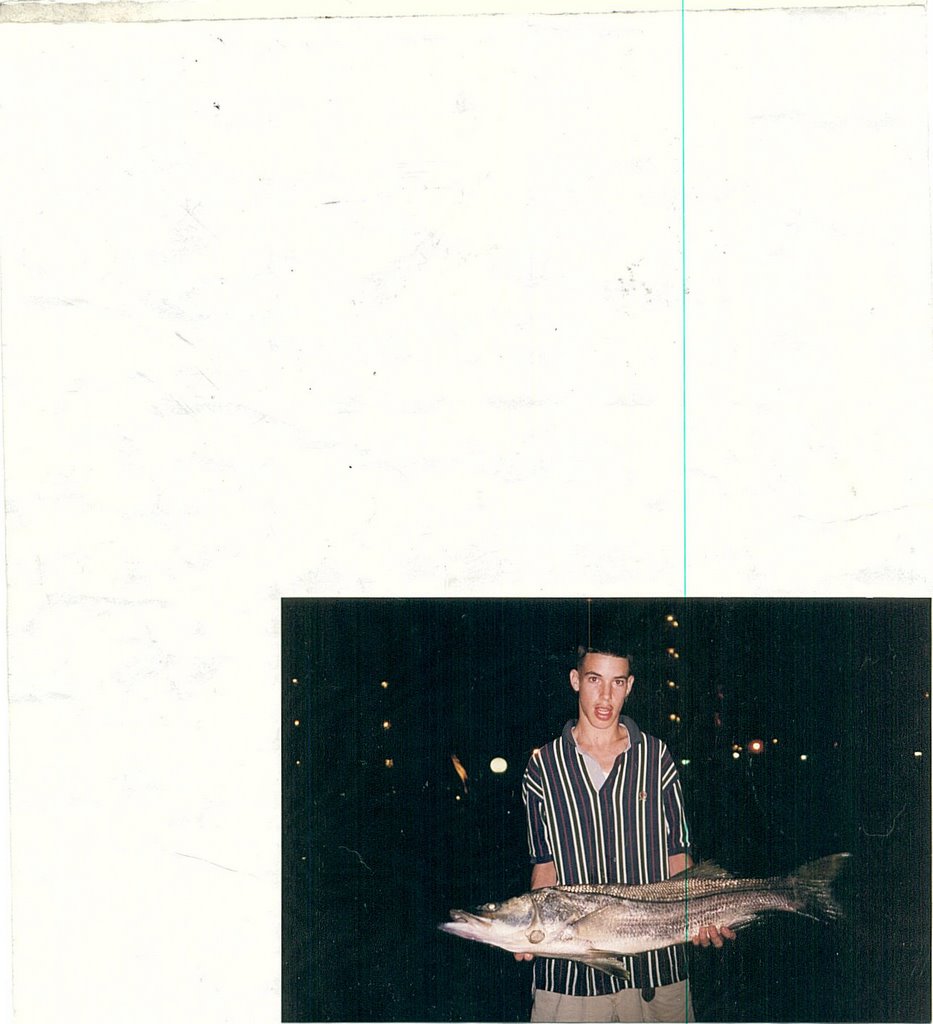
It appears that the Land Down Under may have a snooky relative in the Barramundi, although the latter seems to have a few Corvina/ Croaker features mixed in. The Barra's the one on the beach, while Florida's common snook appears in a nightime shot of Kid Snook, as well as with Captain Mike Smith displaying a tannin-colored beauty from the Ding in Sanibel.

I see some vague analogy potentials that are unrealized. Hordes of American black bass anglers are surging to South American jungle creeks for peacock bass, though the latter are more properly Cichlids. Yet the Barramundi is not given a smidgeon of attention by traveling snook anglers. Is Australia too far? Is this species-which grows to jumbo sizes- still relatively unknown?

Jan

Saturday, July 08, 2006

Looking Forward to Naden Lodge

It's with a heart full of excitement and anticipation that my plans for visiting Naden Lodge ( www.nadenlodge.com/ ) in British Columbia's Queen Charlotte Islands should be coming to fruition this year.

This destination has some of the largest chinook salmon around. Naden Lodge lies smack dab in the migratory path of millions of all the salmon species en route to their natal streams. Halibut the size of a compact car as well as steelhead fishing in the island's tea-colored streams adds to Naden Lodge's bountiful offerings.

Whales, seals, eagles, mountains, leaping salmon, verdant forests, delicious meals...who could ask for more?

Jan

Tuesday, July 04, 2006

More Guidelines for Traveling Flats Anglers...

Besides knowing yourself- your desires, abilities, and proclivities-know your intended destination fully. That includes every facet from guides, boats, country, weather/season, tidal/lunar profile for your stay, culture, political stability, and economic stability of the Lodge itself. Unfortunately, certain lodges and camps go broke for lack of adequate capitalization and cash infusions over time. All these features are crucial for you to review! If you hear rumors that your outfitter does not know about, try to check them out for yourself: even ask the Lodge owner directly!

Do not forget the stability of the transportation: usually, this involves airlines. As this is written, the air carrier for Kamchatka appears to be going out of business and outfitters are scrambling for a replacement! Also, check the political stability of the country of your destination. My personal belief is that relations between the U.S. and Venezuela will continue to deteriorate as President Chavez dukes it out with America and holds hands with Iran- this may not bode well for Los Roques, or things make work out. The point is be clear-thinking and shamelessly inquisitive. I subscribe to the Angling Report ( www.anglingreport.com/) because of its unbiased and honest destination reports and assessments.

Always check out your prospective guide, and doubly verify them if they own the destination you're headed for. Although they may suit the (desireable) personality goals of your outfitter, they may not suit you. Be sure it's going to be a good match! I personally like guides whose competence is flavored by an excellent sense of humor and an optimistic patience. Some guides are slightly more quiet, but they can respond quite well to jokes and are capable of patience and optimism without any difficulty or strain whatsoever. Sometimes there's a cultural factor. I'd think that a Russian guide might be a tad more expressive than a Mayan guide- but there's exceptions everywhere!


Jan

Saturday, July 01, 2006

On the Trail of the Longfin Bonefish.....


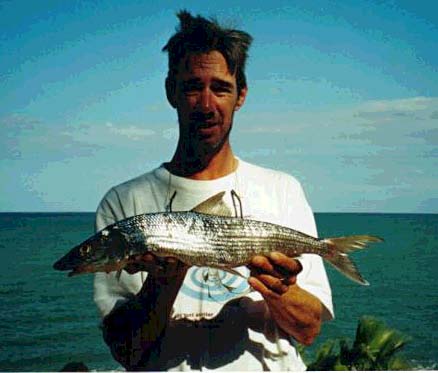
Shafted Bonefish, Albula nemoptera: Shows up when one purchases a “scoop of bait.” Caught in the surf zone, La Playita, San Jose del Cabo, Baja California Sur, Mexico, during late December 2003, with a water temperature of 76 degrees, early morning, in 5 to 10 foot water, utilizing a cast net by panguero bait salesmen. Size of specimen in photo without the angler is approximately 8 inches and 1 pound. Virtually an unknown species to locals. Description and photo courtesy John Snow.


Photo credit for Shafted Bonefish with angler, Albula nemoptera: Found at El Rincon, East Cape, Baja California Sur, Mexico, November 2000. Description and photo courtesy Peter Langstraat.

The mouth of the Shafted Bonefish reaches the eye, another key identification characteristic. The Shafted Bonefish is very similar to and at first sight can be easily confused with three species, the Eastern Pacific Bonefish, Albula esuncula; the Ladyfish, Elops affinis; and the Milk Fish, Chanos chanos. However, none of these three species has an elongated anal or dorsal fin ray. The Shafted Bonefish reaches 2 feet in length and is normally found in the first 30 feet of the water column over sandy bottoms.The Shafted Bonefish is a member of the Albulidae or Bonefish Family which consists of only one genus, Albula.


BONEFISH [bonefish] common name for a fish belonging to either of two species of the family Albulidae. Albula vulpes is widespread in warm, shallow marine waters, and Dixonina nemoptera is found only in the West Indies. The bonefish is silvery in color, with a long, deeply forked tail and a single dorsal fin; it has a pointed head covered by a thick, transparent cartilage and a receding mouth filled with numerous small rounded teeth. D. nemoptera is distinguished by two long trailing filaments, one extending from its dorsal fin and one from its anal fin. Also known as ladyfish and banana fish, the bonefish may reach 3.5 ft (107 cm) in length, and 18 lb (8 kg) in weight. It is a bottom dweller of shallow, sandy areas where it feeds on crabs, shrimp, and worms. It is much prized as a game fish, despite the numerous tiny bones that limit its appeal as food. It is classified in the phylum Chordata , subphylum Vertebrata, class Osteichthyes, order Clupeiformes, family Albulidae. Author not available, BONEFISH., The Columbia Encyclopedia,
Sixth Edition 2006


From The University of Florida:Taxonomy- Linnaeus described the bonefish in 1758, designating it a species within the genus Esox, a taxon that at the time already referred to at least one species of the holarctic freshwater pikes and pickerels. Recognizing the conflict, later workers placed the bonefish in the available genus Albula. The scientific name Albula vulpes is derived from Latin, and can be translated as "white fox". Other synonyms of Albula vulpes include, Esox argenteus, Albula conorynchus, Albula plumier, Amis immaculata, Clupea brasilienses, Clupea macrocephala, Butyrinus bananus, Engraulis sericus, Engraulis bahiensis, Glossodus forskalii, Albula goreensis, Albula parrae, Albula seminuda, Albula rostrata, Esunculus costai, Atopichthys esunculus, and Albula virgata. At least one other species of bonefish exists, the shafted bonefish, described and named by Fowler as Dixonina nemoptera in 1911. However, some scientists argue that the differences between the two species do not warrant genetic separation, and that both should be included within the genus Albula.

Catches for research have been made in the Dominican Republic and Puerto Rico.


Countries where Albula nemoptera is found ( incomplete )
Point map (with point info)

Brazil
BRA
native

7251
Colombia
COL
native

5217
Dominican Rp
DOM
native

12965
Ecuador
ECU
native

40498
Fr Guiana
GUF
native

13608
Jamaica
JAM
native

27228
Nicaragua
NIC
native

13613
Panama
PAN
native

7251
Suriname
SUR
native

13608
Trinidad Tob
TTO
native

33407
Venezuela
VEN
native

Page created by: Eli, 10.05.99, last modified by Eli, 01.02.06.

This is just a searching foray into what I see as a genetic variation of the world's most popular flats fish. I'd love to catch one..would you?

Jan