A Key to Paradise
AS FEATURED IN THE FALL '04 ISSUE OF SOUTH FLORIDA SPORT FISHING MAGAZINE by Jan S. Maizler
As Jim Kanzler snaked his shallow water skiff through the mangroves to the Isles of Capri where my car waited, the images of the action, the Estate, and the surroundings stayed strong and colorful in my mind. That was a good sign, because it signaled that my experience would become a cherished memory.Although I caught countless numbers of ladyfish, jack crevalles, and jumbo mangrove snappers, it was the snook that finned out in the front stages of my mind. I couldn’t possibly remember each and every one of the countless strikes and pulled hooks I had with the line sided bad boys. However, I did succeed in keeping a catch & release tally, which numbered thirty-six fish to twenty pounds! As I said, an incredible two days of snook fishing.
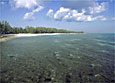
Key Island Estate is the brilliant idea of owners Stacey and Jim Kanzler. They have opened up their beautiful yet secluded Key Island home to groups yearning for an eco-island experience. This fortunately includes groups of anglers, as well as their non-angling friends and family. The fishery at Key Island Estate is absolutely a round-the-clock opportunity, and consists of three types of habitats and techniques.Because Key Island Estate lies on basically uninhabited Key Island you have about eight miles of pristine Gulf of Mexico surf all to yourself. In the calm summer weather, you’ll find countless numbers of snook swimming parallel to the beach only a few feet from the water’s edge. You will be most effective if you pretend that you are casting to spooky bonefish, because that’s exactly how these snook behave.In early morning’s sunrise, and in full daylight, casting to these snook is a total sight-fishing experience. It’s best if you stay low and well back on the beach, so these keen eyed fish do not see your silhouette or movement. Cast your small bucktail or fly well in front of the cruising snook: when the fish is about a yard away, retrieve it in the darting motions of the ever-present minnow schools.The low light times of early dawn and late dusk present different conditions and opportunities for casting the Gulf beaches. It will be harder for you to see the fish, and conversely, for them to see you. You’ll be casting to the boiling strikes in the minnow schools or just plain blind casting. Either way, in the muted light you’ll find that the snook strike more aggressively.Another bonus of fishing at these times is that large schools of jack crevalles invade the surf’s edge to feed on the same vast minnow schools. These predators create large areas of frothy action as they feed almost right onto the beach: you certainly won’t miss them! Try slowing down your retrieve through the melee, and you may even hook up with one of the fat mangrove snapper that lie in wait on the beach bottom for the silvery falling food.The beaches of Key Island Estate can therefore offer you — as it did for me — opportunities where you can cast to individual cruising fish or car-sized patches of crashing jacks, ladyfish, snapper and mackerel. Tough work, but I guess someone’s got to do it!
The beauty of this destination is that while it is in close proximity to the beautiful cities of Marco Island (to the south) and Naples (to the north), it lies in the heart of Rookery Bay Sanctuary. As a visiting angler to Key Island Estate, to you this means mangroves and lots of them and of course along with the mangroves come the big three that live there: snook, redfish, and tarpon.The mangrove fishery at this destination is done by guided skiffs. The habitat that will be covered is huge: anywhere from Rookery Bay all the way down to the Ten Thousand Islands. Light tackle fishing in mangrove country is largely a daytime proposition. It is also more of a year-round enterprise because of the shelter from harsh weather that the mangroves provide.Mangrove fishing is a target-casting undertaking, and the targets generally involve key points of structure and dark pockets right hidden under the mangrove shadows. This is a fishery where flies and artificial lures are a true delight, as an accurate cast to any likely-looking spot could mean a hookup with any of the aforementioned species.On occasion, guides will net a live-well full of pilchards to utilize as hors d’ oeuvres. They do this by tossing a handful of stunned “livies” into the mangrove roots. The resulting pops will be a pretty sure sign that yourfuture snook or redfish is turning on, and has a date with destiny on the end of your line. When the lure fishing slows down a bit, sometimes the guide will bait up a spinner with one of the live baits for you. Despite the tackle I might be using, I always graciously accept this offer since I know a strike is pretty much on its way. In making arrangements to visit this destination, owners Jim and Stacey Kanzler were eager to point out, “there are a lot of snook around the docks at night”, but I was no where near prepared for what lay in store for me.
The idea of snook aplenty haunted me on my drive from Miami to the Isles of Capri, which is just north of Marco Island. Upon my arrival, a huge thunderstorm was moving westward over the area. It glared down hard in its grayish black rolling fullness. Occasionally, it would throw down a startling lightning bolt right into the bay just a few miles upwind of me. As I finally approached the parking area, a figure suddenly appeared at my side. It was Randy, one of the crew members from Key Island Estate. He graciously greeted me, looked upward with a big smile and said, “we can probably make it if we quickly transfer your things.” We quickly made a rapid transfer of rods and baggage into the skiff and he fired up the engine. He looked at the sky again, and asked me which way I’d prefer the ride to the Island: the fastest or the more scenic, where we might get in a cast or two. I could swear I heard the tip of my graphite plug rod humming, so I quickly chose the former.In less than fifteen minutes, we were docking at the front door of the estate, a magnificent three story home finished in wood and majestic in scope. That was when the skies opened up. We’d arrived not a minute too soon. Despite the ensuing downpour, images of snook among the dock pilings swam circles in my mind.
After introductions, a tour, and a marvelous meal cooked by the Kanzlers’, I noticed it was quite dark outside: Fortunately not the bad, storm-darkness, but the sweet darkness of nightfall. Jim’s offer to grab some tackle and investigate their now well-lit dock was like the first kiss with a girl you had a crush on. As we walked down the outside stairs, the after-rain freshness of the vegetation enveloped us, accompanied by the music of a million crickets on this secluded magic island. Far off in the Gulf, a flash of lightning briefly lit our path to the docks.It seemed far too long before our feet touched the dock’s first plank. Jim stopped our stride with an outstretched arm, and then pointed to an area under the dock lights. By the time he said, “look”, I’d already spotted one of the most magnificent sights I have ever seen. There were probably a hundred snook feeding into the current, hitting anything that vaguely resembled food. As I eased forward towards them, the aggressiveness of their popping strikes filled me with anticipation.It was a good thing I’d brought two fully-rigged plug outfits, because my level of agitation precluded the fine finger movements of tackle rigging. I trusted that my lures, a SPRO white bucktail and a D.O.A. small, silver-sided Terroreyz would do their job. At the most, all I could do was walk quickly to the up-tide side of the dock, and make a simple cast over the horde of fish. The strike was immediate, and a healthy snook of about ten pounds thrashed up out of the water. It tail walked over part of the school, temporarily scattering them. I used maximum pressure with my twelve pound line, and had my first fish caught & released within 60 seconds.I gave the school time to settle down and pull together. I picked up the other plug rod and cast a bit farther away on the outskirts of the light. Two slow pulls were quickly followed by a vicious strike. I struck back to get a good hook set, and an even larger snook of about fifteen pounds came thrashing to the surface. My tactic of maximum pressure and “quick-stroke” rod pumps bested the fish in about the same time. I also learned that if I “rested” the school for a half hour, almost every cast would get an instant strike.Another nightly thrill you can almost count on when fishing the docks of the Estate are the large tarpon feeding in the middle of the channel. Any and every passing mullet school literally gets “crashed” by these silvery giants with huge explosions. It sounds like a compact car dropping from a high diving board into the inky waters of the night.As the sun came up the following morning and the “dock snook” dropped off into the center of the channel, all I could think of was running across the Estate to fish for the bonefish style snook in the surf. And so, the fishing and the catching went on and on ....
Any discussion of Key Island Estate would be incomplete without mention of the facilities many features and amenities. The house itself is built with wood and glass and the interior is topped off with the finest Caribbean art. Two uniquely cozy air conditioned “bed and bath” satellite buildings are attached by walkway spokes at opposite ends of the structure.Amenities inside include hammocks, viewing benches for sunsets, outside sun decks, a classic pool table, and a crisp ping-pong table. To top off your excellent meals, you’ll be eating either at the large tiled kitchen bar or at one of the spacious dining tables. Another corner of the central living space boasts an entertainment center with an oversized satellite television.It is important to repeat that the Estate is on secluded acreage between two pristine bodies of water. Bird life abounds: gulls, gannets, ospreys, and pelicans are numerous visitors and residents at the Estate. Jim Kanzler has also seen wild boars, bobcats, lizards, deer and tortoises on the property. Of course, Key Island also features the unforgettable summer nights of watching turtles come ashore to lay their eggs.
The best way to understand the Key Island Estate experience is through its owners, Jimmy and Stacey Kanzler. As a couple and as parents of two children, they exude incredible friendliness, a sense of service, and generosity of spirit.During the span of a marriage that started in their teens, each partner has achieved considerable success. Jimmy got his first dump truck at the age of 15 and now runs a large construction and earth-moving company. Stacey is the inventor of a sand bagging machine that is used world-wide to save lives and property in the event of floods.Jimmy feels that owning Key Island Estate makes him “the luckiest man in the world”. He also feels that the Estate is a place to get away from his busy schedule. In contrast, Stacey sees the estate as a “connection to her soul”. Stacey is the heart of Key Island Estate, and is the steward of a home that is one of the most beautiful lodges around. She feels the lodge can handle up to 14 guests at a time quite nicely. She is also proud that the Estate is exquisitely sandwiched by the Gulf of Mexico on one side and lush mangrove back country channel on the other. To sum it all up, Key Island Estate is truly heaven on earth!If you go...
Getting ThereAccess to the island is by boat only. Water taxi service for guests of Key Island Estate is by appointment. The closest airport is Naples, Florida, with charter jet capabilities. The primary airport is Southwest Florida International Airport, approximately 45 minutes north in Fort Myers. Go south on I-75, take Exit 101 (Marco Island, CR 951), just north of the Alligator Alley tollbooth. Go south on 951 for about 7 miles, crossing U.S. 41, and continue another 6 miles to Isles of Capri Road. Turn right, go three miles to Pelican Bend Marina. Fishing Guides and suppliesFor offshore fishing, J.R. Rosetti can take up to six fishermen aboard KA-DE 11. Call 239-250-2928. For backwater fishing, contact Jeff Smith, 239-289-2728. Others available on request. Some fishing equipment is available on site. Bait, lures and other supplies are available at Pelican Bend Marina or by advance arrangement. Other AdventuresKey Island Estate provides a list of local boat rentals, eco-tours, canoeing, kayaking, parasailing and other watersport services, which can be booked in advance or upon arrival. Chef ServicesKey Island Estate’s own private chef, Reinhard Jacob, is available for full-time or individual meal catering. Advance arrangements can be made at the time of reservation or direct with Jamie & Jacob Catering, 239-246-8967. Guests may bring their own grocery supplies or provide an advance shopping list so the pantry and refrigerators will be stocked upon arrival. Chef and shopping services are priced separately. Inquiries and ReservationsCall 800-770-SAND or visit www.keyislandestate.com

Saturday, December 24, 2005


Posted Destination Feature- Sanibel island
Tips and Tales
Follow the West Wind
AS FEATURED IN THE WINTER 2004 ISSUE OF SOUTH FLORIDA SPORT FISHING MAGAZINE By Jan Stephen Maizler
Sun-drenched days, tropical breezes, incomparable Gulf sunsets and non-stop drag screaming action, all in an unforgettable, beautiful setting!The Gulf surf behind the West Wind Inn was a sight to behold. Backlit by a yellow and orange sunset, countless schools of shimmering glass minnows worked their way along Sanibel’s pristine beach. Every few seconds, their rain shower sounds were shattered by the suction cup strikes of hungry snook that seemed to be everywhere! All this action was literally occurring in knee-deep water right at our feet! My fishing partner, Jim Porter, smirked as a lurking snook nearly collided with his leg. Off to my right, another snook went airborne after a mouthful of silvery bait.My only dilemma in the darkening kaleidoscope was simply where to cast. A throw parallel to the beach might score one of the remaining snook that still had an appetite, but the odds favored casting to the hundreds of exploding jacks, ladyfish and sea trout a mere forty feet from shore. I’d chosen my fishing tackle based on prior experiences fishing these fantastic waters. In the snag-free conditions of the open surf, the ultra-light six pound spinning outfit was ideal. My terminal gear consisted of a short double line to a thirty pound fluorocarbon leader, topped off with a quarter ounce white Spro bucktail jig.It was simple: one quick flick into the thrashing melee and a hookup was immediate. On some of my casts, I would jump a ladyfish, only to have the bait grabbed by a nearby jack or trout just seconds later. Jim and I fished this frenzy until the painted sky darkened and we could no longer see our rod tips. It’s important to note that in order to protect egg-laying turtles and their hatchlings, darkness is a legal mandate along many Gulf coast beaches. It was now pitch black as Jim and I made our way back over the sand dunes to the Inn. The day had come full circle, since earlier that day with rods in hand we had walked to the beach to greet the dawn. On only his second cast that morning, Jim hooked, landed, photographed and released a beautiful snook in the high teens. The great thing was that this first day of our short trip was only a prelude to the upcoming full day on the water fishing with native Sanibel guide, Captain Mike Smith. The West Wind Inn makes Mike their first choice when they want a day of action for their guests.It’s rare for a family resort destination to not only offer first class fishing right at its back door, but also provide shelling, beach walks, swimming, biking, as well as proximity to some of Florida’s finest restaurants, art galleries, and wildlife preserves. You simply could not find this incredible mix in Key West, Cancun, Freeport, Cozumel, or even San Juan. Sanibel and Captiva Islands stand alone in offering this unique blend of amenities for a resort destination, and the West Wind Inn is in the epicenter of it all on Sanibel’s West Gulf Drive. The West Wind Inn had it all: a large pool with adjoining bar for snacks and drinks, a great restaurant, rental bikes, beach lounges, spectacular gardens, and an excellent variety of accommodations. The first time I visited the West Wind Inn, I knew I was in for something special as they handed me a shell guide and collection bag upon my arrival!
BEGINNING THE SECOND DAY-It was a brief but highly effective dawn beach patrol that resulted in a few snook and sea trout. The warmth of the rising sun at our backs reminded us that we had to leave the Inn at 7:15 sharp to meet Captain Mike at the Punta Rassa boat ramp just beyond the Sanibel Causeway toll booth. As we drove up, we saw Captain Mike’s 21’ Lake and Bay skiff right away: it appeared to be gleaming in anticipation as it lay alongside the dock. As we climbed aboard, I inquired about his live bait forays in the predawn hours. Mike smiled as he opened two huge livewells: both were chock full of threadfin herring and pilchards, or whitebait as they refer to them locally.As we settled aboard and stowed our gear, Mike laid out his game plans for the day. Plan #1 would be to run 100 to 200 yards off the Gulf beaches in search of feeding fish. Mike said recent reports indicated huge schools of glass minnows were being ravaged by tarpon and mackerel in the early morning hours. Plan #2 would kick in as the sun climbed higher and the day warmed up. We’d be heading to the inside waters behind Sanibel to fish the ‘Ding’ for snook and redfish. Mike fired up his Yamaha 225 and idled towards the channel which led to open water. Once in the clear, he pushed down the throttle to what felt like warp speed and in mere moments we rounded the bend near Sanibel Lighthouse into the open Gulf.It wasn’t long before we spotted the unmistakable site of skyrocketing Spanish mackerel and free-jumping tarpon out in the distance. I could feel my heart pound with excitement. Mike idled over to the largest feeding frenzy and cut his motor about fifty yards away. Making his way to the bow, he lowered his electric motor into the water. Its strong silent pull added to our excitement as we crept towards the action in ‘stealth mode.’As we approached casting distance, Mike pulled two rods from the upright holders on the console. They were well equipped spinning outfits spooled with what I like to call ‘8/30’ Power Pro, which meant that we’d have the long casts afforded by the thin 8 pound diameter, but the fighting strength of 30 pound mono. PowerPro is an ideal choice for tarpon because of the line’s no-stretch properties which allow solid hook-sets. The terminal end consisted of a double line, 30 pound fluorocarbon leader and a 3/0 Gamakatsu hook.Mike told us that we’d bait up with the threadfins, as they were a perfect choice: too big for the Spanish mackerel, but candy for the tarpon. I lowered my lively bait into the water just beneath me, thinking Mike was going to get us even closer with the electric motor. Seconds later a tarpon exploded on my bait right at my feet, startling me and drenching me with spray. I gave the fish a few second count and struck hard….once, twice, three times. Up came the silver giant, flashing brilliantly in the morning sun. The fish greyhounded across the green Gulf for more than thirty feet before plunging back into the water with a furious splash. The battle then settled into a predictable pattern: maximum pressure when the fish rolled or wallowed and a quick bow when the fish jumped or bolted. Fifteen minutes later the silvery giant was alongside the boat, ready for release. I estimated its weight at about sixty pounds. Not a bad way to start any day! After a brief victory celebration, we noticed the bait schools were now a hundred yards west, fleeing their predators. Off in pursuit of the action we went. Within five minutes we were back on top of the commotion. Jim and I cast our threadfins and were hooked up within seconds. It was a brief double-header with one fish jumping off and the other chafing through the leader. We took a breather and rechecked a thunderhead that had been heading our way. Playing it safe, Mike recommended we speed over to Ft. Myers Beach. Topping off at close to 50 mph, his rig did an excellent job of keeping us out of harm’s way. As we sat just offshore of a sunny beach, we watched the ferocious thunderstorm cross Sanibel Island. The drenching rain showers took an hour to pass. When we finally returned, the minnow schools were long gone. Mike suggested that the storm may have driven the bait into the surf, but the falling tide would put the action out of our reach. He felt the time was right to run behind Sanibel and explore the Ding Darling Wildlife Preserve.
INTO THE DING-Captain Mike cranked up the engine and off we flew. Mike was happy that we were fishing on the new moon. Just like the full moon, the spring tide effect would create tidal levels and current velocities that were stronger than average. Mike felt that both the snook and redfish were more active during these periods. Nobody knows the Ding better than Captain Mike, who has fished the area for the last twenty years. We entered one of the small entrances to this maze-like jungle. Since the tide was falling, Mike raised his engine on its jack-plate and idled in for the remaining half mile.Captain Mike’s tactics in the Ding were fascinating. He would only use his bow-mounted electric motor to approach his honey holes hiding in the cracks and crevices of the countless creeks, bays, and islands. Once the boat was about forty feet from a favorite spot, he’d stake it out to keep the skiff stationary. Now in position, he would net a few frisky pilchards from his livewell and toss them high up into the mangrove treetops. Moments later pilchards would rain down on the snook hiding in the shadows, and then all hell would break loose! Mike smiled at all the pops and calmly said, “looks like they’re really hungry today.” As a few silvery survivors raced out of the entangled roots to hide in the skiff’s shadow, Mike recommended I pull one of the spinning outfits out of the rod holders.The equipment was well thought out: stiff long graphite rods with fast retrieve spinners.Each filled to the brim with braided line to maximize two tackle qualities: sensitivity and low stretch, both translating into a better feel and more fish-pulling power. He baited my 1/0 hook which was tied to a two foot length of fluorocarbon leader. Recommending I toss the bait into one of the shadowy mangrove pockets, I made a good cast and the strike was instantaneous! The snook and I did a seesaw battle, but good technique and quality tackle had him boat-side in just minutes. We admired the roughly six pound fish for a moment and then released it unharmed.Suffice it to say that every stop we made, we hooked nice snook, redfish, or jack crevalle. The technique was the same: accurate casts into shadowy pockets and a keep-him-coming fighting technique. Mike’s spots were as endless as his knowledge of the Ding and by midday, we were exhausted. It was time for a break. As we idled back out of the preserve, Captain Mike encouraged me to return when the fishing really turned on! I laughed and responded that I was thinking the same thing.Mike again mentioned the glass minnow schools might be right in the wash behind the West Wind Inn, and that dusk was a great time to fish the surf. I told him he could count on Jim and I being there, but little did I know what lay in store for us……
WHEN YOU GO-Get off I-75 at exit 131 onto Daniels Road. Follow this west past U.S. 41 until you reach Summerlin Road. Turn left on Summerlin and follow it right to the Sanibel Causeway toll plaza. When you get to the Island, turn right at Periwinkle Way. Follow Periwinkle for 2.6 miles to Tarpon Bay Road and make a left. Follow Tarpon Bay to the stop sign for West Gulf Drive and make a right turn. The West Wind Inn will be 2 miles ahead on your left. You can’t miss it. West Wind Innwww.WestWindInn.com1-800-824-04761-239-472-1541Captain Mike Smith1-239-770-68791-239-573-FISH
Website: http://www.WestWindInn.com
Follow the West Wind
AS FEATURED IN THE WINTER 2004 ISSUE OF SOUTH FLORIDA SPORT FISHING MAGAZINE By Jan Stephen Maizler
Sun-drenched days, tropical breezes, incomparable Gulf sunsets and non-stop drag screaming action, all in an unforgettable, beautiful setting!The Gulf surf behind the West Wind Inn was a sight to behold. Backlit by a yellow and orange sunset, countless schools of shimmering glass minnows worked their way along Sanibel’s pristine beach. Every few seconds, their rain shower sounds were shattered by the suction cup strikes of hungry snook that seemed to be everywhere! All this action was literally occurring in knee-deep water right at our feet! My fishing partner, Jim Porter, smirked as a lurking snook nearly collided with his leg. Off to my right, another snook went airborne after a mouthful of silvery bait.My only dilemma in the darkening kaleidoscope was simply where to cast. A throw parallel to the beach might score one of the remaining snook that still had an appetite, but the odds favored casting to the hundreds of exploding jacks, ladyfish and sea trout a mere forty feet from shore. I’d chosen my fishing tackle based on prior experiences fishing these fantastic waters. In the snag-free conditions of the open surf, the ultra-light six pound spinning outfit was ideal. My terminal gear consisted of a short double line to a thirty pound fluorocarbon leader, topped off with a quarter ounce white Spro bucktail jig.It was simple: one quick flick into the thrashing melee and a hookup was immediate. On some of my casts, I would jump a ladyfish, only to have the bait grabbed by a nearby jack or trout just seconds later. Jim and I fished this frenzy until the painted sky darkened and we could no longer see our rod tips. It’s important to note that in order to protect egg-laying turtles and their hatchlings, darkness is a legal mandate along many Gulf coast beaches. It was now pitch black as Jim and I made our way back over the sand dunes to the Inn. The day had come full circle, since earlier that day with rods in hand we had walked to the beach to greet the dawn. On only his second cast that morning, Jim hooked, landed, photographed and released a beautiful snook in the high teens. The great thing was that this first day of our short trip was only a prelude to the upcoming full day on the water fishing with native Sanibel guide, Captain Mike Smith. The West Wind Inn makes Mike their first choice when they want a day of action for their guests.It’s rare for a family resort destination to not only offer first class fishing right at its back door, but also provide shelling, beach walks, swimming, biking, as well as proximity to some of Florida’s finest restaurants, art galleries, and wildlife preserves. You simply could not find this incredible mix in Key West, Cancun, Freeport, Cozumel, or even San Juan. Sanibel and Captiva Islands stand alone in offering this unique blend of amenities for a resort destination, and the West Wind Inn is in the epicenter of it all on Sanibel’s West Gulf Drive. The West Wind Inn had it all: a large pool with adjoining bar for snacks and drinks, a great restaurant, rental bikes, beach lounges, spectacular gardens, and an excellent variety of accommodations. The first time I visited the West Wind Inn, I knew I was in for something special as they handed me a shell guide and collection bag upon my arrival!
BEGINNING THE SECOND DAY-It was a brief but highly effective dawn beach patrol that resulted in a few snook and sea trout. The warmth of the rising sun at our backs reminded us that we had to leave the Inn at 7:15 sharp to meet Captain Mike at the Punta Rassa boat ramp just beyond the Sanibel Causeway toll booth. As we drove up, we saw Captain Mike’s 21’ Lake and Bay skiff right away: it appeared to be gleaming in anticipation as it lay alongside the dock. As we climbed aboard, I inquired about his live bait forays in the predawn hours. Mike smiled as he opened two huge livewells: both were chock full of threadfin herring and pilchards, or whitebait as they refer to them locally.As we settled aboard and stowed our gear, Mike laid out his game plans for the day. Plan #1 would be to run 100 to 200 yards off the Gulf beaches in search of feeding fish. Mike said recent reports indicated huge schools of glass minnows were being ravaged by tarpon and mackerel in the early morning hours. Plan #2 would kick in as the sun climbed higher and the day warmed up. We’d be heading to the inside waters behind Sanibel to fish the ‘Ding’ for snook and redfish. Mike fired up his Yamaha 225 and idled towards the channel which led to open water. Once in the clear, he pushed down the throttle to what felt like warp speed and in mere moments we rounded the bend near Sanibel Lighthouse into the open Gulf.It wasn’t long before we spotted the unmistakable site of skyrocketing Spanish mackerel and free-jumping tarpon out in the distance. I could feel my heart pound with excitement. Mike idled over to the largest feeding frenzy and cut his motor about fifty yards away. Making his way to the bow, he lowered his electric motor into the water. Its strong silent pull added to our excitement as we crept towards the action in ‘stealth mode.’As we approached casting distance, Mike pulled two rods from the upright holders on the console. They were well equipped spinning outfits spooled with what I like to call ‘8/30’ Power Pro, which meant that we’d have the long casts afforded by the thin 8 pound diameter, but the fighting strength of 30 pound mono. PowerPro is an ideal choice for tarpon because of the line’s no-stretch properties which allow solid hook-sets. The terminal end consisted of a double line, 30 pound fluorocarbon leader and a 3/0 Gamakatsu hook.Mike told us that we’d bait up with the threadfins, as they were a perfect choice: too big for the Spanish mackerel, but candy for the tarpon. I lowered my lively bait into the water just beneath me, thinking Mike was going to get us even closer with the electric motor. Seconds later a tarpon exploded on my bait right at my feet, startling me and drenching me with spray. I gave the fish a few second count and struck hard….once, twice, three times. Up came the silver giant, flashing brilliantly in the morning sun. The fish greyhounded across the green Gulf for more than thirty feet before plunging back into the water with a furious splash. The battle then settled into a predictable pattern: maximum pressure when the fish rolled or wallowed and a quick bow when the fish jumped or bolted. Fifteen minutes later the silvery giant was alongside the boat, ready for release. I estimated its weight at about sixty pounds. Not a bad way to start any day! After a brief victory celebration, we noticed the bait schools were now a hundred yards west, fleeing their predators. Off in pursuit of the action we went. Within five minutes we were back on top of the commotion. Jim and I cast our threadfins and were hooked up within seconds. It was a brief double-header with one fish jumping off and the other chafing through the leader. We took a breather and rechecked a thunderhead that had been heading our way. Playing it safe, Mike recommended we speed over to Ft. Myers Beach. Topping off at close to 50 mph, his rig did an excellent job of keeping us out of harm’s way. As we sat just offshore of a sunny beach, we watched the ferocious thunderstorm cross Sanibel Island. The drenching rain showers took an hour to pass. When we finally returned, the minnow schools were long gone. Mike suggested that the storm may have driven the bait into the surf, but the falling tide would put the action out of our reach. He felt the time was right to run behind Sanibel and explore the Ding Darling Wildlife Preserve.
INTO THE DING-Captain Mike cranked up the engine and off we flew. Mike was happy that we were fishing on the new moon. Just like the full moon, the spring tide effect would create tidal levels and current velocities that were stronger than average. Mike felt that both the snook and redfish were more active during these periods. Nobody knows the Ding better than Captain Mike, who has fished the area for the last twenty years. We entered one of the small entrances to this maze-like jungle. Since the tide was falling, Mike raised his engine on its jack-plate and idled in for the remaining half mile.Captain Mike’s tactics in the Ding were fascinating. He would only use his bow-mounted electric motor to approach his honey holes hiding in the cracks and crevices of the countless creeks, bays, and islands. Once the boat was about forty feet from a favorite spot, he’d stake it out to keep the skiff stationary. Now in position, he would net a few frisky pilchards from his livewell and toss them high up into the mangrove treetops. Moments later pilchards would rain down on the snook hiding in the shadows, and then all hell would break loose! Mike smiled at all the pops and calmly said, “looks like they’re really hungry today.” As a few silvery survivors raced out of the entangled roots to hide in the skiff’s shadow, Mike recommended I pull one of the spinning outfits out of the rod holders.The equipment was well thought out: stiff long graphite rods with fast retrieve spinners.Each filled to the brim with braided line to maximize two tackle qualities: sensitivity and low stretch, both translating into a better feel and more fish-pulling power. He baited my 1/0 hook which was tied to a two foot length of fluorocarbon leader. Recommending I toss the bait into one of the shadowy mangrove pockets, I made a good cast and the strike was instantaneous! The snook and I did a seesaw battle, but good technique and quality tackle had him boat-side in just minutes. We admired the roughly six pound fish for a moment and then released it unharmed.Suffice it to say that every stop we made, we hooked nice snook, redfish, or jack crevalle. The technique was the same: accurate casts into shadowy pockets and a keep-him-coming fighting technique. Mike’s spots were as endless as his knowledge of the Ding and by midday, we were exhausted. It was time for a break. As we idled back out of the preserve, Captain Mike encouraged me to return when the fishing really turned on! I laughed and responded that I was thinking the same thing.Mike again mentioned the glass minnow schools might be right in the wash behind the West Wind Inn, and that dusk was a great time to fish the surf. I told him he could count on Jim and I being there, but little did I know what lay in store for us……
WHEN YOU GO-Get off I-75 at exit 131 onto Daniels Road. Follow this west past U.S. 41 until you reach Summerlin Road. Turn left on Summerlin and follow it right to the Sanibel Causeway toll plaza. When you get to the Island, turn right at Periwinkle Way. Follow Periwinkle for 2.6 miles to Tarpon Bay Road and make a left. Follow Tarpon Bay to the stop sign for West Gulf Drive and make a right turn. The West Wind Inn will be 2 miles ahead on your left. You can’t miss it. West Wind Innwww.WestWindInn.com1-800-824-04761-239-472-1541Captain Mike Smith1-239-770-68791-239-573-FISH
Website: http://www.WestWindInn.com
Friday, December 23, 2005
Terra Nova?
Sure, we can grouse about about the old days, but let's stop crowing and start warbling when you stop to consider the Marathon Bonefish Tournament released over 200 fish in a few days and as this is written, "rafts" of baitfish swim the Atlantic-side reefs of the Florida Keys. The buzz is that the source of this bounty was some obscure and unknown pinwheel weather system called Wilma-some surmise the bait got shoved through the Keys from the Gulf to Atlantic like a Manhattan subway charge. The food chain being what it is whether it's corporate America or the reef drop from Key Largo to Key West, baitfish pull in and concentrate sails, blackfins, and kings. And this, of course, pulls in anglers- the Crown of Creation. So, it does seem like biomass, fish stocks, and habitat can flex a little bit-the last, the least.
Oh yes, I'm happy to report that tarpon fishing is now a year-long, any-weather fishery in Biscayne Bay: you just need to know where to go.
Jan
Oh yes, I'm happy to report that tarpon fishing is now a year-long, any-weather fishery in Biscayne Bay: you just need to know where to go.
Jan
Thursday, December 22, 2005
Spindlebeak Storm Bounty?
FLORIDA KEYS SKIPPERS REPORTING INCREDIBLE SAILFISH ACTIONISLAMORADA, Florida Keys - By noon Thursday (Dec. 22), Captain Alex Adler, skipper of the Kalex, had already caught and released seven sailfish off Islamorada in the Florida Keys."It's the best sustained sailfish bite in the history of the Keys," said Adler, who is not known for fish tales or exaggerations.Two days earlier, on Tuesday, Adler's anglers released 20 sails. "First the ballyhoo were matted like I've never seen since the 1970s, then these baby sardines came out of the Gulf (of Mexico)," said the 48-year-old Adler, who has been in the sportfishing business since he was 18.Speculation is that Hurricane Wilma's jaunt through the Gulf of Mexico in late October might have pushed massive populations of juvenile sardines into the Gulf Stream and around the Florida peninsula.The Keys are the primary beneficiary."It's an extraordinary thing," said Captain Paul Ross, skipper of Relentless. "There are hundreds of square miles of sardines out there from Key West to Ocean Reef."Ross said his anglers have been releasing seven to 10 sailfish every day. "They've had size too," he added. "We're getting 50- to 70-pound fish, even in close [to the reef edge]."Adler said everyone has been taking advantage of the hot sailfish bite."From Keys bridges, motorists can see backcountry skiffs (boats less than 18 feet) along the outer reef edges because the water has been so calm," Adler said. "Whatever it takes to get out there, people are doing it."In Florida Bay, Spanish mackerel have been plentiful with many large fish being caught.In the Lower Keys and Key West, the massive amounts of bait have created one of the best blackfin tuna and kingfish bites in years."There are acres of blackfin tuna out there coming in on a tremendous amount of bait," said Captain Mike Weinhofer of Compass Rose charters in Key West. "The kingfishing has been phenomenal too."Perhaps the best news is that the captains agreed the bait is here to stay for a long time and the fishing should remain very strong."It's a phenomenon," said Adler.More details on the Florida Keys are available at www.fla-keys.com or by calling 1-800-FLA-KEYS (800-352-5397).###FOR MEDIA INFORMATION ONLY: Contact: Andy Newman/Carol Shaughnessy 1-800-ASK-KEYS (800-275-5397) or (305) 461-3300www.fla-keys.com/media
Looking Forward...Looking Back
As the water temps drop in the midst of rising holiday freneticism, shallow waters are thinning a bit of gamesters-though far from entirely. Right now, I'm caught up with the allure of distant shores on the other side of the new year, when the days get longer and warmer and travel is more of a 360 for me. Two of the first-date thrills are focused on British Columbia for 50 pound chinook and bone batallions on the salinas of Long Island, Bahamas. The future can be the place of possiblility, dreams and excitements, yet the reveries of Deep Past recollected, a bank account and repository of accomplishments and experiences irrevocably booked in. Remembrances of things past a bittersweet sense of things gone, sometimes longed-for, and maybe relished. Chad and Jeremy said a bit: "When the rain beats against my window pane, I'll think of summer days again, and dream of you."....Wow!
Jan
Jan
Friday, December 16, 2005
Did you ever say "go", but wanted to stay?...
Jack after jack after jack in the cold front-cooled waters of South Bay pounced on my Spro bucktail tipped with shrimp. The BassPro Inshore Extreme baitcasting outfit performed well as I released over 100 fish. Companion Jim Porter was told the cooler, flatter, dirtier water on the outside of Key Biscayne would have less bonefish than before- we gave it a try under the last day of the full moon... and found much less than before, as in zero. Jacks can be a day- saver, especially when the search time is limited on half-day trips. It's all relative: Jim wanted a bonefish, but i could not have been happier on constant hookups on my trusty little plug rod.
Jan
Jan
Monday, December 12, 2005
One Step at a Time!
A tough season for some particularly from Naples to Key West including Wilma's cross-Florida swath south of the Big O. Amazing how the latest news grab makes us forget and deny. There are still people mourning and looking at shattered lives and homes. This season should focus on support and healing. There are 19 SOFLA.fishing destinations I know still cleaning up the storm's decimation..putting on a happy face, but still hurting.
Jan
Jan
Friday, December 09, 2005
Friday, December 02, 2005
Good Day, Sunshine!
Clear skies and a spring tide brought some great conditions to the flats and channels of Biscayne Bay. Captain Joe Gonzalez had an excellent day with 7 bonefish in deeper South Bay- he caught the fish on fly and bait. With less time and a passion for diving birds, I stayed further north and tallied 40 jacks, and plenty of blue runners, yellow jacks, as well as pompano and bonefish. The secret when you are plug casting jigs tipped with shrimp is let the presentation drop actionless to the channel floor and bottom bounce- bones and pomps love it. A faster retrieve is sure to attract the jack family...the choice is yours: a bent rod beneath sunny skies are good days!
Jan
Jan
Monday, November 28, 2005
Terrific Tarpon Times and.....
It's almost December and we've had two cold fronts: one following Hurricane Wilma and one last week. If recollection of years past (very past!) serves correct, it was colder earlier in the year. There were more fronts by now, and they would be colder fronts. The World Series in the sixties meant sustained cold weather as well as catching all the bluefish, mackerel, and pompano you wanted at the Sunny Isles Fishing Pier-people literally left with orange sacks and wheelbarrows full. These times coincided with the British Invasion by the Beatles, and the biggest scandal was a high school pregnancy. The aforementioned gamesters never make it this far south and this shallow anymore. Right now, there are some macks in forty feet of water off Miami, but Jupiter seems to be the stopping point for the really large schools.
What species survive may have climactic implications. The ladyfish-filled waters of North Biscayne Bay have passed into history and now hold year-round tarpon. No ones complaining, but it might suggest that such a presence of the tropically-originating tarpon may show a northward push of a warm water fish in a warmer water world. To wit, I went " five for five" on a school of backbay rolling fish-they ranged in size from ten to fifty pounds. These fish seem to never leave Miami anymore. They just go a bit inland in the presence of a cold front.. they make terrific tarpon times.
Don't want to wax morbid or selfish, but I hope the sick birds of Asia stay put and give Floridians a rest from catastrophe. We humans make hurricane preparations, but how do you position yourself for a mutating virus you cannot even see? It all boils down to the job a writer has for not simply writing soothing ink, but to find some distant, deep discomfort and drain it into daylight, despite the sight of it.
And, heck, the de facto-quarantined status of distant tropical islands with lots of flats are shrinking, with the jetliner-belched numbers of anglers seeking the getaway to places where I've already wished that I got away to. Maybe there's a cozy little place in the center of Abaco where I can hide my skiff and kayak and alternately fish Green Turtle for giant bones one day on the east side, and 'yak the Marls on the west side the next day. No need for a computer... just pencil, paper, and lots of makings for a few Tranquil Turtles on a sunny Bahamian afternoon, far across the Gulf Stream from all those masses and the rise of the concrete cancers- a flats fisherman gone survivalist not just for survival sake, but respite from the "too much" that life along the Gold Coast has often become. I'm also sure that if Saint Peter hears that you did roadwork in Miami, there's a red-hot future in store for you... far, far, below.
Jan
What species survive may have climactic implications. The ladyfish-filled waters of North Biscayne Bay have passed into history and now hold year-round tarpon. No ones complaining, but it might suggest that such a presence of the tropically-originating tarpon may show a northward push of a warm water fish in a warmer water world. To wit, I went " five for five" on a school of backbay rolling fish-they ranged in size from ten to fifty pounds. These fish seem to never leave Miami anymore. They just go a bit inland in the presence of a cold front.. they make terrific tarpon times.
Don't want to wax morbid or selfish, but I hope the sick birds of Asia stay put and give Floridians a rest from catastrophe. We humans make hurricane preparations, but how do you position yourself for a mutating virus you cannot even see? It all boils down to the job a writer has for not simply writing soothing ink, but to find some distant, deep discomfort and drain it into daylight, despite the sight of it.
And, heck, the de facto-quarantined status of distant tropical islands with lots of flats are shrinking, with the jetliner-belched numbers of anglers seeking the getaway to places where I've already wished that I got away to. Maybe there's a cozy little place in the center of Abaco where I can hide my skiff and kayak and alternately fish Green Turtle for giant bones one day on the east side, and 'yak the Marls on the west side the next day. No need for a computer... just pencil, paper, and lots of makings for a few Tranquil Turtles on a sunny Bahamian afternoon, far across the Gulf Stream from all those masses and the rise of the concrete cancers- a flats fisherman gone survivalist not just for survival sake, but respite from the "too much" that life along the Gold Coast has often become. I'm also sure that if Saint Peter hears that you did roadwork in Miami, there's a red-hot future in store for you... far, far, below.
Jan
Tuesday, November 22, 2005
A Green Turtle Cay Adventure
Despite being caught in what Captain Ricky Sawyer called a "squeeze play" between a stalled front and a north-moving tropical disturbance, I headed for Bluff House and Captain Ricky on Green Turtle Cay off the northeast coast of Abaco, Bahamas. The first day featured winds gusting to 30 mph out of the northeast, yet Ricky "tucked in" inside an ocean passage and within 10 minutes we hooked and released a 7 1/2 pound bonefish. I also caught a huge tailing ocean tally and then a big mutton snapper just off the flats. The evening at Bluff House featured great food and a great view off a cliffside suite on the sea of Abaco and beautiful furnishings (www.bluffhouse.com/). Their phone is 1-800-745-4911
The second day had the winds dropping off. Ricky took me to a wreck just off the flats for nonstop action on cero mackeral and snappers on ultralight tackle and lures. As the tide starting falling, we shot back to the flats, where I spotted, hooked, and released a 9 1/2 pound bonefish. Green Turtle may have the largest frequency of big bonefish in the entire Bahamas. There's so much more to be said!
I'll be writing of this incredible experience at length, but for now Ricky's contact data are:
phone: 1-242-365-4261
website: www.abacoflyfish.com/.
email:bonefish@abacoflyfish.com.
Jan
The second day had the winds dropping off. Ricky took me to a wreck just off the flats for nonstop action on cero mackeral and snappers on ultralight tackle and lures. As the tide starting falling, we shot back to the flats, where I spotted, hooked, and released a 9 1/2 pound bonefish. Green Turtle may have the largest frequency of big bonefish in the entire Bahamas. There's so much more to be said!
I'll be writing of this incredible experience at length, but for now Ricky's contact data are:
phone: 1-242-365-4261
website: www.abacoflyfish.com/.
email:bonefish@abacoflyfish.com.
Jan
Saturday, November 12, 2005
"Drop Fishing" for Tarpon
We've been here before, but let's remember that when tarpon are off the flats and not migrating, they stage along the bottom. Witness Boca Grande, Government Cut, etc. Their tal-slapping rolls also indicate a rapid return back to the bottom-some call this hard-rolling. When tarpon stay on top, their rolls are less circular and feature a momentary dorsal bulge.
But in any bay situation when tarpon stick to the bottom, be sure to fish your baits ALL THE WAY DOWN. It's a temptation to get those breakaway rubber jigs hopping off the bottom, but tarpon can be brought to the surface by a method of chumming and drop fishing silvery jerk baits along with mullet strips. This is very similar to yellowtail fishing off the Keys. The baits must drop alongside the chum without any line resistance all the way to the bottom. The best way to accomplish this is with 12 pound spinning racked in a oblique rod holder and fished on an open spool from your anchored boat. Pull the line from your rod tip and let it rest in well-piled fashion on the water's surface with just enough length to take it to the bottom. Use a J-Hook and watch for sudden line runoffs, which indicate a strike. Using the drop method for tarpon, I've taken as many as 7 tarpon to 100 pounds on a morning trip. Sometimes the tarpon will rise up to meet the chum, and this is the time to take out your 12 weight fly rod and drop fish a bulky chum fly with all the descending food. I find this method a great way to catch tarpon in those times of years that they are off the flats.
Jan
But in any bay situation when tarpon stick to the bottom, be sure to fish your baits ALL THE WAY DOWN. It's a temptation to get those breakaway rubber jigs hopping off the bottom, but tarpon can be brought to the surface by a method of chumming and drop fishing silvery jerk baits along with mullet strips. This is very similar to yellowtail fishing off the Keys. The baits must drop alongside the chum without any line resistance all the way to the bottom. The best way to accomplish this is with 12 pound spinning racked in a oblique rod holder and fished on an open spool from your anchored boat. Pull the line from your rod tip and let it rest in well-piled fashion on the water's surface with just enough length to take it to the bottom. Use a J-Hook and watch for sudden line runoffs, which indicate a strike. Using the drop method for tarpon, I've taken as many as 7 tarpon to 100 pounds on a morning trip. Sometimes the tarpon will rise up to meet the chum, and this is the time to take out your 12 weight fly rod and drop fish a bulky chum fly with all the descending food. I find this method a great way to catch tarpon in those times of years that they are off the flats.
Jan
Andros Island
Everything ANDROS
AS FEATURED IN THE WINTER ISSUE OF SOUTH FLORIDA SPORT FISHING MAGAZINE by Jan S. Maizler
The largest and least-explored island in the Bahamas, Andros offers a wide variety of reel screaming action!Andros is by far the largest island in the Bahamian archipelago. The Island measures over 40 miles from east to west and more than 100 miles from north to south. Glancing at a chart, you will notice that Andros Island is really a collection of many smaller islands. The larger north and south sections are split by three shallow bights that completely bisect the landmass. These bights carve the islands mid section into a jumbled maze of smaller mangrove cays. These cays create one of the best and most extensive shallow water habitats found anywhere in the world. The Islands east side fronts the 6000 foot depths of the tongue of the ocean and along with the three shallow bights, contains some of the most productive flats found anywhere. All of the villages, roads, ports and, not surprisingly, resorts lie on the east shore of Andros. No place in the Bahamas rivals Andros Island regarding its exciting and unique geographic fish-producing characteristics. The Island’s sheer size, shape and extremely intricate configurations create numerous and diverse ecosystems which produce excellent feeding grounds for some of the world’s top game fish: seemingly endless backcountry creeks with hordes of silvery bonefish and permit out to the deep blue seas where tuna and marlin reign supreme, Andros is simply a paradise for all fishermen.
If that’s not enough to get you excited, much of the Island’s perimeter is a maze of serpentine creeks, cuts, channels and small mangrove cays that create one of the most extensive skinny water habitats on planet earth.Flats Fishing In Andros:Andros Island is often considered the epicenter of Bahamas bonefishing and for good reason. Its monumental size yields countless flats that seem to melt into the horizon. There are many seasoned flats fishermen who believe that Andros still has many areas that have yet to see an angler. The outside flats of Andros which feature sand, reef or crunchy bottom, create habitats that attract swarms of hungry bonefish. Then there are the shoreline mangrove forests that are endless feeding fields for the large number of bones which graze in the roots at high tide searching for snails, crabs and other tasty crustaceans. Consistently successful anglers will work the mangrove edges on the ebb tide as countless gray ghosts leave the bush on their way to deeper water. The three huge bights which slice through the center of the Island are in actuality quite complex. Not only do they traverse Andros in a northeast to southwest direction, but they do it in a meandering fashion right in the midst of countless keys, islands, and creeks. This intricate habitat creates the well-known inside flats of Andros. These inside flats often have softer bottom than the outside flats and anglers may need to fish from poled boats, versus wading. Though, the bonefish action here can be just as exciting. It’s nice to remember that you can always find refuge from harsh, windy weather on the inside.Most of Andros’ fishing lodges lie on the Islands east side, and run from north to south along the constructed roads on the Island’s major segments. This geographic position no longer stops the more aggressive and adventurous guides from making the comparatively longer run to the fabled west side of the Island. It’s definitely true that the west side of the Island is less-pressured and often, more productive. Due to the cost of fuel and guide disinclination, most anglers never get to fish the west side. It is there that tarpon are more commonly seen prowling the flats, giving shallow water anglers an additional thrilling bonus on this breathtaking atoll.All of these features make Andros an incredible year round flats fishing destination. Couple that with some of the best guides found anywhere in the Bahamas and you are in for an experience you will soon not forget. As a note, it’s on Andros the famed Crazy Charlie Fly was originally constructed of nothing more than chicken feathers and line!
Reef Fishing In Andros:The eastern side of Andros Island offers long expanses of deep water flats which give way to a marvelous series of patch reefs. These very patch reefs lead to a barrier reef which is overwhelmingly abundant in sea life. The multiple species inhabiting these jagged areas can keep an anglers interest for a lifetime and a day. Surface, mid-water and bottom-dwelling gamesters will constantly provide bent rods and smiling faces.If you concentrate on working the upper layer of the water column over the reefs, you will lose your mind for hours with non stop action from mackerel, barracuda and a variety of jacks. Imagine tossing bucktail or swimming plug over a patch reef knowing for certain that on every single cast one of many different species is going to explode on your presentation. This is the embodiment of excitement for saltwater anglers who enjoy casting with artificials. I recall a recent reef trip I took out of Small Hope Bay. We anchored off one of the patch reefs, as I hooked fish on almost every cast on my trusty ten pound plug rod. As we took a lunch break, I looked astern and saw a school of what looked to be about seventy to a hundred large jacks. I instantly dropped my sandwich and quickly flipped a fifty foot cast right in front of the school. The first sweep of my jig was blasted by the lead fish. I set the hook with vigor as the fish rocketed in the opposite direction. The blistering run demanded the guide weigh anchor and give chase. After a long half hour see-saw battle, my jack began to surface in reaction to the constant pressure. As it popped up, its long silvery black dorsal and tail fins sliced through the surface which clearly indicated I was battling a large permit. I was high with excitement! Constant pressure for a few more minutes yielded a wonderful catch that was tailed at boat side, weighed in at 32 lbs., and quickly released. Pleasant surprises are common when fishing the reefs off Andros.The most popular bottom dwellers that will surely grab your attention and your baits are snapper and grouper. At times, the number of large grouper and snapper inhabiting the waters just east of Andros can be staggering! During the months of February and March, these fish stack up and often finding large influxes of grouper is an easy task. Natives believe these fish move inshore to spawn and know exactly where they are. Speak with the local fishermen, inquire respectfully and I am sure they will be happy to point you in the right direction. I remember a particular Bahamian skiff that pulled up to our fishing lodge one evening. The skiff was literally filled with big groupers from gunwale to gunwale. It was incredible. 30 lb. conventional tackle will conquer plenty grouper for your consumption although you can expect to hook some bruisers that prove to be unstoppable. I have started experimenting with short graphite-glass stand-up rods matched with reels spooled with PowerPro braided super line. I am finding that I can exert a greater amount of pressure against the powerful shoulders of hefty grouper as they head back toward their holes. The added pressure has definitely helped me land a greater number of larger fish.Later in the year, around May, large numbers of muttons also move inshore to spawn. These fish range in size from five to eighteen pounds and can provide outstanding action. The springtime muttons of Andros quickly gobble up ballyhoo, mullet, crabs and most other baits that are commonly used here in South Florida. The sandy runs and potholes between reefs often produce large numbers of muttons and should always be investigated. On occasion, juvenile mutton snapper may make their way inshore to the flats and channels but for consistency with bruisers, head to the reefs! The same thirty lb. class grouper tackle can be used for muttons as well, with the slight modification of a longer, lighter, 10’ forty lb. leader.
Andros’ Blue Water Bonanza:The bountiful reef paralleling the east coast of Andros forms a steep wall with a rapid drop off into a nutrient rich deep blue sea called the tongue of the ocean. This body of water drops to more than a mile in depth. It’s a huge deepwater cul-de-sac with powerful upwellings that trap huge concentrations of bait and large numbers of pelagics. The most notable of which are mahi, mackerel, tuna and big blue marlin.The good news when fishing the cobalt blue water off the east side of Andros Island is that tactics and tackle are generally universal and what is effective here is also good there. It is important to remember that if you plan on trolling natural baits, you should bring a few frozen packs with you or plan on catching the bait there. I have had some great success slow-trolling just about any small member of the jack family. I have also witnessed a huge kingfish caught on a big yellowtail snapper, so don’t be afraid to be creative and experiment. Trolling artificials works like a dream, just remember to “match the hatch”, and present what you think the big guys off Andros are feeding on. Skirted lures, cedar plugs and deep diving plugs will all do the trick. The addition of a single fifty to eighty pound class outfit prepares you for an encounter with the giant of the tongue, the blue marlin. It has been proven over and over that trolling natural or artificial baits in the tongue can be equally effective on mid size blues in the two to six hundred pound range. For both productivity and comfort, successful blue water fishing off Andros points toward the days of late spring and summer, although this is also a year-round fishery. Be aware that the local sport fishing community on Andros does not really place emphasis on offshore fishing like Bimini, Chub Cay or Walkers Cay. Most of the preparation definitely the tackle will be your responsibility.Getting To Andros:To insure the finest lodge, facilities, amenities, guides and the least-pressured fishing grounds, I really recommended that you utilize a stateside outfitter, such as Angling Destinations (1-800-211-8530). I have been to the Bahamas many times, and have heard too many horror stories from readers, colleagues and everyday anglers that decided to play “free agent”, only to have their best-laid plans evaporate upon arrival. These guys at Angling Destinations are really super. They’re professional outfitters who are committed to providing you the best angling experience possible. They have plenty of options available and will coordinate and route your entire trip, including air, water and taxi transportation. The most recent information I have from multiple sources specifies Tranquility Hill (Behring Point, North Andros), Tiamo Resort (South Bight) and Bair Bahamas Guesthouse (South Andros) as lodges that really go the extra mile to achieve success and 100% satisfaction!Arriving On Andros IslandNow that you’ve got your feet planted on Andros, you can relax. You have brought what you need, your outfitter’s plans have you neatly dropped off at the Lodge and all you need to do is patiently await tomorrow’s fishing. It’s time to get into the island spirit and slow down. Enjoy the sun, sand and salty smells of Andros. After a delicious fresh seafood dinner and a couple of cocktails, you’ll be mesmerized by the spell of the islands known as pure tranquility. You owe it to yourself to enjoy the moment. As the sun sets and you soon behold a sky full of stars, you’ll feel like you’re in heaven. As you’re gaze into the sky deepens, you quickly come to the realization that your trip to Andros is an absolute success before you’ve wet a line.
Andros Checklist:You should plan on bringing any and all rod, reels and terminal tackle that you will need or think you might need. It is best to travel with your rods in travel tubes while soft tackle bags for all your other accessories will fit perfectly into suitcases. Remember, airlines ban any sharp pointed objects in your carry-on; this includes hooks, lures, scissors etc. Don’t forget simple items such as photo ID’s and any prescriptions or over the counter medications you might be taking. In addition, bring a small first aid kit just to play it safe. Keep in mind, you’re traveling to a small, secluded fishing lodge on a remote paradise island, not to the Hyatt Regency.Fishing Gear and Accessoriesfor an Andros trip:One or more of the following are recommended:•7’- 8’ spinning outfit with 6 lb. or 8 lb. line for flats and shallow water fishing •7’ rod with 15 lb. or 20 lb. line for cuda, kings, dolphin and sailfish•30 lb. conventional outfit for reef fishing and offshore•50 lb. conventional outfit for tuna and marlin•Bonefish Flyrod- 9’-10’ rod; 8 weight•Permit Flyrod- 9’-10’ rod; 9 weight Artificial Lures:•Wiggle jigs, flat head, in various small sizes for bonefish and permit•Tube lures for barracuda•Various swimming plugs for inshore and offshore species•Bucktail and nylon jigs in a variety of sizes •Skirted trolling luresBonefish flies:•Clouser Minnow #4, #6 in tan/white•Crazy Charlie #4,#6 in tan/white•Bonefish Special #4.#6Permit Flies:•Del’s Merkin Crab #1,2•The McCrab #1,#2Terminal tackle:•Hooks in various sizes for flats to offshore species•Various size egg sinkers•Leader material and extra line for all inshore and offshore applications.•Polarizes sunglasses with side shields•Multi-purpose tool•Pliers•Portable water bottle•Hook file•Reel lube•Bic Lighter
Website: http://www.flatsfishingonline.com
Tarpon versus Bonefish
Dynamic Duo
POSTED ON THE INTERNET BY, AND AS FEATURED IN THE SPRING EDITION OF THE SOUTH FLORIDA SPORT FISHING MAGAZINE
JAN STEPHEN MAIZLER
Tarpon -VS- Bonefish
This year, south Florida’s winter was as cold, vicious, and ornery as it could be. The icy blows chilled and kicked up our waters from back bays to the Gulf Stream. While the early spring months may still feature some encore fronts, they inevitably will bring warmth while the sun will be higher in the sky and the days will be longer. As South Florida’s marine waters begin to warm, inshore anglers will break through their winter thaw, and begin the water temperature watch with excitement and expectancy. After spending too much time in the sixties, surf temperatures will climb back in the mid-seventies. This lifts the starting gate for south Florida inshore anglers to pursue the return of the dynamic duo, the tarpon and the bonefish.During the previous cooler weather, south Florida tarpon fishing spots were geographicallylimited. Places like Miami’s Government and Haulover Cut offered a nightly ebb tide buffetof shrimp and this kept some tarpon around. The warm water discharge havens in Port Everglades also attracted tarpon.Springtime’s warmth triggers movement in both the residential and migratory stocks of thesilver kings. With spring three basic patterns emerge. For starters our local tarpon will broaden their horizons and their feeding range will dramatically increase. The Government Cut tarpon will begin feeding well into the daylight hours with a prime location being two hundred yards south around the Range Markers. In addition tarpon will migrate into warming waters such as Whitewater Bay near Flamingo and Biscayne Bay in Miami, and feed on the growing schools of mullet and pilchards. The most truly migratory groups of tarpon will launch from the deep waters of the Florida Straits and begin their northward trek up through the shoal waters and beaches along both coasts. When targeting spring tarpon in south Florida, keep these aforementioned patterns in mind.Springtime tarpon become available to anglers all the way from the inside bays to the outside beaches, and each locale has its own angling system. Some of the best baits for back bay tarpon are fresh mullet chunks fished on the bottom.This is an especially effective daytime bait. Come nightfall and the sharks will generally overwhelm your bottom baits. Casting large swimming plugs becomes more realistic.Towards the south Florida coast and beaches, the pristine blue waters become quite clear.Add to this the shoal water depths of migrating tarpon, and you have the perfect situationfor casting artificials from both a flats skiff or a bay boat.Daytime schools of moving and rolling tarpon are quite sensitive to sound and will spook easily if they hear boat engine noise. The best approach while fishing off the beach and along the coast is to pole your skiff towards the rolling schools. If the water gets over eight or ten feet deep, electric motors become the method of choice for propelling your boat towards the fish.When the school gets into range, remember to cast well ahead of the lead fish and retrieveyour lure with a slow even retrieve. This is as true for heavy fly tackle as it is for plug tackle and jerkbaits. Because of the tarpon’s rough mouth, a heavier leader is essential. For medium fish size fish of around fifty pounds and with medium tackle, use a at least a fifty pound mono leader. Larger tarpon and heavier tackle demand leader material testing as high as eighty to a hundred pounds.When using artificials in clear daytime water, think of switching to fluorocarbon leader material due to its decreased visibility factors.South Florida lays claim to the beautiful Florida Keys, which presents its own unique tarponfishery. Silver Kings congregate en masse under bridges which connect this island paradise. The epicenter of the action begins in Islamorada, at Indian Key Bridge and extends well into the lower Keys at Bahia Honda Bridge. It’s a tarpon extravaganza for novice and expert alike. These bridge tarpon feed both during the day and night and actively grab artificials and live baits. However, a betting man would give the best odds to a live mullet fished on an outgoing tide right in the shadow line of a bridge at midnight.The last two things to remember are crucial. Tarpon have hard bony mouths, and an extremely sharp hook is a must. Check your hook point often and file it whenever you have the slightest doubt. Also remember to bow (drop the rod tip) to your tarpon when it jumps - this will minimize the chance of your hook being thrown or your line snapping under too much strain. South Florida’s bonefish - the Gray Ghost - shares top billing with the tarpon, yet it issuch a different creature. Bonefish are shallow water grazers and look primarily to bottom dwelling organisms like shrimp, crabs, and clams asthe fodder. In contrast, tarpon feed on multiple life forms all along the water column. Bonefish, unlike tarpon, are not truly migratory fish. Basically, they move on to the inshore flats with increasing warmth and/or theflooding tide. Conversely, as the tide ebbs out or if colder weather plunges flats temperaturesdown, bonefish move to deeper water where temperatures are more moderate. Though the Gray Ghost is so much smaller than theSilver King, its fighting qualities more than make up for its lesser stature. Who’s to saywhich of the duo is more exciting? The slow roll, jump, and giant splash of a big tarpon, or the silvery flash of a tailing bonefish coupled with sizzling hundred yard runs in eightinches of water? The bonefish of south Florida have a geographical range from Miami’s Key Biscayne all the way down to Key West. Biscayne Bay and Islamorada still rank as the two top producers of the largest bonefish on the planet, afact we can take pride in. In these locales, a ten pound bonefish is hardly news, but would have anglers in the Bahamas, Belize, and the Seychelles dancing for joy. In contrast to the multiple fishing systems employed for tarpon, bone fishing is a sight fishing and casting specialty. Learning and relearning the crucial tactics will keep your bone fishing skills sharply honed. HOW YOU SEE BONEFISH WILL NEED TO CHANGE BASED ONDIFFERENT CONDITIONS. You will need to look at the water’s surface in order to best see tailing bonefish andschools of fish pushing water. In low light, get to the shallowest flats and train your eyesto see the water as a solid film pierced by potential bonefish activity.As the sun comes up and the tide rises too high for bonefish to tail in, put on your polarized UV/glare-blocking sunglasses. Because the fish you will be looking for now are cruising fish below the surface. Retrain your eyes to see through the water toward the bottom. Be sure to wear a cap with a long bill and dark underside. This will help eliminate further glare and help your eyes penetrate the water. SILENCE IS GOLDEN. Many professional guides believebonefish can hear the water pressure made by far away wading anglers for great distances. Some even believe that bonefish can hear human voices and other atmospheric sounds. It’s certain that bonefish will spook when sudden loud sounds penetrate into the water world. Never slam hatches in your boat or scrape your push pole across the bottom.STILLNESS IS GOLDEN. Sudden movement - particularly overhead movement will generally spooks bonefish. They equate this motion with danger and predation from above. When you see a fish, squat, move cautiously, and make a stealthy cast. Above all, don’t wave your rod or push pole to point out the location of incoming bonefish. Use the well-known clock system to help your partner see the fish as well.LINES OUT OF THE WATER! This refers not to the days end, but the best tactic after you hook up with a bonefish. The flats always have some abrasive bottom and the higher you hold your rod tip, the more line remains out of the water. This tactic will definitely reduce your cutoffs. There’s so much more to be said of hunting the Silver King and the Gray Ghost, but that will have to wait for another time. For now, let’s be grateful that spring’s warmth will bring us the great dynamic duo!
Website: http://www.flatsfishingonline.com
POSTED ON THE INTERNET BY, AND AS FEATURED IN THE SPRING EDITION OF THE SOUTH FLORIDA SPORT FISHING MAGAZINE
JAN STEPHEN MAIZLER
Tarpon -VS- Bonefish
This year, south Florida’s winter was as cold, vicious, and ornery as it could be. The icy blows chilled and kicked up our waters from back bays to the Gulf Stream. While the early spring months may still feature some encore fronts, they inevitably will bring warmth while the sun will be higher in the sky and the days will be longer. As South Florida’s marine waters begin to warm, inshore anglers will break through their winter thaw, and begin the water temperature watch with excitement and expectancy. After spending too much time in the sixties, surf temperatures will climb back in the mid-seventies. This lifts the starting gate for south Florida inshore anglers to pursue the return of the dynamic duo, the tarpon and the bonefish.During the previous cooler weather, south Florida tarpon fishing spots were geographicallylimited. Places like Miami’s Government and Haulover Cut offered a nightly ebb tide buffetof shrimp and this kept some tarpon around. The warm water discharge havens in Port Everglades also attracted tarpon.Springtime’s warmth triggers movement in both the residential and migratory stocks of thesilver kings. With spring three basic patterns emerge. For starters our local tarpon will broaden their horizons and their feeding range will dramatically increase. The Government Cut tarpon will begin feeding well into the daylight hours with a prime location being two hundred yards south around the Range Markers. In addition tarpon will migrate into warming waters such as Whitewater Bay near Flamingo and Biscayne Bay in Miami, and feed on the growing schools of mullet and pilchards. The most truly migratory groups of tarpon will launch from the deep waters of the Florida Straits and begin their northward trek up through the shoal waters and beaches along both coasts. When targeting spring tarpon in south Florida, keep these aforementioned patterns in mind.Springtime tarpon become available to anglers all the way from the inside bays to the outside beaches, and each locale has its own angling system. Some of the best baits for back bay tarpon are fresh mullet chunks fished on the bottom.This is an especially effective daytime bait. Come nightfall and the sharks will generally overwhelm your bottom baits. Casting large swimming plugs becomes more realistic.Towards the south Florida coast and beaches, the pristine blue waters become quite clear.Add to this the shoal water depths of migrating tarpon, and you have the perfect situationfor casting artificials from both a flats skiff or a bay boat.Daytime schools of moving and rolling tarpon are quite sensitive to sound and will spook easily if they hear boat engine noise. The best approach while fishing off the beach and along the coast is to pole your skiff towards the rolling schools. If the water gets over eight or ten feet deep, electric motors become the method of choice for propelling your boat towards the fish.When the school gets into range, remember to cast well ahead of the lead fish and retrieveyour lure with a slow even retrieve. This is as true for heavy fly tackle as it is for plug tackle and jerkbaits. Because of the tarpon’s rough mouth, a heavier leader is essential. For medium fish size fish of around fifty pounds and with medium tackle, use a at least a fifty pound mono leader. Larger tarpon and heavier tackle demand leader material testing as high as eighty to a hundred pounds.When using artificials in clear daytime water, think of switching to fluorocarbon leader material due to its decreased visibility factors.South Florida lays claim to the beautiful Florida Keys, which presents its own unique tarponfishery. Silver Kings congregate en masse under bridges which connect this island paradise. The epicenter of the action begins in Islamorada, at Indian Key Bridge and extends well into the lower Keys at Bahia Honda Bridge. It’s a tarpon extravaganza for novice and expert alike. These bridge tarpon feed both during the day and night and actively grab artificials and live baits. However, a betting man would give the best odds to a live mullet fished on an outgoing tide right in the shadow line of a bridge at midnight.The last two things to remember are crucial. Tarpon have hard bony mouths, and an extremely sharp hook is a must. Check your hook point often and file it whenever you have the slightest doubt. Also remember to bow (drop the rod tip) to your tarpon when it jumps - this will minimize the chance of your hook being thrown or your line snapping under too much strain. South Florida’s bonefish - the Gray Ghost - shares top billing with the tarpon, yet it issuch a different creature. Bonefish are shallow water grazers and look primarily to bottom dwelling organisms like shrimp, crabs, and clams asthe fodder. In contrast, tarpon feed on multiple life forms all along the water column. Bonefish, unlike tarpon, are not truly migratory fish. Basically, they move on to the inshore flats with increasing warmth and/or theflooding tide. Conversely, as the tide ebbs out or if colder weather plunges flats temperaturesdown, bonefish move to deeper water where temperatures are more moderate. Though the Gray Ghost is so much smaller than theSilver King, its fighting qualities more than make up for its lesser stature. Who’s to saywhich of the duo is more exciting? The slow roll, jump, and giant splash of a big tarpon, or the silvery flash of a tailing bonefish coupled with sizzling hundred yard runs in eightinches of water? The bonefish of south Florida have a geographical range from Miami’s Key Biscayne all the way down to Key West. Biscayne Bay and Islamorada still rank as the two top producers of the largest bonefish on the planet, afact we can take pride in. In these locales, a ten pound bonefish is hardly news, but would have anglers in the Bahamas, Belize, and the Seychelles dancing for joy. In contrast to the multiple fishing systems employed for tarpon, bone fishing is a sight fishing and casting specialty. Learning and relearning the crucial tactics will keep your bone fishing skills sharply honed. HOW YOU SEE BONEFISH WILL NEED TO CHANGE BASED ONDIFFERENT CONDITIONS. You will need to look at the water’s surface in order to best see tailing bonefish andschools of fish pushing water. In low light, get to the shallowest flats and train your eyesto see the water as a solid film pierced by potential bonefish activity.As the sun comes up and the tide rises too high for bonefish to tail in, put on your polarized UV/glare-blocking sunglasses. Because the fish you will be looking for now are cruising fish below the surface. Retrain your eyes to see through the water toward the bottom. Be sure to wear a cap with a long bill and dark underside. This will help eliminate further glare and help your eyes penetrate the water. SILENCE IS GOLDEN. Many professional guides believebonefish can hear the water pressure made by far away wading anglers for great distances. Some even believe that bonefish can hear human voices and other atmospheric sounds. It’s certain that bonefish will spook when sudden loud sounds penetrate into the water world. Never slam hatches in your boat or scrape your push pole across the bottom.STILLNESS IS GOLDEN. Sudden movement - particularly overhead movement will generally spooks bonefish. They equate this motion with danger and predation from above. When you see a fish, squat, move cautiously, and make a stealthy cast. Above all, don’t wave your rod or push pole to point out the location of incoming bonefish. Use the well-known clock system to help your partner see the fish as well.LINES OUT OF THE WATER! This refers not to the days end, but the best tactic after you hook up with a bonefish. The flats always have some abrasive bottom and the higher you hold your rod tip, the more line remains out of the water. This tactic will definitely reduce your cutoffs. There’s so much more to be said of hunting the Silver King and the Gray Ghost, but that will have to wait for another time. For now, let’s be grateful that spring’s warmth will bring us the great dynamic duo!
Website: http://www.flatsfishingonline.com
Lunar Times 2006
Lunar Phases, 2006
All times are Universal Time
Lun#* New Moon First Quarter Full Moon Last Quarter
---- ---------------- ---------------- ---------------- ----------------
1028 2006/01/29 14:15 2006/02/05 06:29 2006/02/13 04:45 2006/02/21 07:17
1029 2006/02/28 00:31 2006/03/06 20:16 2006/03/14 23:36 2006/03/22 19:11
1030 2006/03/29 10:16 2006/04/05 12:01 2006/04/13 16:41 2006/04/21 03:29
1031 2006/04/27 19:44 2006/05/05 05:14 2006/05/13 06:52 2006/05/20 09:21
1032 2006/05/27 05:26 2006/06/03 23:06 2006/06/11 18:04 2006/06/18 14:09
1033 2006/06/25 16:06 2006/07/03 16:37 2006/07/11 03:02 2006/07/17 19:13
1034 2006/07/25 04:32 2006/08/02 08:46 2006/08/09 10:54 2006/08/16 01:52
1035 2006/08/23 19:10 2006/08/31 22:57 2006/09/07 18:43 2006/09/14 11:16
1036 2006/09/22 11:46 2006/09/30 11:04 2006/10/07 03:13 2006/10/14 00:26
1037 2006/10/22 05:15 2006/10/29 21:26 2006/11/05 12:59 2006/11/12 17:46
1038 2006/11/20 22:19 2006/11/28 06:30 2006/12/05 00:25 2006/12/12 14:32
All times are Universal Time
Lun#* New Moon First Quarter Full Moon Last Quarter
---- ---------------- ---------------- ---------------- ----------------
1028 2006/01/29 14:15 2006/02/05 06:29 2006/02/13 04:45 2006/02/21 07:17
1029 2006/02/28 00:31 2006/03/06 20:16 2006/03/14 23:36 2006/03/22 19:11
1030 2006/03/29 10:16 2006/04/05 12:01 2006/04/13 16:41 2006/04/21 03:29
1031 2006/04/27 19:44 2006/05/05 05:14 2006/05/13 06:52 2006/05/20 09:21
1032 2006/05/27 05:26 2006/06/03 23:06 2006/06/11 18:04 2006/06/18 14:09
1033 2006/06/25 16:06 2006/07/03 16:37 2006/07/11 03:02 2006/07/17 19:13
1034 2006/07/25 04:32 2006/08/02 08:46 2006/08/09 10:54 2006/08/16 01:52
1035 2006/08/23 19:10 2006/08/31 22:57 2006/09/07 18:43 2006/09/14 11:16
1036 2006/09/22 11:46 2006/09/30 11:04 2006/10/07 03:13 2006/10/14 00:26
1037 2006/10/22 05:15 2006/10/29 21:26 2006/11/05 12:59 2006/11/12 17:46
1038 2006/11/20 22:19 2006/11/28 06:30 2006/12/05 00:25 2006/12/12 14:32
Friday, November 11, 2005
Some things Change and Some Things Stay the Same
Yes, South Floridians will indeed go on about Wilma, and what's left and what's changed-that's how people cope and work it through. On the Gold Coast, we did not get hammered the way Florida Bay and the Ten Thousand Islands did. Biscayne Bay was left filthy for weeks, though, as a Very strong Cat. 1 storm left our coast to do its dirty Tsunami work to West End, Grand Bahama Island, as well as redemolish Walkers Cay, according to certain accounts. Hurricanes displace water, fish, and can change bottom contours. The areas they do not affect remain predictable.
The areas that were protected from #1- floods of storm surge, and #2- severe winds, and #3-tree blowdown debris emerged entirely intact. if you want to find these places, think the above 3 factors through as rule-outs to find unaffected spots. You can count on them to be at whatever seasonal status for November fish populations unaffected by hurricanes. A good example would be the West Lake area of Hollywood, Florida and the canals of Fort Lauderdale...as it gets cooler, give these areas the kayak and fly rod treatment in the heat of the afternoon sun around 3.p.m. You should find good fishing for the local stocks of smaller non-migratory tarpon.
Jan
The areas that were protected from #1- floods of storm surge, and #2- severe winds, and #3-tree blowdown debris emerged entirely intact. if you want to find these places, think the above 3 factors through as rule-outs to find unaffected spots. You can count on them to be at whatever seasonal status for November fish populations unaffected by hurricanes. A good example would be the West Lake area of Hollywood, Florida and the canals of Fort Lauderdale...as it gets cooler, give these areas the kayak and fly rod treatment in the heat of the afternoon sun around 3.p.m. You should find good fishing for the local stocks of smaller non-migratory tarpon.
Jan
Friday, November 04, 2005
The Seasons Change
Storm weary, wind weary, warm weary, I hit South Biscayne Bay , a tea-colored, debris -strewn sinister soup. A few tarpon seen, but hellishly impossible in the dirty water. Then jigging with a new Bass Pro Shop saltwater plug outfit, I worked the channels and caught big ladyfish, jacks, and a five-pound mackeral. ENE winds at 25 mph and Thanksgiving ahead....The Seasons Change.
Jan
Jan
Monday, October 31, 2005
Fall Tarpon Transition
With the horrid hurricane, cold front, and 2 days of a northeaster, Miami's tarpon are headed into the back bays which provide lots of shelter. Todays winds were 25-30 mph out of the NW, but i went 1 for 2 in conditions so gusty, your rod was blown bent.
Jan
Jan
Friday, October 28, 2005
Quick Jog to get Post-Wilma Reports
Did a triangular hopscotch to get a sense of how the South Florida area was doing coastally from my friends, who are local guides in some of the best fishing areas in South Florida. Starting in Islamorada, Captain Greg Poland said everyone was okay, doing yardwork, and awaiting an outstanding fall fishing season. Further down the island chain, Captain Fernand Braun on Little Torch Key said that the Lower Keys took a beating but his good planning helped him to emerge unscathed- Fernand looks forward to a "permity" fall with the good prevailing weather. He did mention that Little Palm Island had landscaping that needs to be replaced after the storm, but core structures are fine. Due North at Sanibel Island, my friend Captain Mike Smith reports less damage, but some storm impacts. He also mentioned that the red tide is gone and the snook and redfishing should be getting back to an excellent fall norm. East across the state in Jupiter, Captain Butch Constable went through the eye of Wilma and reports winds much higher in rain band gusts than prior storms Jean and Frances. Sadly, he said that the western parts of Palm Beach County are very hard-hit in every possible way. He mentioned Broward County was in "very bad shape", in addition to the North Broward to Palm Beach corridor. Butch mentioned that a summery fall had produced only a quick spurt of finger mullet and bluefish before the storm.
Jan
Jan
Hey, Wilma!
An anhinga perches on a broken tree limb in a debris-strewn lake on a besotted golf course. Not far away, mile-long gas lines sit like predatory millipedes- angry shouting and fighting everywhere as residents and newcomers reel in a tri-county stripped of electric, gas, and communications. A rainbow of responses from parties who have the nerve to say, "we couldn't anticipate the breadth or severity of the devastation" when the same pathetic excuse was used such a short time ago with Katrina. Max Mayfield said, "plan on a Category 3 storm." As for the storm's expanse, did you need a tape measure...just look at a NOAA screen. Better yet, how about CNN or the Weather Channel?
Eldery people weep in Broward retirement communities, puzzling over acquiring some ice to keep their insulin cold. Americans stranded in Cancun, an ex-tropical paradise that went from looking like trendy Miami Beach to Post WWII Berlin. Hurricane-pounded Floridians now walking in the same dazed circles as Gulf Coasters- some even less fortunately members of both groups.
What price, Paradise? Anglers no longer able to ease up to the gas station and gas up their skiffs-some even using their boat fuel tank as a source for their car. While anglers in the Keys have less angry multitiudes than the Tri-County area, their beloved Key West sits partially under water, Sloppy Joe's corner looking like a mini Ninth Ward flood-out.
Good anglers are good planners and good weathermen. Let's be sure our officials get a good dose of that!
Jan
Eldery people weep in Broward retirement communities, puzzling over acquiring some ice to keep their insulin cold. Americans stranded in Cancun, an ex-tropical paradise that went from looking like trendy Miami Beach to Post WWII Berlin. Hurricane-pounded Floridians now walking in the same dazed circles as Gulf Coasters- some even less fortunately members of both groups.
What price, Paradise? Anglers no longer able to ease up to the gas station and gas up their skiffs-some even using their boat fuel tank as a source for their car. While anglers in the Keys have less angry multitiudes than the Tri-County area, their beloved Key West sits partially under water, Sloppy Joe's corner looking like a mini Ninth Ward flood-out.
Good anglers are good planners and good weathermen. Let's be sure our officials get a good dose of that!
Jan
Saturday, October 22, 2005
Do You Get the Cabin Blues, Too?
Wilma thrashes my home of the late sixties, Cozumel, possibly speeding up the impermanence of things as well as kicking my recollections of a simpler past there into endless kaleidoscopic shards. Miguel, donde esta usted? The last few days have congested my angler's muse: lowered skies, rain, a postponed trip to the Bahamas, and a lightening strike last night that set off hundreds of alarms that screamed like tortured electric machine-wolves. Hot coffee, soup, blankets, TV, and a cascade of regressive pleasures are called into duty to ease the pain of waiting for another pinwheel, all amidst wondering and cynically chuckling off the B.S. of an "it's just a cycle" explanation when confronted with numbers of hurricanes never seen before. The chilly pain of knowing these water witches are the werewolf progeny of a warming world. It's okay, then, to linger longer over a ruby-colored glass of Pinot noir and enjoy a pasta dish tucked cozily in the fragant shadows of a new cafe in Hollywood Circle-thats a fine way of playing the watery, gray-skied cards that have been dealt!
Jan
Jan
Thursday, October 13, 2005
Return of the Bonefish
The cool front that pushed out the water witches of the sky left a crescent of clear heavens, dry air, and slightly lowered water temps. Lessening daylight also might help the cause in this summery fall. I had my first bonefish hooked up within 5 minutes, staked up tight to the shore on an early a.m. high tide. 2 for 4 was the score by midday, then off to other things. Great results in the Keys with a potential world fly rod record coming from Islamorada: 13.9 pounder on 12 pound tippet. To top that, The Marathon International Bonefish Tournament, which featured 30 anglers on 15 boats for three days racked up 224 bonefish releases. How 'bout dem apples?
Jan
Jan
Friday, September 30, 2005
A Summery Fall
Buildups surround Miami...some mushroom into black and gray. Others do a cotton-candy pose, then vanish. Out early today in South Biscayne Bay, which features 84 degree water temperatures. Not surprising in all this heat, plenty of tarpon. While plug casting for them, I let out a 10-pound spinner with a live shrimp. Not 10 seconds after setting the latter down, line flew off it. I grabbed it, closed the bail, and struck. The long runs, surfacings, circling the boat, all without jumping made me think of a permit. After a half-hour battle that wound up a half-mile from the hookup, indeed it was "quicksilver" and a good 25-pounder at that. My day was "made," but i cound not resist plugging some bird-filled channels, and loaded up on jacks, blue runners, and a few nice muttons. The transition to fall can only be felt in shorter days.
Jan
Jan
Friday, September 23, 2005
A Time To Help !!!!
Still suffering from Katrina, the Gulf Coast braces for another onslaught from Rita. These people need help. On a personal note, I am offering a fishing trip on my 16 foot Hewes flats fishing boat in exchange for an appropriate donation to any bonafide charity that immediately is helping these people in so much pain. Examples include The Red Cross, Habitat for Humanity, ClintonBushKatrinaFund, and the like. There is nothing more important in this world than to ease the suffering of humanity. Give something, help someone in need, and you have my promise that you'll add another shining star in the sky and sleep with a full heart!
Contact information is on the website.
Jan
Contact information is on the website.
Jan
Sunday, September 18, 2005
Back from Little Palm Island
Without hesitation, I'd characterize this exotic destination off Little Torch Key, Florida as a 6- star experience floating high above a 5- star destination world. I'll be writing about this experience at length in the future, yet I must say I cannot recall such excellence and such an eye for every wonderful detail(www.littlepalmisland.com/) I fished with Captain Fernand Braun deep into the Content Key area Saturday and he found us loads of tarpon, trophy barracuda and shark. Thanks to this guide, photographer, and diver, my trusty little 10 pound plug rod was kept well-bent until midday, when we were chased back to Little Palm Island by a fierce squall. Captain Fernand's phone number is 305-872-9004 and his email is frbraun@bellsouth.net. Great times, great destination,great guide ...who could ask for more?
Jan
Jan
Friday, September 09, 2005
The Sun Also Rises...
Back out today, a day of drier Northwest winds, draining SFWMD canals spewing fresh cold water in North Bay. Things are poised for a Fall transition. The three storms are going Northeast-let them flee like wicked witches, to perish in the cooler waters of the North Atlantic.
Another transition color was silver, for the hordes of glass minnows working their way south of Broad Causeway. The cormorants, gulls, and pelicans were having Thanksgiving Day dinner quite early! But the tarpon, where were they? Delicious mysteries that keep us coming back for more..Another slice of adventure, please, sir?
A new boss tapped to oversee New Orleans, better changes in store.
The last column spoke of tomorrow, the future, and passion. In that spirit, I am pleased and delighted to say i'll be headed to Little Palm Island - www.littlepalmisland.com/ - to do a story on the fishing and the resort itself that, in fact, is one of the world's most exquisite five-star destinations. Little Palm Island is a celebration of life itself. Visit their website to get a sense of this. I'll be writing about this wonderful place at length in the near future....
Jan
Another transition color was silver, for the hordes of glass minnows working their way south of Broad Causeway. The cormorants, gulls, and pelicans were having Thanksgiving Day dinner quite early! But the tarpon, where were they? Delicious mysteries that keep us coming back for more..Another slice of adventure, please, sir?
A new boss tapped to oversee New Orleans, better changes in store.
The last column spoke of tomorrow, the future, and passion. In that spirit, I am pleased and delighted to say i'll be headed to Little Palm Island - www.littlepalmisland.com/ - to do a story on the fishing and the resort itself that, in fact, is one of the world's most exquisite five-star destinations. Little Palm Island is a celebration of life itself. Visit their website to get a sense of this. I'll be writing about this wonderful place at length in the near future....
Jan
Thursday, September 08, 2005
Here's to the Future!
At times like this when so many fellow Americans are strangers in a strange land-their own country!- It's essential to pull back and try to find some perspective and a big picture. Part of this attempt is the realization that although not everything can be restored, there is, and will be a tomorrow. This is our future, and where our hope can reside. Katrina reminds us how small we are in this cosmos, and forces us to bear mystery as we come to grips with what happened on the Gulf Coast. Yesterday is over, today is a new day, and tomorrow will come. Let's celebrate the fact that although all things must pass, let's make the most of the now, of this irretrievably unique moment, and sing our song! This means doing what we've done-those things we love-with even more pride and dedication. One thing I can say, is that I am so glad I am here in South Florida-with all its good and bad-and that so much of my life, I've been able to fish. Most wise anglers realize, of course, that fishing has nothing to do with fishing..it has to do with the search for peace, passion, and hope.
Jan
Jan
Saturday, August 20, 2005
Return To Key Island Estate
A quick note to report that two days fishing here August 18 and 19 yielded 32 snook and 3 pompano- all on a sight-fished basis. Their website is www.keyislandestate.com/ . I do not recall seeing tailing pompano anywhere, but on these soft Gulf surf flats, it's a sight to behold. Not easy fishing, when the pomps and cruising snook have such a biomass-forage on nature's buffet table.
Jan
Jan
Saturday, August 13, 2005
ONCE UPON A TIME IN COZUMEL- PART 2
Miguel clearly was making a course for what he called the "lighthorse", but on the way to a meeting with his roan stallion, the water in front of us erupted in all directions with the splashes of gamefish carnage. As we got closer, I made out some half-airborne blackfin tuna savaging what looked to be a form of sardine.
Out came my trusty traveling spinner- two pieces of rod became one. I threaded the eight pound line and forty pound mono leader through the guides with shaky hands, and grabbed one of the tiny homemade jigs Miguel kept on the helm. One quick improved clinch knot, an open bail, quick cast, and rodjerk was all the time it took to tell you now that I was hooked up back then, almost forty years ago, to my first blackfin tuna- a fish that runs like an Indy Car. When the arbor of my reel made an unwelcome appearance on this show of shows, I tapped Miguel and told him in Spanish( a mixture of anxious "signing" and utterance) to come out of idle gear and follow the fish. He did. I regained precious line, and as Captain Buck Starck-my Islamorada mentor- put it, "got well."
Eventually, the silver and black battler came alongside and he gaffed the fish expertly in the head. We looked around us to find more striking tuna, but the calm sea indicated the tuna had moved on in their typically hit and run tunahood.
Miguel smiled and motioned for me to sit down. He pulled the tuna onto his cutting board and with his razor-sharp cuchillo started slicing shoulder strips off the still-quaking tuna. He cut the skins off the strips and laid them on a plate. He dug out a small bottle filled with what looked- I hoped- to be salt and pepper and lightly dusted them. He held the plate my way and said, "take!" I did, and had my first sashimi experience. I knew the Native American idea, and maybe Aztec, too, that when I ingested my trophy, it became a part of me and vice versa. So, I tunaed my way through a bunch more tuna strips. Water was turned down for the iced Carta Blancas I brought onboard. One beer was just right. Dessert was naranja y manzana- orange and apple.
As I happily crunched away on my apple, Miguel put the vessel in gear.
We had not even arrived at the "lighthorse" and yet the day, the action, was full and fulfilling already...all the rest would be a Mexican gravy on our Cozumel enchilada, back in time, before the time this place would change. Who knew what lay ahead of us, but who ever does?
Jan
Out came my trusty traveling spinner- two pieces of rod became one. I threaded the eight pound line and forty pound mono leader through the guides with shaky hands, and grabbed one of the tiny homemade jigs Miguel kept on the helm. One quick improved clinch knot, an open bail, quick cast, and rodjerk was all the time it took to tell you now that I was hooked up back then, almost forty years ago, to my first blackfin tuna- a fish that runs like an Indy Car. When the arbor of my reel made an unwelcome appearance on this show of shows, I tapped Miguel and told him in Spanish( a mixture of anxious "signing" and utterance) to come out of idle gear and follow the fish. He did. I regained precious line, and as Captain Buck Starck-my Islamorada mentor- put it, "got well."
Eventually, the silver and black battler came alongside and he gaffed the fish expertly in the head. We looked around us to find more striking tuna, but the calm sea indicated the tuna had moved on in their typically hit and run tunahood.
Miguel smiled and motioned for me to sit down. He pulled the tuna onto his cutting board and with his razor-sharp cuchillo started slicing shoulder strips off the still-quaking tuna. He cut the skins off the strips and laid them on a plate. He dug out a small bottle filled with what looked- I hoped- to be salt and pepper and lightly dusted them. He held the plate my way and said, "take!" I did, and had my first sashimi experience. I knew the Native American idea, and maybe Aztec, too, that when I ingested my trophy, it became a part of me and vice versa. So, I tunaed my way through a bunch more tuna strips. Water was turned down for the iced Carta Blancas I brought onboard. One beer was just right. Dessert was naranja y manzana- orange and apple.
As I happily crunched away on my apple, Miguel put the vessel in gear.
We had not even arrived at the "lighthorse" and yet the day, the action, was full and fulfilling already...all the rest would be a Mexican gravy on our Cozumel enchilada, back in time, before the time this place would change. Who knew what lay ahead of us, but who ever does?
Jan
Friday, August 12, 2005
Tarpon ad infishitem
Miami's reeling with tarpon-in both senses of the word. Fish everywhere- I left them after catching 7 fish from 40 to 100 pounds all before 10 a.m. For those basin tarpon, take a hint from Key West harbor and chum the fish into excitement. MOST IMPORTANTLY, BRING SCHOOL SCISSORS AND CUT OLD FILLET AND CARCASS CHUM INTO MINNOW SHAPED STRIPS----YOU WILL NOT BELIEVE THE RESULTS!! They think they're eating killed whitebait. This is simply a re-embracement of the old match-the-hatch theory.
On the low tide when the tarpon are off the flats and holding in the channels and bays, look for baitfish schools in those areas. I often use mullet as bait in High Summer since the tarpon are not eating winter shrimp. Thy're staging for the mullet run, and looking for oily finfish. I scissor cut the mullet into minnow shapes and chum "on anchor." This gives a steady stream of what looks like the dream of minnows from heaven to a tarpon!
Jan
On the low tide when the tarpon are off the flats and holding in the channels and bays, look for baitfish schools in those areas. I often use mullet as bait in High Summer since the tarpon are not eating winter shrimp. Thy're staging for the mullet run, and looking for oily finfish. I scissor cut the mullet into minnow shapes and chum "on anchor." This gives a steady stream of what looks like the dream of minnows from heaven to a tarpon!
Jan
Saturday, August 06, 2005
I Fall for the Fall
Excitement takes many forms, but really kicks in high gear for future anticipations. My favorite Bahamian island is Abaco...the diversity of environments and habitat are incredible. A user-friendly island with superb flats and offshore fishing. Its got sounds, outside keys, history, great resorts, cottages, and wonderful guides. I'm pleased to be headed to Bluff House(www.bluffhouse.com/) on Green Turtle Key (home of some monster bones) and fishing with well-known Capt. Ricky Sawyer (www.abacoflyfish.com/) . With anticipations like these, who can go wrong?
Jan
Jan
If you get to Skagway......
I'm well towards accepting that certain feelings and impressions have a relentless way of impressing themselves on the mind again and again....yearning reveries are in that category, so my dreaming of Alaska's mists, mountains, bears, whales, salmon, halibut, ulu knives, berries, light nights, hearty food, treetop majesties, chilly mornings, smokehouse scents, and a thousand other companeros acknowledges another "move-in" upstairs, alongside all those other places in the world's four corners that attest to a life that can pinch itself as the camera rewinds the tape as it's over and can proudly say, "yes, I've been there."
One "zoom" in my reveries is the town of Skagway way up in the Inside Passage. This is one "movie set" of a mining town that seems to have been preserved for the pleasures of commemorating that life-wooden store and hotel fronts, a locomotive with a face sporting a circular spinning bore device, squared -out easily plotted streets. Although cruise ships dock here, they are a mile's walk from town and do not intrude. In fact, I was one of the first off one chilly morning and my walk to this and any other new place was filled with that special cluster of feelings and sensations so familiar they could almost be named.
Just before town, there's a stream that runs under the path via a culvert. The water there is the icy-misted medium colored by glacial silt. I looked downstream and saw a fish jump, and then another, and another. I ran quickly to the stream side and got a heart-pounding look a loads of large king salmon from 20 to 30 pounds struggling their way upstream. My companion was mentioning something about catching the train up into the mountains and Liarsville, but the voice was so far off it could have been a surfer off of Southern Cal. My only thoughts were focused on grabbing up my rod, reel, and lure...........more,soon.
Jan
One "zoom" in my reveries is the town of Skagway way up in the Inside Passage. This is one "movie set" of a mining town that seems to have been preserved for the pleasures of commemorating that life-wooden store and hotel fronts, a locomotive with a face sporting a circular spinning bore device, squared -out easily plotted streets. Although cruise ships dock here, they are a mile's walk from town and do not intrude. In fact, I was one of the first off one chilly morning and my walk to this and any other new place was filled with that special cluster of feelings and sensations so familiar they could almost be named.
Just before town, there's a stream that runs under the path via a culvert. The water there is the icy-misted medium colored by glacial silt. I looked downstream and saw a fish jump, and then another, and another. I ran quickly to the stream side and got a heart-pounding look a loads of large king salmon from 20 to 30 pounds struggling their way upstream. My companion was mentioning something about catching the train up into the mountains and Liarsville, but the voice was so far off it could have been a surfer off of Southern Cal. My only thoughts were focused on grabbing up my rod, reel, and lure...........more,soon.
Jan
Friday, August 05, 2005
Transitioning Back To Summer's Heat
Still nursing a case of homesickness for Sportsman's Cove back up in Ketchikan, Alaska, I headed out in dawn's heat this morning. Thunderheads over the Gulf Stream lit up with lightning like bully bladders, but were so few in number that the yellow and blue dawn and scorching sun evaporated them effortlessly. To the west, and down on the Bay, I found the tarpon staging in the expected area. I jumped one and released another of fifty pounds. Ladyfish showed up to savage some pilchard schools, and i caught enough of those silver speedsters to go for a change of pace. A quick run to a grassflat, which I worked with twelve pound plug and a YoZuri popper yielded a 12 pound barracuda. Also saw a huge school of jacks around fifteen pounds on the move, but not eating. Steady...steady...not far away are fall tides, a few tropical weather systems with freshening wind, and the blessing of the fall, the mullet run.
Jan
Jan
Thursday, July 28, 2005
An Alaskan Sojourn- Go For It !
Here's a brief review of the fantastic places I visited and lodges I fished in the last week in Southeastern Alaska.
I started out at Sportsman's Cove Lodge on Prince of Wales Island, a 20 minute floatplane ride out of Ketchikan. Their number is 1-800-962-7889. Website www.alaskasbestlodge.com/ This is a fly-in only heaven of a lodge, where, in four days, I caught and released 48 salmon (king, coho, pink) on very light tackle Also caught on the Inside Passage Waters were loads of halibut, cod, and loads of rockfish. This is a lodge you owe to yourself for a lifetime experience. Ask for the "Hopester." Captain Mac is the owner.
Stayed at the Clover Pass Resort, 18 miles out of Ketchikan. Their number is 1-800-410-2234. The website is www.cloverpassresort.com/ . On the "island", this is a drive-to resort that caters to drive-in RecVees, motelliers, and has a huge fleet of rental boats for the salmon right out in front. This appeals to a totally different market than Sportsman's Cove.
In Ketchikan, please include for yourself and your family a must-do visit to the Alaska Rainforest Sanctuary and the adjacent and adjoining Canopy Adventure and Wildlife Expedition.
Their number is 1-907-225-5503. Not far from "town", this appeals to eco and sport enthusiasts. The canopy goes from treetop to treetop...Alaska Tarzan, anyone?
Off to Anchorage, command central for all Alaska anglers departing for all points of Alaska. This city has come of age....so many art galleries, restaurants, and museums. Great hotels and a great airport. Best resource, www.anchorage.net/ Email: esiegel@anchorage.net/ Also contact, Jeanette Anderson Moores, same agency.
So much more to write, but always, small moves, Ellie...small moves.
Jan
I started out at Sportsman's Cove Lodge on Prince of Wales Island, a 20 minute floatplane ride out of Ketchikan. Their number is 1-800-962-7889. Website www.alaskasbestlodge.com/ This is a fly-in only heaven of a lodge, where, in four days, I caught and released 48 salmon (king, coho, pink) on very light tackle Also caught on the Inside Passage Waters were loads of halibut, cod, and loads of rockfish. This is a lodge you owe to yourself for a lifetime experience. Ask for the "Hopester." Captain Mac is the owner.
Stayed at the Clover Pass Resort, 18 miles out of Ketchikan. Their number is 1-800-410-2234. The website is www.cloverpassresort.com/ . On the "island", this is a drive-to resort that caters to drive-in RecVees, motelliers, and has a huge fleet of rental boats for the salmon right out in front. This appeals to a totally different market than Sportsman's Cove.
In Ketchikan, please include for yourself and your family a must-do visit to the Alaska Rainforest Sanctuary and the adjacent and adjoining Canopy Adventure and Wildlife Expedition.
Their number is 1-907-225-5503. Not far from "town", this appeals to eco and sport enthusiasts. The canopy goes from treetop to treetop...Alaska Tarzan, anyone?
Off to Anchorage, command central for all Alaska anglers departing for all points of Alaska. This city has come of age....so many art galleries, restaurants, and museums. Great hotels and a great airport. Best resource, www.anchorage.net/ Email: esiegel@anchorage.net/ Also contact, Jeanette Anderson Moores, same agency.
So much more to write, but always, small moves, Ellie...small moves.
Jan
Sunday, July 10, 2005
Dennis Contemplations
So could it be that a fast-moving storm, with a very small eyewall and comparatively small windfield deserves attention, but no more than its characteristics would qualify for? Frances- last year- the slow-moving pinwheel of wet, razor blade-studded movement and character gave such slow torture and decimation to GBI.
Jan
Jan
Sunday, July 03, 2005
As Summer Unfolds
Every so often, like last Friday, the wind comes out of the west. This also harkens to cooler times of fall fronts amidst the swelter, like a distant welcome shape. Two of those that beckon are Sportsman's Cove Lodge (www.alaskasbestlodge.com) and Bluff House off NE Abaco (www.bluffhouse.com) . Looking forward to those future things as summer swelters.
Jan
Jan
Friday, July 01, 2005
Son of Tarpon Summer
The water temperatures have been soaring into the upper eighties. To a tarpon, this is friendly water, truly tropical and quite at home. Today, waterspouts formed off Miami Beach and danced their tubular hula northwards off the ferociously brazen highrises. Cumulus became nimbus early and late on and off in a liquid atmosphere that went from blue to white to gray and back again. These bathtub conditions bring out the tarpon. To me the direct sunlight is less tarpon-friendly than cloud cover, but there I was, at it again with the silver king.
This time there were less strikes, although the numbers of rolling fish were sometimes unbelievable. Miami has rarely seen such quantities of tarpon. In the fifties, hundreds of ladyfish and jacks were more the open bay norm, but in this globally-warmed Miami, it's hard to tell what to expect. Still, I managed to release a forty pounder, which absolutely made my day right smack dab in the middle of High Summer.
Jan
This time there were less strikes, although the numbers of rolling fish were sometimes unbelievable. Miami has rarely seen such quantities of tarpon. In the fifties, hundreds of ladyfish and jacks were more the open bay norm, but in this globally-warmed Miami, it's hard to tell what to expect. Still, I managed to release a forty pounder, which absolutely made my day right smack dab in the middle of High Summer.
Jan
Friday, June 24, 2005
A Tarpon Summer!
I really cannot tell why, but this might be shaping up to what the Chinese could call Year of the Tarpon, at least for North Biscayne Bay. The fish seem to be everywhere. I left them still on the feed to search for some big seatrout. Tally for this a.m. 5 fish to fifty pounds released, along with 4 strikes.
Jan
Jan
Sunday, June 19, 2005
Key Island Estate Extravaganza....part 3
It was a dizzying two days of fishing. It had been a year off the Key, highlighted by nasty hurricanes and a winter of cold fronts that lasted too long. I was returning with Publisher Dan Palmer and writer Lynda Peeler of Community Newspapers. They were interested in the ecological "feel' of this destination.
Courtesy of of a high-pressured filled vacuum created by the northward passage of a tropical storm, we were blessed by cloudless skies in the mornings and rainless days. This is unusual for High Summer in Florida. Little did I know it was pouring back in Miami. I had the pleasure of meeting Steve Thomas , who was handling transfers and maintenance at KIE. We had a high tide and flew across the outside flats..the water was beautiful and clear, an omen for fine fishing.
The rest is a dizzying kaleidoscope of two days of sheer joy, kind of like the old spinning serving dishes called Lazy Susans when I was a kid. Dish 1- hooked up to a dusk- sunlit beachside snook. Dish 2- chef Mark preparing glazed grouper as I peer over my glass of Firesteed Pinot Noir. Dish 3- The sun is down and I'm tight to a thick snook thrashing up the darkness with skybourne foam clumps. Dish 4-Asleep, but how long for? Dish 5 or was it back to Dish 3? Tight to another snook under a crescent moon, and trying to keep count of the fish released-sometimes quantity creates quality-why did you go to Christmas Island? Dish 6- KIE's Earth Mother Stacey Kanzler tells a ghost story. On and on it spun like this until I was back at Pelican Landing offloading my transfer by Jimmy and Stacey from their Carolina Skiff.
I do recollect more after I slept back in Miami. The shells I picked up between beach hunts for the elusive surf snook was a reminder I could actually do something else besides fish! But for a fanatic fisherman, KIE is like this. I do remember that my log- written with sunburnt, charley-horsed hands- scribbled that I released 76 snook, not 75. I'm sure this will be a lifetime record that I will cherish. My log indicated that I released over 20 nice-sized jacks and ladyfish. Dan and Lynda left KIE better than when they came, calmer and more fish and eco-savvy. That's the way it is there.
Interested? try www.keyislandestate.com/
Jan
Courtesy of of a high-pressured filled vacuum created by the northward passage of a tropical storm, we were blessed by cloudless skies in the mornings and rainless days. This is unusual for High Summer in Florida. Little did I know it was pouring back in Miami. I had the pleasure of meeting Steve Thomas , who was handling transfers and maintenance at KIE. We had a high tide and flew across the outside flats..the water was beautiful and clear, an omen for fine fishing.
The rest is a dizzying kaleidoscope of two days of sheer joy, kind of like the old spinning serving dishes called Lazy Susans when I was a kid. Dish 1- hooked up to a dusk- sunlit beachside snook. Dish 2- chef Mark preparing glazed grouper as I peer over my glass of Firesteed Pinot Noir. Dish 3- The sun is down and I'm tight to a thick snook thrashing up the darkness with skybourne foam clumps. Dish 4-Asleep, but how long for? Dish 5 or was it back to Dish 3? Tight to another snook under a crescent moon, and trying to keep count of the fish released-sometimes quantity creates quality-why did you go to Christmas Island? Dish 6- KIE's Earth Mother Stacey Kanzler tells a ghost story. On and on it spun like this until I was back at Pelican Landing offloading my transfer by Jimmy and Stacey from their Carolina Skiff.
I do recollect more after I slept back in Miami. The shells I picked up between beach hunts for the elusive surf snook was a reminder I could actually do something else besides fish! But for a fanatic fisherman, KIE is like this. I do remember that my log- written with sunburnt, charley-horsed hands- scribbled that I released 76 snook, not 75. I'm sure this will be a lifetime record that I will cherish. My log indicated that I released over 20 nice-sized jacks and ladyfish. Dan and Lynda left KIE better than when they came, calmer and more fish and eco-savvy. That's the way it is there.
Interested? try www.keyislandestate.com/
Jan
Saturday, June 18, 2005
THE " REAL SKINNY" ON KEY ISLAND ESTATE (KIE)
It's really all about habitat, and KIE has got it all. This destination is fed by Rookery Bay Preserve, which indicates a large nursery area to grow all the huge numbers of snook which come out to play along Key Island and the Isles of Capri.
The nightime dock thing is productive beyond belief...look for the lights! The most fun is walking the beaches of this area on a calm incoming tide and cast to the snook cruising PARALLEL to the surf's edge in water a foot deep. Do not let them see you or they spook. It is better from 10 until 4 with overhead or western sun...less of your shadow. summer months are the time.
Go to KIE as part of a 12 person group and enjoy a function, or retreat with your fishing.
www.keyislandestate.com/
Jan
The nightime dock thing is productive beyond belief...look for the lights! The most fun is walking the beaches of this area on a calm incoming tide and cast to the snook cruising PARALLEL to the surf's edge in water a foot deep. Do not let them see you or they spook. It is better from 10 until 4 with overhead or western sun...less of your shadow. summer months are the time.
Go to KIE as part of a 12 person group and enjoy a function, or retreat with your fishing.
www.keyislandestate.com/
Jan
Key Island Estate Extravaganza
I just returned from my all-best snook trip in my fishing career. In a practically sleepless 48 hour period at Key Island Estate (www.keyislandestate.com/), I was able to release 75 snook. Hard to believe, but utterly true.I'll be writing about this experience in the near future.
Jan
Jan
Saturday, June 11, 2005
Storms create fluid opportunities
Don't know whether you've been following the theorizing of the evolving permit opportunities in the Carib Yucatan, but one idea is that the purported number of bigger and more fish along the reefline, and bays is that hurricanes may have a beneficial impact on this fishery. There is no real way to certify these ideas, one of which says that possible water mass and biomass shifts from Hurricane Mitch did the trick.
I remember Captain Buck Starck's idea that Florida Bay needed a good 'cane cleaning periodically, this purportedly to flush out weed-clogged bay bottom, although the de-Thallasianization of this area would be like evicting crabs, shrimp, etc. from grassy condos.
I do recall that Hurricane Jeanne's massive storm surge into North Bay put wads of finger mullet alongside and often right over our seawall tops-the storm occured as the mullet run was beginning. I recall hooking tarpon literally at my feet. What is clear is that the forage and gamefish within the waters being storm-affected and shifted may wind up in some new and temporarily concentrated places. Couple this with a hurricane making landfall during an autumn high tide augmented by a spring tide, and maybe this year I'll just drop a line out my office window.
These speculations have merit, particularly when waiting out the torrential rains us Floridians have been dealing with these last two weeks. Instead of feeling frustrated and helpless, we can think great thoughts!!
Jan
I remember Captain Buck Starck's idea that Florida Bay needed a good 'cane cleaning periodically, this purportedly to flush out weed-clogged bay bottom, although the de-Thallasianization of this area would be like evicting crabs, shrimp, etc. from grassy condos.
I do recall that Hurricane Jeanne's massive storm surge into North Bay put wads of finger mullet alongside and often right over our seawall tops-the storm occured as the mullet run was beginning. I recall hooking tarpon literally at my feet. What is clear is that the forage and gamefish within the waters being storm-affected and shifted may wind up in some new and temporarily concentrated places. Couple this with a hurricane making landfall during an autumn high tide augmented by a spring tide, and maybe this year I'll just drop a line out my office window.
These speculations have merit, particularly when waiting out the torrential rains us Floridians have been dealing with these last two weeks. Instead of feeling frustrated and helpless, we can think great thoughts!!
Jan
Sunday, June 05, 2005
On Guides
Inevitably, if you fish the four corners of the earth, you'll need a guide because you are not familiar with their waters, but they are-hopefully!
Although anglers do not have to pay attention to being the greatest, they should expect their guide to want to be the very best they can be. In addition, you are paying them, and you should learn on your dollar, not the other way around. There are characteristics you should look for in a guide not just as a fish hunter, but as the provider of an experience.
When I got started in the sixties, I had two guides, who were to become my mentors and friends. They were Captain Bill Curtis of Miami for flats fishing and Captain Buck Starck of
Islamorada for reef and offshore. I never had a bad day with either of them-ever! I had fun, adventure, laughs, great stories, and lots of exciting fishing. Above all, I learned alot.
I have fished with guides all over the world, and I feel they ideally shoud have the following characteristics:
1. A feel for safety
2.Attention to details on boat, tackle, etc.
3.A love of fishing and the outdoors
4.Ambition to be the best they can be, but no ego.
5.A hunter's soul
6.Mastery of fishing techniques
7.Patience
8.A source of knowledge of their land and waters
9.Lots of experience
10.A hunter's skills
11.A sense of humor, please!
12.Prompt, courteous and efficient
13.Quiet dignity in the sense of not being overly or overtly full of bravado
14.Maturity
15.Optimism and adventure for what lies around the bend
16. Absolute respect and responsiveness for you the customer.
17.Totally weather-attuned
Maybe you can think of others, but for those that haven't given this much thought, or are just getting started, maybe this will help.
Jan
Although anglers do not have to pay attention to being the greatest, they should expect their guide to want to be the very best they can be. In addition, you are paying them, and you should learn on your dollar, not the other way around. There are characteristics you should look for in a guide not just as a fish hunter, but as the provider of an experience.
When I got started in the sixties, I had two guides, who were to become my mentors and friends. They were Captain Bill Curtis of Miami for flats fishing and Captain Buck Starck of
Islamorada for reef and offshore. I never had a bad day with either of them-ever! I had fun, adventure, laughs, great stories, and lots of exciting fishing. Above all, I learned alot.
I have fished with guides all over the world, and I feel they ideally shoud have the following characteristics:
1. A feel for safety
2.Attention to details on boat, tackle, etc.
3.A love of fishing and the outdoors
4.Ambition to be the best they can be, but no ego.
5.A hunter's soul
6.Mastery of fishing techniques
7.Patience
8.A source of knowledge of their land and waters
9.Lots of experience
10.A hunter's skills
11.A sense of humor, please!
12.Prompt, courteous and efficient
13.Quiet dignity in the sense of not being overly or overtly full of bravado
14.Maturity
15.Optimism and adventure for what lies around the bend
16. Absolute respect and responsiveness for you the customer.
17.Totally weather-attuned
Maybe you can think of others, but for those that haven't given this much thought, or are just getting started, maybe this will help.
Jan
Friday, June 03, 2005
Bathtub Mornings and Silver Kings
This a.m. another cloudy sky, spring high tide bringing the tarpon close to the shores of North Bay. A tarpon bite is quite an event...why do they start and stop with such definition when laying over basins and deep channels? All of a sudden, stirkes on all rods. Airborne flipsters and adrenaline highs. 3 fish released to 50 pounds..another 3 jumped off. Good luck to the bonefish bretheren in South Bay waiting for midday to reveal tall tails-not tales-under these darkened skies, no seeing into the water. It's possible with uniform black clouds to peer into the water column, but not the mottled puffies aloft which create too much reflection.
Jan
Jan
Thursday, June 02, 2005
Pardon My Obsession!
I have always been preoccupied why certain areas hold truly big bonefish. I hope to get myself to the flats of New Caledonia from Noumea North...some of the fish in the north are enormous.
And yes, back to GreenTurtle Cay off Abaco, Key Biscayne off Miami, Peterson Bank and Lignum Vitae Key off Islamorada, and the Biminis. What's up? Why are the bonefish so consistently big in these last 4 areas?
One hint seems to be proximity to deeper waters. The ocean side of Islamorada has plenty of huge fish, too. The area off jet-ski reeking Whale Harbor has monsters that pass through with regularity. Yet the oceanside of Marathon a bit South-Southwest has less big fish. Perhaps one has to bear not figuring out why and simply go the these well-known areas for a trophy. I'm on my way, but why do certain areas.......
Jan
And yes, back to GreenTurtle Cay off Abaco, Key Biscayne off Miami, Peterson Bank and Lignum Vitae Key off Islamorada, and the Biminis. What's up? Why are the bonefish so consistently big in these last 4 areas?
One hint seems to be proximity to deeper waters. The ocean side of Islamorada has plenty of huge fish, too. The area off jet-ski reeking Whale Harbor has monsters that pass through with regularity. Yet the oceanside of Marathon a bit South-Southwest has less big fish. Perhaps one has to bear not figuring out why and simply go the these well-known areas for a trophy. I'm on my way, but why do certain areas.......
Jan
Monday, May 30, 2005
Hats off to Green Turtle Cay!
I've spent a load of time fishing Abaco, primarily Sandy Point with Captain Ricardo Burrows and the Marls with Captain Danny Sawyer. Though there are tons of bonefish in these areas, I have never seen such honkers as in the pictures in New Plymouth Museum on Green Turtle Cay and on Captain Ricky Sawyer's webpage guest photo "book". (www.abacoflyfish.com)
Danny Sawyer called these ocean bonefish, and they really are some of the biggest in the Bahamas. The other area that seems to cough up lunkers is Bimini. It's fine the other islands claim big fish, but do a research in the record books and with actual photos..you be the judge!
Jan
Danny Sawyer called these ocean bonefish, and they really are some of the biggest in the Bahamas. The other area that seems to cough up lunkers is Bimini. It's fine the other islands claim big fish, but do a research in the record books and with actual photos..you be the judge!
Jan
Saturday, May 28, 2005
Fishing Plans Flourish in a Cyber Age!
I just spoke to friend and Jupiter fishing legend Captain Butch Constable last night about some upcoming collaboration. We both discussed our respective tarpon seasons. I'd already released 16 fish with over 4 fish topping 100 pounds...all this since March 10th, and on a very part-time basis. Butch mentioned that their tarpon and snook season seemed to be running a bit late. Generally, by now, Butch has his Lake and Bay along the beaches flycasting for silver kings. After our talk, I went to various websites, but the major one for the tarpon question was www.oceanweather.com/data. This site shows sea surface temperatures, crucial for a tropical fish like a tarpon. It was clear that Miami had considerably warmer water than Jupiter and provided some data that seemed to make sense.
Before I shoot out to the flats-outside salty sandy ones, or inshore brackish grassy ones, I like to check for sky weather, current directions, and wave directions. The websites I use for this are:
www.srh.noaa.gov/mfl -This site gives it all, including marine weather. I need to check the satellite images and radar for weather systems.
http://iwave.rsmas.miami - This gives wave characters that I think are relevant even inshore.
www.ndbc.noaa.gov/maps/florida - Ditto for the above site.
By the time I'm done with these inquiries, I have a better idea of the water world I'm venturing into on any given day.
Please double-check the exact URL's for these websites. They could change or need additional refinement.
Jan
Before I shoot out to the flats-outside salty sandy ones, or inshore brackish grassy ones, I like to check for sky weather, current directions, and wave directions. The websites I use for this are:
www.srh.noaa.gov/mfl -This site gives it all, including marine weather. I need to check the satellite images and radar for weather systems.
http://iwave.rsmas.miami - This gives wave characters that I think are relevant even inshore.
www.ndbc.noaa.gov/maps/florida - Ditto for the above site.
By the time I'm done with these inquiries, I have a better idea of the water world I'm venturing into on any given day.
Please double-check the exact URL's for these websites. They could change or need additional refinement.
Jan
Saturday, May 21, 2005
The Genuine Angler
There's always been discussion about who is and who is not a great angler, or the qualities it takes or does not take to achieve saidsame exalted status. My advice is to pass the oxygen, calm down, and think for a minute. Do anglers need to be great? Who are the people dispensing the criteria for greatness? And more importantly, who are the people who blindly pursue the ideas of other people? I think greatness is far less important than the joy of the angler.
Let's bring angling back to the basics, which are primordial hunt, conquer, and provide food. You cannot pick salmon off a stalk! I have seen many self-appointed great anglers sniff condescendingly at ancient Native American salmon spearing practices, as if the latter were truly convinced that tricking a cold- blooded fish into striking a bunch of feathers tied on a hook was a triumph! Not very tolerant, is it? So I suggest that maybe a desireable characteristic for anglers to consider is that tolerance for fishing methods that do not harm stocks whatsoever is another's rights. Witness a handline bonefisherman in Bowen Sound on Andros and a flyfisher 100 yards away..is one inherently better?
Another situation I saw firsthand was an angler's refusal to accept that big tarpon off Sanibel's beaches were only grabbing live herring. His bucktails and DOA's were refused in the high sun and ultraclear water. He sat down in the skiff and skulked. I moved to live bait and released 3 big fish. I feel he was not passionate about his angling, but rigid. I would think that battling a gamefish in celebration of their "gameness" is the very essence of desire and passion, but an insistence on the catching them only the way the angler expects is not passionate-its saying that his method is more important than the fish themselves.
But more importantly, there is no right way. I think it's good to decide for yourself what is important. Greatness is relative- who has more of it?.... A TV personality or a dad whose son sees him a best a bass in the backyard on a spincasting outfit?
Be your own guide!!
Jan
Let's bring angling back to the basics, which are primordial hunt, conquer, and provide food. You cannot pick salmon off a stalk! I have seen many self-appointed great anglers sniff condescendingly at ancient Native American salmon spearing practices, as if the latter were truly convinced that tricking a cold- blooded fish into striking a bunch of feathers tied on a hook was a triumph! Not very tolerant, is it? So I suggest that maybe a desireable characteristic for anglers to consider is that tolerance for fishing methods that do not harm stocks whatsoever is another's rights. Witness a handline bonefisherman in Bowen Sound on Andros and a flyfisher 100 yards away..is one inherently better?
Another situation I saw firsthand was an angler's refusal to accept that big tarpon off Sanibel's beaches were only grabbing live herring. His bucktails and DOA's were refused in the high sun and ultraclear water. He sat down in the skiff and skulked. I moved to live bait and released 3 big fish. I feel he was not passionate about his angling, but rigid. I would think that battling a gamefish in celebration of their "gameness" is the very essence of desire and passion, but an insistence on the catching them only the way the angler expects is not passionate-its saying that his method is more important than the fish themselves.
But more importantly, there is no right way. I think it's good to decide for yourself what is important. Greatness is relative- who has more of it?.... A TV personality or a dad whose son sees him a best a bass in the backyard on a spincasting outfit?
Be your own guide!!
Jan
Friday, May 20, 2005
Tarpon Nocturne
Here were today's choices. Full moon coming, lots of clouds and overcast in the presence of high humidity and syrupy air pumped from the hurricane crossing Honduras. I could spend the day struggling to see into the water for bonefish and wait for midday to see low tide tailing bonefish break the surface. No way!
These are the conditions tarpon love-that low light, bathtub situation. I found one of my "basins" in Biscayne Bay, and there they were, at the first light of a dawn obliterated by clouds. Today featured schools of whitebait, so tiny strips were employed on 8/30 PowerPro with nine foot salmon rods. The baits were absolutely gobbled on the "drop." Tally for two hours fishing: 4 released tarpon to 40 pounds, 4 more jumped, and a 'cuda over 30 pounds that snipped the hook before the leader touched the rod tip. Additionally, gator trout love these same exact conditions. When they're on the Indian River flats under dawning cloudy skies, no need to see them..just cast the area gently with artificials.
Jan
These are the conditions tarpon love-that low light, bathtub situation. I found one of my "basins" in Biscayne Bay, and there they were, at the first light of a dawn obliterated by clouds. Today featured schools of whitebait, so tiny strips were employed on 8/30 PowerPro with nine foot salmon rods. The baits were absolutely gobbled on the "drop." Tally for two hours fishing: 4 released tarpon to 40 pounds, 4 more jumped, and a 'cuda over 30 pounds that snipped the hook before the leader touched the rod tip. Additionally, gator trout love these same exact conditions. When they're on the Indian River flats under dawning cloudy skies, no need to see them..just cast the area gently with artificials.
Jan
Sunday, May 15, 2005
Luck be a Lady...right now!
To further the discussion on ladyfish merits vis a vis tarpon, remember that of the three primal relatives, bone, tarpon, and ladyfish, the latter is most rapid-moving open water hunter of them all. Bones graze, tarpon can sit on bottom, slurp, roll, and can hit with vigor on nightime bridges, but ladyfish are far more the unmitigated predator of the three. Witness the times they show up alongside jacks, mackeral, and bluefish. Also, when was the last time you cast at "laid-up" ladies?
Not much! It would kind of be like that long ago, in a galaxy, far,far away a tarpon and mackeral-like fish spawned and voila!, a ladyfish- clumsy, but the idea does hold. It's easy to tell by the way ladyfish feed, they are not lazy. They are aggressive, on the move, and never drive you crazy just rolling and not feeding. It has been my experience to also notice that while tarpon and snook, too, can tolerate horrid water, ladyfish seem to opt for the slightly cleaner more saline waters of beaches and bays. Many years ago, I caught a ladyfish in North Biscayne Bay that was almost 6 pounds on the then-popular Chatillion scale. By the battle of the first run, I thought I hooked a big bone, until I saw the first jump. Heavyweights by their nature make a big splash- John Ruiz, Golotta, the Klitschkos, and Brewster, but I'll stop to think- and you can if you want- what it would be like if Lennox Lewis had to fight a 240 pound Floyd Mayweather. The fact they do not grow bigger than 5 or 6 pounds in no way prevents me from this speculation.
Jan
Not much! It would kind of be like that long ago, in a galaxy, far,far away a tarpon and mackeral-like fish spawned and voila!, a ladyfish- clumsy, but the idea does hold. It's easy to tell by the way ladyfish feed, they are not lazy. They are aggressive, on the move, and never drive you crazy just rolling and not feeding. It has been my experience to also notice that while tarpon and snook, too, can tolerate horrid water, ladyfish seem to opt for the slightly cleaner more saline waters of beaches and bays. Many years ago, I caught a ladyfish in North Biscayne Bay that was almost 6 pounds on the then-popular Chatillion scale. By the battle of the first run, I thought I hooked a big bone, until I saw the first jump. Heavyweights by their nature make a big splash- John Ruiz, Golotta, the Klitschkos, and Brewster, but I'll stop to think- and you can if you want- what it would be like if Lennox Lewis had to fight a 240 pound Floyd Mayweather. The fact they do not grow bigger than 5 or 6 pounds in no way prevents me from this speculation.
Jan
Friday, May 13, 2005
Ladyfish versus Tarpon! - Let the battle begin!
Today was windy.Waves rolled whitecappingly and you'd better have had a tight cap or at least a clip for it. Ken Long and I encountered a few "lifetime"-sized bonefish, but they were skittish in the poor currents and low levels of the quarter moon. The day was saved by working an area of Biscayne Bay loaded with ladies, small kingfish, and an occasional tarpon. All these fish love to frequent basin- like depths deeper than the surrounding waters. Whether on plug with white bucktails or spin and shrimp, the ladyfish were large and ferocious, some topping 4 pounds. The leaps and long runs had far more power and speed than tarpon. How much has this been discussed, but why shouldn't it? I've always proposed the same levels of admiration for these great gamesters. The pound for pound notion from boxing applies here: can anyone really conceive what it would be like to battle a 150 pound ladyfish? It would probably make alot of anglers forget about the silver king.
Jan
Jan
Sunday, May 08, 2005
A SNOOKISH FLING IN THE "DING"
Despite a recent cold front that crept over Sanibel Island, Captain Mike Smith-"King of the Ding"- took us into Ding Darling Refuge. He was well-armed with whitebait, and had linesiders in a frenzy of feeding wherever we went, with some judicious chumming. In a half day trip, I caught and released 14 snook to 8 pounds, and lost just as many. Mike's number is 239-573-FISH. The West Wind Inn (www.westwindinn.com/) was totally intact after last year's 'canes, and provided great lodging. It will be a tad longer for the surf to flatten and warm, so the snook can hit the beaches.
Jan
Jan
Subscribe to:
Posts (Atom)